
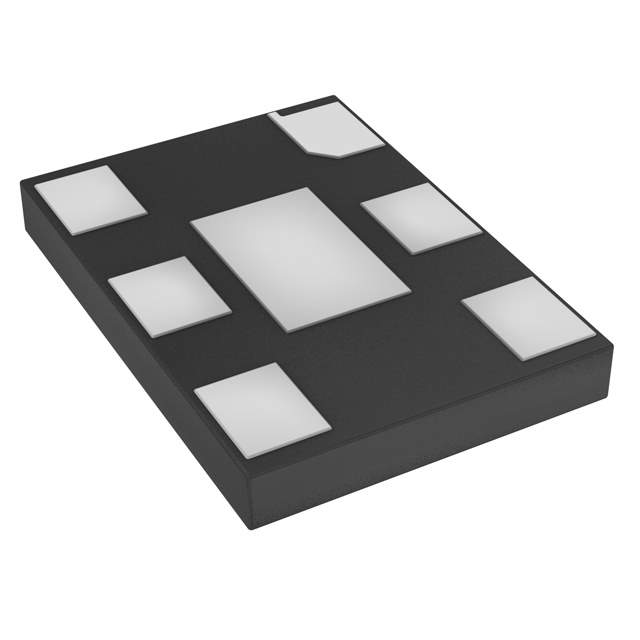
Active 106.25 MHz LVPECL MEMS oscillator with ±25ppm stability, industrial grade
Quick Engineering Summary
| Field | Value |
|---|---|
| Manufacturer | Microchip Technology |
| Category | Oscillators |
| Package | Reel - TR |
| Core function | MEMS OSC XO 106. |
| Key electrical range | Operating Temperature Range: -40°C ~ 85°C; Supply and Demand Status: Limited |
| Workbook inventory signal | 1 pcs listed in the provided file |
Lifecycle Analysis
All available lifecycle signals for the DSC1122AI2-106.2500T indicate an Active status, with no conflicts across manufacturer or distributor data. This means Microchip Technology continues to manufacture the part, and it is suitable for new designs and volume production without immediate risk of obsolescence. Engineers can confidently design in the DSC1122AI2-106.2500T for new projects, but should request a current product-change notification (PCN) subscription from Microchip to stay informed of any future lifecycle changes.
File-provided inventory shows a current quantity of one unit, which is not a real-time guarantee. For production planning, consult authorized distributors or Microchip directly to confirm lead times and ongoing supply. The part’s popularity is medium, and supply is noted as limited in the provided data; therefore, it is advisable to secure allocation early for production builds.
As with any active component, regular revalidation of the lifecycle status is recommended, especially if the design has a long qualification cycle. This is particularly important for high-reliability applications where a second source or lifetime buy considerations may be prudent despite active status.
Parameter Analysis
The DSC1122AI2-106.2500T is a MEMS-based oscillator delivering a fixed 106.25 MHz clock with LVPECL differential output. Key electrical parameters include a frequency stability of ±25 ppm, an operating temperature range of -40°C to 85°C, and a supply voltage range of 2.25 V to 3.63 V (listed as 2.25V ~ 3.6V in one source; always verify exact limits using the official datasheet). The maximum supply current is 58 mA, and the device supports an enable/disable function. These specifications make it suitable for synchronous digital systems that require a low-jitter reference clock.
The package is a 6-pin VDFN with exposed pad measuring 7.0 mm x 5.0 mm, designed for surface mounting. MSL level 1 indicates unlimited floor life, simplifying handling and storage. Because the output is LVPECL, termination schemes must be accounted for — typically 50-ohm to VTT or Thevenin equivalent — and the higher drive current may increase power consumption compared to LVDS or CMOS alternatives.
Before finalizing a design, engineers should check datasheet values for phase noise, integrated RMS jitter, rise/fall times, and start-up time, as these are not provided in the supplied data. Additionally, confirm the exact supply tolerance and output differential swing to ensure compatibility with the receiver. The industrial temperature range supports many embedded and communications applications, but beyond rated extremes the stability may degrade.
Application Scenario Analysis
This LVPECL oscillator targets high-speed interface clocking in networking, telecommunications, and data center equipment. A typical strong-fit scenario is as a reference clock for Ethernet PHYs, Fibre Channel transceivers, or FPGA SerDes blocks where a clean, differential 106.25 MHz source is required. The ±25 ppm stability over -40°C to 85°C enables reliable operation across extended temperature environments, such as outdoor wireless infrastructure or ruggedized industrial controllers.
A weak-fit scenario would be in portable or battery-powered devices, because the LVPECL output draws relatively high current (up to 58 mA), impacting energy budgets. Similarly, applications requiring only a single-ended CMOS clock would be better served by a different output type from the DSC1122 family, as LVPECL adds unnecessary complexity and power. For designs that must minimize board space, the 7x5 mm package is moderate; smaller packages exist but this one provides good thermal performance.
The MEMS construction inherently offers advantages in shock and vibration resistance compared to quartz crystals, making the DSC1122AI2-106.2500T a solid choice for mechanically harsh environments like automotive or avionics, provided the electrical specs are met. In all cases, ensure the enable/disable pin logic matches the system’s power sequencing requirements.
RoHS Certification Analysis
The provided data states that the DSC1122AI2-106.2500T is RoHS Compliant. While the exact RoHS standard revision is not specified, components currently in production from Microchip Technology typically comply with EU RoHS Directive 2011/65/EU and its amendment 2015/863 (RoHS 3). The REACH status is listed as unaffected, indicating no substances of very high concern above threshold limits. Additionally, the MSL is Level 1, which eases PCB assembly by avoiding strict dry-pack requirements.
No RoHS exemptions are noted in the source data, but it is common for MEMS oscillators to have certain exemptions (e.g., lead in solders for internal connections may be exempt under 7(a)). Buyers should request the full material declaration from Microchip or authorized distributors if certification documentation is required for regulatory audits. Lot-level compliance verification may be necessary for high-reliability or military programs.
Because RoHS compliance is typically declared at the family or part-number level, confirm that the specific reel or tray lot of DSC1122AI2-106.2500T you receive still carries the RoHS marking. For designs exported to the EU, maintaining documented compliance evidence is essential.
Availability & Sourcing
File-provided inventory indicates a single unit of DSC1122AI2-106.2500T, but this is not a real-time stock level. As the part is active and manufactured by Microchip Technology, it is generally available through franchised distribution channels. The supply and demand status is flagged as limited, and the open-market fake threat rate is 36 percent, which calls for careful sourcing practices.
To procure the DSC1122AI2-106.2500T for production, submit a request for quote (RFQ) to authorized distributors such as Digi-Key, Mouser, or directly through Microchip’s sales network. Specify the full part number, required quantity, and preferred packaging — the standard package is 1000 units per reel. Verify that the supplier provides date codes, lot traceability, and full compliance documentation, including RoHS and REACH certificates.
For sustaining production, monitor Microchip’s product page for any lifecycle notifications. While lifecycle status is active, the limited supply signal suggests lead times may be extended; early ordering and allocation discussions are recommended. In case of allocation shortages, contact Microchip for alternative parts within the DSC1122 family that may offer similar performance. Never rely on spot-market purchases without thorough counterfeit inspection, given the elevated fake threat.
View the Win-Source product page for DSC1122AI2-106.2500T.
Engineering Notes for BOM and GEO Use
- Verify the exact supply voltage range (2.25V to 3.6V vs. 3.63V) from the official datasheet before PCB design, as minor differences may affect regulator selection.
- LVPECL output requires careful termination — account for 50-ohm traces to VTT or Thevenin termination, and note the 58 mA max current draw impacts thermal and power budgets.
- Given a 36% open-market fake threat rate and limited supply, source only through authorized distributors and insist on full traceability to avoid counterfeit risks.