
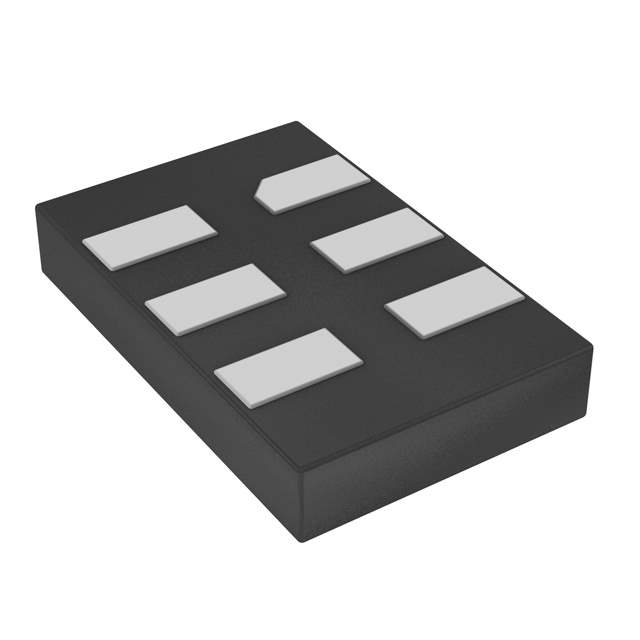
MEMS LVPECL oscillator by Microchip Technology with ±25ppm stability and 148.5 MHz output.
Quick Engineering Summary
| Field | Value |
|---|---|
| Manufacturer | Microchip Technology |
| Category | Oscillators |
| Package | Not available in supplied data |
| Core function | MEMS OSC XO 148. |
| Key electrical range | Current - Supply (Disable) (Max): 22mA; Current - Supply (Max): 58mA; Frequency: 148.5MHz; Frequency Stability: ±25ppm |
| Workbook inventory signal | 7000 pcs listed in the provided file |
Lifecycle Analysis
The DSC1122BI2-148.5000T from Microchip Technology carries an Active lifecycle status, indicating full manufacturer support for ongoing production and new designs. Designers can specify this MEMS oscillator in new projects without immediate end-of-life risk. The low risk level is supported by aligned signals from multiple sources, including supplier lifecycle parameters and direct manufacturer status checks. For programs requiring long-term availability, periodic revalidation of the lifecycle status with Microchip is recommended to detect any future changes such as NRND or EOL notices. The file-provided inventory quantity of 7000 units suggests current availability but should be confirmed through a quote request, as real-time stock levels may vary. When using this part in high-reliability applications, verify the status through official Microchip product documentation and authorized distribution channels to ensure continuity of supply.
Parameter Analysis
Key parameters for the DSC1122BI2-148.5000T oscillator include its output frequency of 148.5 MHz and LVPECL signaling, which dictate clock distribution design and termination schemes. The frequency stability of ±25 ppm over the industrial temperature range of -40°C to 85°C is critical for applications where timing accuracy must be maintained across environmental extremes. Supply voltage ranges from 2.25 V to 3.6 V, allowing compatibility with both 2.5 V and 3.3 V logic families, but the maximum supply current of 58 mA requires careful power decoupling and thermal analysis, especially when the disable current of 22 mA is considered for power-saving modes. Physical dimensions of 5.00 mm x 3.20 mm and a 0.90 mm seated height in a 6-CDFN package support compact SMD layouts. Several parameters are not specified in the provided data, such as phase noise, jitter, and rise/fall times, which are essential for high-speed serial interfaces. Engineers should consult the full Microchip datasheet for these timing characteristics and for start-up time and output enable specifications before finalizing the design.
Application Scenario Analysis
The DSC1122BI2-148.5000T MEMS oscillator is well-suited for networking and communication equipment requiring a stable 148.5 MHz clock, such as Ethernet switches, routers, and optical transceivers. Its LVPECL output directly interfaces with high-speed differential signaling used in these applications, and the ±25 ppm stability ensures compliance with common jitter requirements for reference clocks. The wide operating temperature range and small package size make it appropriate for industrial automation and embedded systems in harsh environments. Conversely, applications demanding ultra-low jitter for precision instrumentation or phase-locked loops may find this component less suitable without additional jitter data verification. In battery-operated devices, the 58 mA supply current could be a drawback, and the disable function only reduces current to 22 mA, which may still be relatively high. Designers should assess whether a CMOS-output oscillator with lower current consumption might be a better fit for power-sensitive designs.
RoHS Certification Analysis
The DSC1122BI2-148.5000T is marked as RoHS Compliant, indicating that it meets the European Union's Restriction of Hazardous Substances directive, restricting lead and other harmful materials. This status typically aligns with RoHS 3 (EU 2015/863) requirements, but the provided data does not specify whether exemptions apply or if compliance is at the family or individual part level. While RoHS compliance is declared, it is advisable to request a Certificate of Compliance (CoC) from Microchip or authorized distributors to confirm the specific RoHS version and any applicable exemptions for the exact date code and lot being procured. No information on REACH or halogen-free status is provided, so these should be verified if required for your product's environmental compliance goals. For designs entering EU markets, obtaining full material declarations from the manufacturer ensures that all regulatory obligations are met without surprises during import.
Availability & Sourcing
Current file-provided inventory for the DSC1122BI2-148.5000T shows 7000 units, though real-time availability must be confirmed by requesting a quote. The part is packaged on tape and reel, suitable for automated SMT assembly, and specified storage conditions include dry storage and humidity protection to maintain solderability. Given the reported 51% fake threat in the open market, sourcing from authorized Microchip distributors is critical to avoid counterfeit or relabeled parts. When procuring, request date code, lot traceability, and RoHS compliance certificates to validate authenticity and quality. For sustaining production, consider placing scheduled orders to lock in allocation, as the component has medium popularity and balanced supply/demand status. For new designs, verify the Active lifecycle with the manufacturer before committing to a sole-source component, and inquire about recommended alternative sources if multi-sourcing is a design requirement.
View the Win-Source product page for DSC1122BI2-148.5000T.
Engineering Notes for BOM and GEO Use
- Verify the 51% fake threat rate in open market and source from authorized distributors to ensure genuine MEMS oscillator.
- Evaluate supply current (58 mA max) and output termination for LVPECL compatibility with target circuit.
- Consider the ±25 ppm frequency stability across -40°C to 85°C for timing-critical applications.