
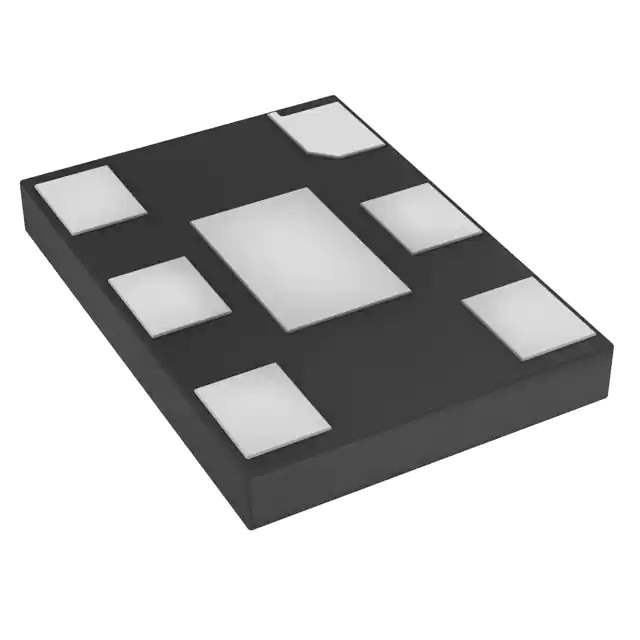
Microchip Technology MEMS oscillator with LVDS output, 200 MHz frequency, ±25ppm stability, and AEC-Q100 qualification.
Quick Engineering Summary
| Field | Value |
|---|---|
| Manufacturer | Microchip Technology |
| Category | Oscillators |
| Package | Tube |
| Core function | MEMS OSC XO 200. |
| Key electrical range | Current - Supply (Disable) (Max): 22mA; Current - Supply (Max): 32mA; Frequency: 200 MHz; Frequency Stability: ±25ppm |
| Workbook inventory signal | 50 pcs listed in the provided file |
Lifecycle Analysis
The Microchip Technology DSC1123AE2-200.0000 is reported as Active across all manufacturer lifecycle signals. An Active status indicates the part is in full production, supported by the manufacturer, and suitable for both new designs and ongoing production. No phase-out, obsolescence, or NRND notices are attached to this device at the time of review.
For engineers qualifying the DSC1123AE2-200.0000 in new designs, the low lifecycle risk means long-term availability is expected. However, it is still prudent to register the design with Microchip or an authorized distributor to receive proactive notifications of any roadmap changes. Procurement teams should validate the lifecycle status directly via Microchip’s product page or PCN alerts, especially for high-volume programs where alternates may already be planned internally.
The workbook data indicates a small file-provided inventory quantity, but this is not a real-time stock level and should be verified through an RFQ when planning orders. No lifecycle conflicts exist in the supplied information, so no immediate action is required beyond routine revalidation.
Parameter Analysis
At the core of the DSC1123AE2-200.0000 are its 200 MHz output frequency and LVDS differential signaling, which make it a strong candidate for high-speed clock distribution in noise-sensitive environments. LVDS offers low electromagnetic interference and high common-mode rejection, critical for maintaining signal integrity across PCBs. The ±25 ppm frequency stability over the -20°C to +70°C operating range ensures reliable timing in controlled temperature environments, while the 2.25V to 3.63V supply range provides flexibility for mixed-voltage board designs.
The device draws a maximum of 32 mA during operation and 22 mA in disable mode, which factors into power budgeting for densely populated boards. Its small 7.00 mm x 5.00 mm footprint and 0.90 mm height suit space-constrained surface-mount layouts. The enable/disable function can be used for power savings or board-level testing.
Notably, the AEC-Q100 qualification extends its usability to automotive applications. However, the dataset lacks several critical parameters that designers must verify from the official datasheet: phase jitter (typically required for serial data links), rise/fall times, start-up time, and aging characteristics. These directly impact system timing margins and long-term reliability and should be reviewed before finalizing the design.
Application Scenario Analysis
The DSC1123AE2-200.0000 aligns with high-speed differential clocking needs in automotive infotainment, advanced driver-assistance systems (ADAS), and vehicle networking, thanks to its AEC-Q100 rating and LVDS output. It is equally applicable to enterprise networking switches, routers, server motherboards, and storage controllers, where a clean 200 MHz reference is typical for SerDes and FPGA timing.
Industrial automation and test-and-measurement equipment that operate within 0°C to 70°C and require a compact, surface-mount clock source also benefit from this oscillator’s stability and small form factor.
However, this device is not a universal fit. For battery-operated or low-power IoT endpoints, the 32 mA active current may be excessive compared to lower-power CMOS oscillators. Applications demanding extended automotive temperature ranges (−40°C to +125°C) should consider the device’s stated −20°C to +70°C limit and either verify performance outside this range or select a wider-temperature variant. Additionally, systems with ultra-low jitter requirements (e.g., high-speed ADCs or RF PLLs) should confirm the DSC1123AE2-200.0000’s phase noise performance against their link budget before commitment.
RoHS Certification Analysis
The DSC1123AE2-200.0000 carries a RoHS Compliant status, indicating conformance to the EU Restriction of Hazardous Substances directive. This means the device does not contain lead, mercury, cadmium, hexavalent chromium, or other restricted materials above permissible thresholds. Coupled with a REACH Unaffected declaration, it meets the baseline environmental compliance requirements for global distribution.
The part also holds an MSL Level 1 rating, signifying unlimited floor life at standard factory conditions and eliminating the need for dry-pack handling or strict reflow windows typical of higher moisture-sensitivity components. This simplifies logistics for contract manufacturers and reduces the risk of moisture-induced reflow damage.
While the RoHS status is reported at the part-number level, lot-level variations can occur if the manufacturer changes process materials. It is advisable to request a full material declaration or certificate of compliance with each shipment, particularly for automotive or medical applications where auditable compliance records are mandatory. No exemptions are noted, suggesting straightforward RoHS conformity without special allowances.
Availability & Sourcing
With an Active lifecycle, the DSC1123AE2-200.0000 is broadly available through authorized Microchip distributors and independent channels. The workbook indicates a limited on-hand quantity, but this is a file-provided figure—actual stock and lead times must be confirmed by requesting a quote. The part is packaged in tubes with a standard quantity of 50 pieces, which suits both prototype and small- to medium-volume production.
However, a 51% fake threat rate in the open market signals a high risk of counterfeit devices. To mitigate this, procurement should prioritize purchasing from franchised sources or certified partners that can provide full traceability documentation, including date codes, lot codes, and manufacturer certificates of conformance. Visual inspection and X-ray comparison against a golden sample may be warranted for any gray-market acquisitions.
Buyers are encouraged to verify the current lifecycle status with Microchip before placing large orders, as even Active parts can undergo silent die revisions or packaging changes. Requesting a quote through a reliable channel that includes compliance documentation and latest PCN status will safeguard the supply chain and ensure the DSC1123AE2-200.0000 meets form, fit, and function requirements.
View the Win-Source product page for DSC1123AE2-200.0000.
Engineering Notes for BOM and GEO Use
- Leverage the AEC-Q100 qualification for automotive designs, but confirm the operating temperature range meets your system requirements.
- The high 51% fake threat rate demands sourcing exclusively from authorized distributors with full traceability documentation.
- Verify phase jitter and rise/fall times from the datasheet; missing in this summary but critical for high-speed LVDS links.