
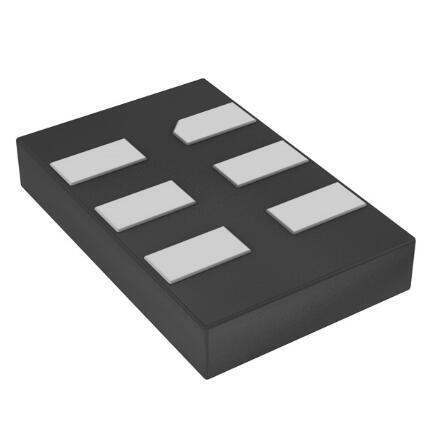
Microchip Technology MEMS oscillator, 125 MHz LVDS output. Sourcing guide for buyers and engineers.
Quick Engineering Summary
| Field | Value |
|---|---|
| Manufacturer | Microchip Technology |
| Category | Oscillators |
| Package | Not available in supplied data |
| Core function | MEMS OSC XO 125. |
| Key electrical range | Frequency: 880MHz ~ 915MHz, 1.92GHz ~ 1.98GHz; Frequency Stability: ±20ppm @ 25°C; Operating Temperature: -40°C ~ 85°C; Voltage - Supply: 3V |
| Workbook inventory signal | 288 pcs listed in the provided file |
Lifecycle Analysis
The DSC1123BI2-125.0000 from Microchip Technology appears Active based on the primary lifecycle signal, which typically means it is in full production and suitable for new designs. Active status usually ensures ongoing availability and manufacturer support.
However, a specification field within the data set lists the Part Status as Obsolete, creating a contradiction. This conflict must be resolved before committing to a design. Relying on an Active status while an Obsolete flag exists carries risk for production planning.
We recommend contacting Microchip directly or consulting the official product page to clarify the lifecycle. For sustaining production, verify with authorized distributors and consider securing inventory if the part is indeed Obsolete or transitioning to end‑of‑life.
Parameter Analysis
The supplied specifications for DSC1123BI2-125.0000 contain several inconsistencies that must be resolved through the official datasheet. The part number suggests a 125 MHz oscillator, but the specification field lists a frequency range of 880MHz–915MHz and 1.92GHz–1.98GHz, which does not align. The supply voltage is given as 3V in one field and 2.25V–3.63V in another, indicating a possible range. Mounting type appears as Requires Holder, yet the package data points to a surface‑mount 6‑VDFN, which is more typical for this part. Output is consistently described as LVDS.
For design integration, the frequency tolerance (±20ppm at 25°C) and industrial operating temperature range (−40°C to 85°C) are critical for ensuring timing accuracy across environmental conditions. The wide supply range suggests flexibility in power rail design, but the actual voltage must be confirmed to avoid latch‑up or performance degradation.
Priority missing items to verify from the official datasheet include: exact frequency, supply voltage limits, output drive strength, current consumption, phase noise/jitter, and the correct mounting/packaging details. Do not rely solely on the summary parameters presented here for board layout or electrical qualification.
Application Scenario Analysis
Assuming a 125 MHz LVDS oscillator with industrial temperature range and good frequency stability, the DSC1123BI2-125.0000 is well‑suited for high‑speed digital systems that require a clean clock reference. Typical strong‑fit applications include FPGA and SoC clocking, high‑speed serial communication (SERDES, Ethernet), data converters, and networking infrastructure where LVDS signaling preserves signal integrity across a backplane or PCB.
The MEMS construction can offer mechanical robustness, making it candidate for environments with vibration or shock. However, if the true frequency is indeed in the 900‑MHz or 2‑GHz band, the use case shifts toward RF synthesizers or microwave clocking, which would require careful impedance matching and phase‑noise analysis.
Weak‑fit scenarios include low‑cost consumer devices that can tolerate lower precision ceramic resonators, or systems where a single‑ended CMOS output is sufficient. Without a settled datasheet, do not assume the oscillator is a plug‑in replacement for any specific 125‑MHz LVDS design; verify footprint, pinout, and electricals before use.
RoHS Certification Analysis
The DSC1123BI2-125.0000 is marked as RoHS Compliant in the provided data. This indicates that the part, as normally supplied, meets the restrictions on lead, mercury, cadmium, and other hazardous substances mandated by the EU Directive.
No specific directive version (e.g., EU 2015/863, often called RoHS 3) is quoted, and no exemption list is provided. For compliance in regulated industries, you should request the manufacturer’s declaration of conformity and verify that it covers the latest amendments (including the four additional phthalates).
Additionally, RoHS compliance is typically declared at a product family level; trace‑level materials changes can occasionally introduce non‑compliant batches. Implement incoming quality checks or obtain lot‑specific certifications from your distributor to maintain environmental compliance across all production units.
Availability & Sourcing
The provided inventory workbook indicates a stock quantity of 288 units for the DSC1123BI2-125.0000, but this is a file‑based snapshot and not a real‑time availability check. Given the lifecycle conflict, current market conditions should be verified before placing orders.
Because the part is considered Active yet shows an Obsolete flag, sourcing requires a two‑pronged approach. First, request a quote from authorized Microchip distributors, specifying the exact part number and packaging (bulk or tape as needed). Request confirmation of lifecycle status, production scheduling, and delivery date/lot codes. Second, evaluate lead times and consider second‑source options if the part is EOL or NRND.
For high‑reliability procurement, ensure that the distributor provides full traceability and compliance documentation, including RoHS certificates and MSL/ESD ratings. Without a confirmed lifecycle, avoid using this part for new production programs until the status is clarified by the manufacturer.
View the Win-Source product page for DSC1123BI2-125.0000.
Engineering Notes for BOM and GEO Use
- Confirm part status directly with Microchip; the Obsolete flag in one field conflicts with the Active lifecycle signal.
- Critical electrical parameters (frequency, supply voltage, output type) must be verified against the official datasheet before design‑in.
- Use RoHS certification on a per‑lot basis and request manufacturer compliance documents with each shipment.