
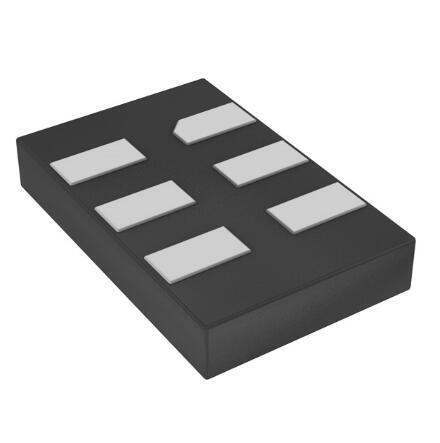
Obsolete MEMS‑based 125 MHz LVDS oscillator in 112‑BQFP package from Microchip. Review lifecycle, parameters, and procurement options.
Quick Engineering Summary
| Field | Value |
|---|---|
| Manufacturer | Microchip Technology |
| Category | Oscillators |
| Package | 112-BQFP |
| Core function | MEMS OSC XO 125. |
| Key electrical range | Current - Supply (Max): 17mA; Operating Temperature: -40°C ~ 85°C; Voltage - Supply: 3V |
| Workbook inventory signal | 1 pcs listed in the provided file |
Lifecycle Analysis
The DSC1123BL5-125.0000T is classified as Obsolete in the provided specifications, directly conflicting with a lifecycle status of Unknown. Engineers and buyers must treat this Microchip oscillator as discontinued: no further production runs are expected, and remaining stock is limited to what is already in the distribution channel. For new designs, the part should be excluded from the bill of materials; a migration to an active Microchip MEMS oscillator or an alternative supplier’s LVDS oscillator is required.
The attached file‑based inventory indicates only 1 unit, but this is not a real‑time guarantee. Any existing production lines still using the DSC1123BL5-125.0000T must immediately verify availability, negotiate a last‑time buy if possible, and initiate qualification of a replacement. Failure to act can lead to gaps in production when the remaining stock is depleted.
Additionally, documentation from Microchip (product change notification, end‑of‑life notice) should be obtained to confirm the exact last‑ship date and any recommended alternates. Without these, procurement cannot safely assume future supply for long‑term programs.
Parameter Analysis
The DS C1123BL5-125.0000T delivers a 125.0000 MHz LVDS output from a MEMS resonator. LVDS is essential for low‑power, high‑speed differential clock distribution, making this part suitable for noise‑sensitive digital systems. The supply voltage is 3V — note this is not the more common 3.3V or 2.5V, so the power rail design must accommodate a tight ±5% tolerance to avoid jitter degradation. Maximum current draw is 17mA, which is moderate for this frequency class; ensure sufficient decoupling and that the regulator can handle inrush if multiple oscillators are present on the same rail.
Operating temperature spans -40°C to 85°C, covering industrial range applications. The package is a 112‑BQFP with dimensions 0.250″ dia x 1.250″ L (6.35mm x 31.75mm), indicating a cylindrical metal‑can oscillator with fixed mounting. This physical form factor demands careful PCB layout — verify through‑hole or surface‑mount pad compatibility from the manufacturer’s mechanical drawing.
Critical missing parameters from the supplied data include frequency stability (ppm), phase jitter (rms), output rise/fall times, and start‑up time. Any design must retrieve these from the official Microchip DSC1123BL5-125.0000T datasheet to guarantee timing margins and signal integrity. Also, the Function field reads “Multiple, NonProgrammable,” which likely implies enable/disable or standby features; pinout and logic‑level thresholds need confirmation before layout freeze.
Application Scenario Analysis
With a 125 MHz LVDS output and industrial temperature range, the DSC1123BL5-125.0000T is a strong fit for high‑speed clocking in telecom line cards, networking switches, FPGA/SoC reference clocks, and high‑resolution video interfaces where a clean, differential clock reduces EMI. The MEMS technology provides better shock and vibration resilience than quartz, suiting avionics or rugged embedded computing if the form factor can be accommodated.
Weak‑fit scenarios include space‑constrained designs where the elongated 112‑BQFP canister is too large, or applications requiring a common 3.3V supply rail without an additional LDO. Also, for RF synthesizers or precision ADC/DAC clocking, the lack of published phase noise and stability figures makes the part a risk without upfront evaluation. Consumer products with cost pressures and high‑volume SMT assembly would likewise find the through‑hole/fixed mounting style a logistical hurdle.
Because the part is obsolete, even strong‑fit applications should not proceed with new design‑ins. Existing equipment already designed around the DSC1123BL5-125.0000T can only be sustained if remaining inventory is secured and any replacement is form‑, fit‑, and function‑identical.
RoHS Certification Analysis
The DSC1123BL5-125.0000T is declared RoHS Compliant in supplier data. Without an explicitly referenced directive (such as 2011/65/EU or 2015/863), the default assumption is conformity to the original EU RoHS Directive. This means the part does not contain lead, mercury, cadmium, hexavalent chromium, PBBs, or PBDEs above the permitted thresholds.
Nevertheless, compliance at the component level does not automatically guarantee assembly‑level compliance for the entire board. Obtain a full‑material declaration or certificate of analysis covering all homogeneous materials. Pay particular attention to possible exemptions, e.g., lead in glass or high‑melting‑temperature solders used within the MEMS package; these are often permitted but must be declared.
If the end product is destined for global markets, also verify REACH and China RoHS status, as the present data omits these. The bulk packaging of this obsolete part may require separate verification that no non‑compliant materials were introduced during long‑term storage.
Availability & Sourcing
As an obsolete Microchip oscillator, the DSC1123BL5-125.0000T presents acute availability risks. File‑provided inventory indicates only 1 piece, a quantity that does not reflect real‑time distributor stock. Buyers should immediately request quotes from authorized Microchip distributors, independent brokers, and surplus channels, but must apply rigorous counterfeit mitigation: verify date/lot codes, test electrical parameters on sample lots, and insist on certification of conformance.
Because the part is discontinued, no additional factory production is possible. Sourcing must focus on securing residual channel inventory. Request that suppliers confirm moisture sensitivity level (MSL), as bulk‑packed units may have compromised dry‑packaging after long storage. For production runs, consider ordering a larger quantity to cover future needs, but balance against the risk of obsolescence‑driven shelf‑life degradation.
Engineers should simultaneously evaluate form‑fit‑function replacements or newer Microchip MEMS oscillators that provide LVDS output at 125 MHz. Before committing any new assembly orders, obtain a written end‑of‑life notice from Microchip and validate that secured stock is genuine and fully compliant. A proactive RFQ process with direct lifecycle verification is the only safe path forward.
View the Win-Source product page for DSC1123BL5-125.0000T.
Engineering Notes for BOM and GEO Use
- The DSC1123BL5-125.0000T is marked Obsolete; verify with Microchip for final production status and last‑time buy options.
- With a 3V supply and 17mA max current, ensure power rails meet tolerance and consider decoupling for the LVDS output.
- The 112‑BQFP package and fixed mounting require careful PCB footprint verification; consult the datasheet for physical dimensions and termination.