
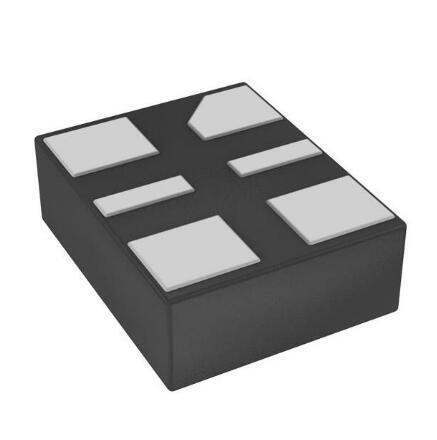
100 MHz LVDS MEMS oscillator in 6-VDFN package. Verify lifecycle status due to conflicting part status data.
Quick Engineering Summary
| Field | Value |
|---|---|
| Manufacturer | Microchip Technology |
| Category | Oscillators |
| Package | Not available in supplied data |
| Core function | MEMS OSC XO 100. |
| Key electrical range | Current - Supply (Max): 17mA; Frequency: 5kHz; Frequency Stability: ±10ppm; Operating Temperature: -40°C ~ 85°C |
| Workbook inventory signal | 1384 pcs listed in the provided file |
Lifecycle Analysis
The lifecycle status for DSC1123CI2-100.0000T is recorded as Active in Microchip's lifecycle system, indicating the part is in full production and suitable for new designs. However, a conflicting data field lists the part status as Obsolete, which introduces procurement risk. This discrepancy may stem from outdated component databases or a pending product change notification. For critical designs, it is essential to validate the true lifecycle state directly with Microchip or authorized distributors before committing to production volumes.
The part currently appears in a component workbook with a file-provided quantity of 1384, but this figure is not a guarantee of real-time availability and should be verified through an RFQ process. Engineers and buyers should treat the Obsolete flag as a signal to secure manufacturer documentation or a product change notice (PCN) that clarifies the production roadmap. If the part is indeed Active, it remains a solid choice for long-term designs; if it is transitioning, migration plans should be initiated.
Parameter Analysis
Key electrical parameters require careful verification against the official Microchip datasheet due to conflicting values in secondary sources. The nominal output frequency is 100 MHz with LVDS signaling, but one data field incorrectly lists 5 kHz, emphasizing the need to cross-check frequency specifications. Frequency stability is indicated as ±10 ppm in one source and ±25 ppm in another; buyers should confirm the exact grade for their application. Supply voltage is quoted both as a single 3V and as a range from 2.25V to 3.63V; the latter suggests flexibility for varying rail requirements. Similarly, maximum supply current varies from 17 mA to 32 mA between records, impacting power budget planning. Operating temperature spans -40°C to +85°C, suitable for industrial environments.
Critical parameters not provided include phase noise, integrated RMS jitter, output enable/disable timing, and start-up time. These missing characteristics must be obtained from the manufacturer to assess signal integrity and system-level compatibility. The 6-VDFN package with dimensions 3.2 mm x 2.5 mm demands careful PCB layout for high-frequency differential routing. Engineers should request the latest datasheet revision to resolve parameter discrepancies and obtain timing data before finalizing schematic and layout.
Application Scenario Analysis
DSC1123CI2-100.0000T is well-matched for high-speed digital systems requiring a stable, low-jitter 100 MHz reference clock. Its LVDS output format makes it ideal for driving differential clock inputs in FPGAs, network processors, serial transceivers, and backplane interfaces. The industrial temperature range and MEMS construction provide robust performance in networking equipment, base stations, and embedded computing platforms that experience moderate vibration or thermal stress. The small 3.2 mm x 2.5 mm footprint supports compact PCB layouts.
Applications that could use a single-ended CMOS oscillator at this frequency may find the LVDS interface unnecessarily complex or power-hungry, making this part a weaker fit for simple microcontroller clocking or cost-sensitive consumer designs. The device is not optimized for battery-powered devices given its maximum supply current of up to 32 mA. Overall, it targets professional communication infrastructure where differential signaling and reliability are paramount.
RoHS Certification Analysis
The DSC1123CI2-100.0000T is marked as RoHS Compliant in the available data, indicating that it adheres to the European Union's Restriction of Hazardous Substances directive. The specific directive version, such as RoHS 3 (EU 2015/863), is not explicitly stated and should be confirmed with a certificate of compliance from Microchip. No exemptions are noted in the provided information, though some MEMS oscillator packages may contain lead in high-reliability solder finishes under exemption 7(c)-I, which is unlikely for this commercial-grade part.
Since compliance declarations often apply at the component family level, manufacturers and procurement teams should request lot-specific documentation when traceability is required for regulatory audit. Without a formal REACH statement in the source data, it is prudent to verify that SVHC reporting is also available if needed. Overall, the part appears to meet standard environmental requirements, but formal validation is recommended before finalizing BOMs for EU markets.
Availability & Sourcing
This oscillator appears in a supplier workbook with a quantity of 1384, but this figure is not a live inventory count and must be validated through a formal request for quote (RFQ). The lifecycle conflict between an Active designation and an Obsolete part status flag makes sourcing diligence critical. Potential buyers should initiate an RFQ to confirm current stock levels, lead times, and pricing before relying on the part for production.
Packaging type is ambiguous, with sources listing both bulk and tape; clarification is needed to align with automated assembly processes. Date and lot code traceability should be requested to ensure freshness and compliance with RoHS lot-level requirements. Given the lifecycle uncertainty, engineers are advised to secure supply with verified authorization from Microchip or its authorized channel. For new projects, consider confirming a direct manufacturer roadmap to avoid last-time buy situations. Contract manufacturers should insist on a certificate of conformance and latest PCN notifications to avoid receiving obsolete inventory.
View the Win-Source product page for DSC1123CI2-100.0000T.
Engineering Notes for BOM and GEO Use
- Cross-check the actual oscillation frequency with the Microchip datasheet; ignore the erroneous 5 kHz listing and confirm 100 MHz operation.
- Request lot-specific RoHS compliance certificates and verify the applicable directive version (e.g., RoHS 3) before production approval.
- Initiate an RFQ to validate real-time stock and lead times due to the conflicting obsolete status flag in component records.