
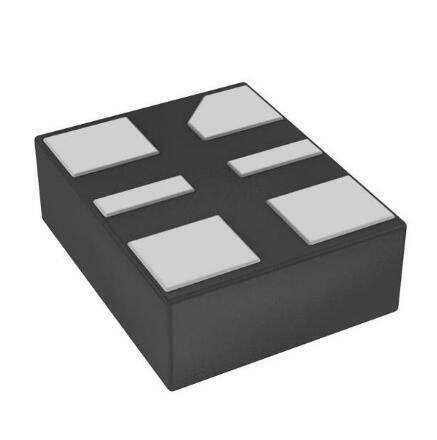
MEMS oscillator with LVDS output at 156.25 MHz. Verify status before design-in.
Quick Engineering Summary
| Field | Value |
|---|---|
| Manufacturer | Microchip Technology |
| Category | Oscillators |
| Package | Not available in supplied data |
| Core function | MEMS OSC XO 156. |
| Key electrical range | Current - Supply (Max): 17mA; Frequency: 5kHz; Frequency Stability: ±20ppm @ 25°C; Operating Temperature: -40°C ~ 85°C |
| Workbook inventory signal | 1 pcs listed in the provided file |
Lifecycle Analysis
The lifecycle status of the DSC1123DI2-156.2500T presents a significant conflict. While the Excel lifecycle parameter and a generic 'Lifecycle Status' field both list 'Active,' a specifications entry explicitly states 'Part Status: Obsolete.' This discrepancy typically indicates that the part has been discontinued by the manufacturer. For new designs, this status is a red flag; engineers should avoid incorporating this oscillator into future products. For sustaining production, immediate action is required.
If the part is indeed obsolete, sourcing options will be limited to existing distributor stock or aftermarket channels. The file-provided inventory of 1 unit is not real-time and may not reflect actual availability. A last-time buy may be necessary to secure enough components for existing builds. We strongly recommend contacting Microchip Technology directly to clarify the official lifecycle status and obtain any end-of-life notifications. Without manufacturer confirmation, treat this part as high-risk and unsuitable for new production programs.
Parameter Analysis
The DSC1123DI2-156.2500T is characterized by its 156.25 MHz output frequency—a common value for high-speed serial communication and FPGA reference clocks—and LVDS differential signaling, which provides low electromagnetic interference and robust noise immunity. The supply voltage range spans 2.25V to 3.63V, allowing integration into both 2.5V and 3.3V systems with some margin. Frequency stability is specified at ±25ppm (from the Excel parameters; the specification list shows ±20ppm at 25°C, typical), which meets many industrial requirements but may be insufficient for telecom-grade phase-noise-sensitive applications.
Current consumption is listed as 17mA max in the specifications and 32mA max in the Excel data; this discrepancy must be resolved by consulting the official datasheet. Designers should budget for the higher 32mA value to avoid power supply issues. The operating temperature range is -40°C to +85°C, making it suitable for industrial environments. The package is a 6-VDFN with a 2.5mm x 2.0mm footprint, which saves board space but complicates rework. Missing critical datasheet parameters include phase noise performance, startup time, and aging characteristics—all essential for clock-tree design and long-term reliability assessments.
Application Scenario Analysis
The DSC1123DI2-156.2500T is best suited for applications requiring a high-frequency, differential clock source. Strong-fit scenarios include networking switches, routers, and base stations where 156.25 MHz is standard for 10GbE/25GbE interfaces. It also fits well into FPGA boards, high-speed data converters, and test equipment that demand low-jitter LVDS clocks. The industrial temperature range broadens its use in field-deployed hardware.
Weak-fit scenarios involve battery-powered or energy-sensitive designs, as the 32mA supply current may be too high. Applications needing very tight frequency stability over temperature extremes—such as precision instrumentation—might require better than ±25ppm. Additionally, designs that use single-ended clock inputs will need a translator, reducing the oscillator's integration advantage. The part is also not suitable for low-frequency timing where a crystal might be more cost-effective. Engineer should evaluate whether the 156.25 MHz fundamental frequency and LVDS output align exactly with the clock receiver requirements.
RoHS Certification Analysis
The DSC1123DI2-156.2500T is declared RoHS Compliant, which generally means it meets the European Union’s Restriction of Hazardous Substances directive. The supplied data does not specify which revision (e.g., RoHS 2 or RoHS 3) applies, nor does it provide REACH, halogen-free, or MSL (moisture sensitivity level) details. In the absence of a certificate, it is prudent to assume compliance with the current RoHS 3 (EU 2015/863) standard.
From a procurement standpoint, RoHS compliance at the part-number level does not guarantee that every production lot is compliant. Lot-level certificates of conformance should be requested from the supplier to ensure traceability and regulatory adherence, especially if the part is sourced from non-franchised distributors. The missing REACH statement is not a direct substitute for RoHS but may be required for certain end markets. Always verify the latest compliance status with Microchip Technology or an authorized source before committing to production.
Availability & Sourcing
Availability of the DSC1123DI2-156.2500T is highly uncertain due to the conflicting obsolete signal. The file-provided quantity is 1 unit, but this snapshot is not a real-time inventory guarantee. For new designs, sourcing this part is not recommended; however, for legacy systems, immediate action is necessary to secure any remaining stock. Engineers and buyers should request a quote through RFQ channels to check current distributor holdings and lead times, while clearly communicating the suspected discontinued status.
Sourcing should emphasize traceability, date/lot codes, and compliance documentation. The packaging is listed as Bulk in the specifications, but the Excel row suggests tape packaging; clarify the packaging format before ordering to ensure compatibility with assembly processes. Given the high probability that this part is obsolete, consider verifying the manufacturer’s official obsolescence notice and evaluating last-time buy options. For long-term production, migration to an active alternative oscillator should be prioritized. Always verify lifecycle status and availability before issuing a purchase order.
View the Win-Source product page for DSC1123DI2-156.2500T.
Engineering Notes for BOM and GEO Use
- Verify part status with Microchip; the 'Obsolete' designation suggests this part may be discontinued, avoid new designs.
- Critical parameters: frequency 156.25 MHz, LVDS output, supply 2.25–3.63V, ensure 32mA max current budget.
- Confirm package footprint (6-VDFN 2.5x2.0mm) and mounting type for PCB layout.