
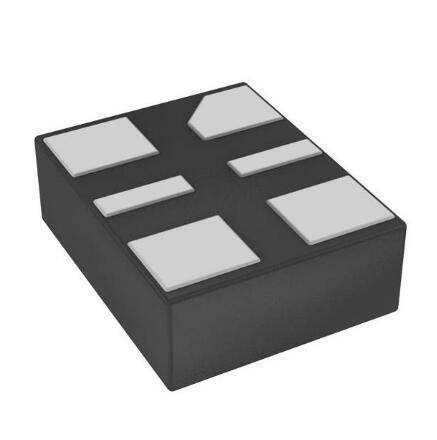
150 MHz LVDS MEMS Oscillator – Active, RoHS Compliant, 6-VDFN Package
Quick Engineering Summary
| Field | Value |
|---|---|
| Manufacturer | Microchip Technology |
| Category | Oscillators |
| Package | TO-220-7 |
| Core function | MEMS OSC XO 150. |
| Key electrical range | Frequency: 5kHz; Frequency Stability: ±20ppm @ 25°C; Operating Temperature: -40°C ~ 85°C; Voltage - Supply: 3V |
| Workbook inventory signal | 40 pcs listed in the provided file |
Lifecycle Analysis
The DSC1123DL5-150.0000 oscillator is in Active lifecycle status with all available signals aligned. This indicates full manufacturer support, ongoing production, and no recommended migration timeline. For new designs, the part can be confidently integrated without near-term risk of obsolescence.
Engineers should still monitor Microchip’s PCN (Product Change Notification) system for any future updates, as even Active components can undergo fab or material changes. The file-provided inventory quantity is 40 units, but this is not a live stock level; actual availability must be confirmed at time of order.
For sustaining production, it is good practice to maintain a safety stock and periodically revalidate lifecycle through authorized distributors to avoid unexpected disruptions.
Parameter Analysis
Key specifications derived from the available data include a fixed 150 MHz output frequency with LVDS signaling, a supply voltage range of 2.25 V to 3.63 V, and frequency stability of ±10 ppm. The operating temperature span is -40 °C to +105 °C, making it suitable for industrial environments. Maximum supply current is 32 mA, which aids in power budgeting for multi-rail designs.
The DSC1123DL5-150.0000 uses an enable/disable function (non-programmable) and is housed in a 6-pin VDFN package with dimensions of 2.50 mm x 2.00 mm and a maximum height of 0.035 inches. These compact dimensions are critical for high-density PCB layouts.
Missing from the available summary are jitter performance metrics, output drive strength, start-up time, and aging characteristics. Engineers should consult the full Microchip datasheet for these values when qualifying the part for high-speed serial interfaces, clock trees, or phase-locked loop applications. Pay special attention to rise/fall time matching and differential output swing to ensure compatibility with receiver thresholds.
Application Scenario Analysis
The DSC1123DL5-150.0000 is a strong fit for applications requiring a low-jitter, high-frequency reference clock with LVDS differential signaling. Typical use cases include Ethernet switches, routers, base stations, FPGA clocking, and high-speed data converters. The wide temperature range and MEMS construction offer robustness against shock and vibration, making it viable for industrial and outdoor equipment.
It is less suited for designs that need a programmable frequency or CMOS/TTL output levels without additional level translation. While the oscillator can serve as a crystal replacement in some clock generators, its fixed frequency and non-programmable nature mean it cannot be tuned or adjusted in-circuit.
For applications where low phase noise at 150 MHz is critical, the datasheet’s phase noise plots and integrated RMS jitter should be reviewed against system requirements. Absent that data, a conservative design margin should be applied or a dedicated evaluation board used for pre-compliance testing.
RoHS Certification Analysis
The part is listed as RoHS Compliant. Under typical interpretation, this aligns with EU RoHS Directive 2011/65/EU and its amendment 2015/863 (RoHS 3), which restricts lead, mercury, cadmium, and other hazardous substances. The designation is at the component family level, so individual production lots may carry specific compliance certificates.
No explicit exemptions are noted in the supplied data. Some oscillators might use lead in certain exemptions (e.g., lead in glass or ceramics), but this is not indicated. For safety-critical or regulated industries, requesting a full material declaration or certificate of compliance from Microchip or an authorized distributor is recommended.
Additionally, while not mentioned, end customers may need to verify REACH SVHC status and halogen-free claims if required by their supply chain policies. Lot-level traceability ensures that any changes in compliance status are captured before acceptance.
Availability & Sourcing
The DSC1123DL5-150.0000 is in active production, and sourcing flows should follow standard RFQ procedures. The file indicates a quantity of 40 units, but this is a snapshot and does not guarantee real-time stock. Engineers and buyers should request a quote for current lead times, date codes, and packaging (bulk or tape/reel) from authorized channels.
Given the Active lifecycle, the primary focus is on securing pricing and delivery in line with production schedules. However, compliance documentation and manufacturer traceability should be verified for each shipment, particularly for RoHS and for any export classification requirements.
For urgent needs, checking secondary sources may be an option, but with the understanding that lifecycle status and authenticity must be confirmed. Always verify the part’s marking against the datasheet, especially the Microchip logo, lot code, and the abbreviated part number, to avoid counterfeit risk.
View the Win-Source product page for DSC1123DL5-150.0000.
Engineering Notes for BOM and GEO Use
- Verify output swing, rise/fall times, and phase noise from official datasheet for high-speed LVDS receiver compatibility.
- Confirm pad layout matches the 6-VDFN (2.5x2 mm) footprint to avoid solder bridging and thermal issues.
- Request lot-specific compliance documentation (RoHS, REACH) to ensure traceability for regulated end markets.