
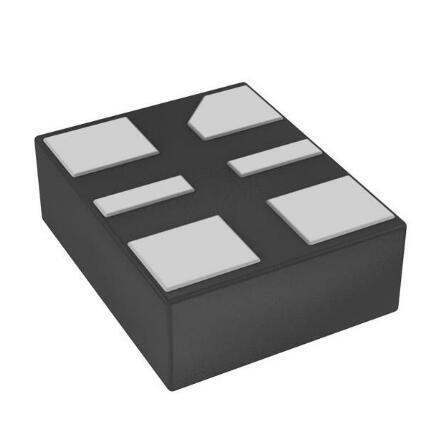
Microchip Technology DSC1123DL5-200.0000 MEMS oscillator – specifications, lifecycle status, and sourcing insights for engineers.
Quick Engineering Summary
| Field | Value |
|---|---|
| Manufacturer | Microchip Technology |
| Category | Oscillators |
| Package | 5-UFBGA, CSPBGA |
| Core function | MEMS OSC XO 200. |
| Key electrical range | Current - Supply (Max): 17mA; Frequency: 5kHz; Frequency Stability: ±10ppm; Operating Temperature: -40°C ~ 85°C |
| Workbook inventory signal | 340 pcs listed in the provided file |
Lifecycle Analysis
The supplier-provided lifecycle data for DSC1123DL5-200.0000 is contradictory: one parameter lists the lifecycle status as Active, while another indicates a Part Status of Obsolete. This conflict introduces significant risk for procurement and design planning. For new designs, relying on this part is not advisable until the manufacturer officially clarifies its production status. Sustaining production programs should treat the part as uncertain and prepare for potential obsolescence, including seeking alternate sources or planning last-time buys.
The file indicates an inventory of 340 units, but this figure is a static snapshot and does not confirm ongoing availability. No date codes or lot origins are provided. Engineers must contact Microchip Technology directly, review the latest product change notifications (PCNs), and obtain a written lifecycle confirmation. Until then, the part should be considered high-risk for any production intent.
Parameter Analysis
The DSC1123DL5-200.0000 is described as a MEMS-based oscillator with LVDS output. The primary description states a frequency of 200.0000 MHz, but a secondary specification field lists 5 kHz—a discrepancy that must be resolved using the official datasheet. Key parameters include a frequency stability of ±10 ppm and an operating temperature range of -40°C to 85°C (extended to 105°C in some sources). Supply voltage is given as 3 V in the main specs, while secondary data indicates a wider range of 2.25 V to 3.63 V. Maximum current draw is listed as 17 mA, but a secondary entry shows 32 mA, likely reflecting different load conditions.
Packaging information also conflicts: the primary field shows 5-UFBGA, CSPBGA, while another source refers to a 6-VDFN (2.5x2.0 mm) package. Such discrepancies can affect PCB layout and thermal management. Critical missing parameters include phase noise, start-up time, jitter performance, and output enable/disable timing—all of which are essential for high-speed clocking applications. Engineers should obtain the official Microchip DSC1123 family datasheet and validate parameters under actual operating conditions.
Application Scenario Analysis
This MEMS oscillator targets applications requiring a high-frequency, low-jitter reference clock. Potential use cases include networking equipment (routers, switches), high-speed data converters, FPGA/ASIC clocking, and telecommunications infrastructure. The LVDS output format provides noise immunity and is suitable for differential signaling over controlled-impedance tracks.
However, the component is less appropriate for low-frequency, cost-sensitive consumer devices where a 200 MHz oscillator is unnecessary. Additionally, the inconsistent package and voltage data make it challenging to design in without detailed footprint and electrical verification. If the part is truly obsolete, it will not be recommended for any new development, and even for existing systems, the risk of supply interruption demands an immediate migration plan. Therefore, its applicability is contingent on resolving the lifecycle and parametric uncertainties.
RoHS Certification Analysis
The part is declared as RoHS Compliant according to the supplied data, suggesting conformity with European Union hazardous substance restrictions. No specific directive version (such as EU 2015/863, commonly known as RoHS 3) is mentioned, nor are any exemptions cited. This lack of detail means that engineers cannot assume compliance with the latest RoHS requirements without manufacturer confirmation.
Moreover, REACH and halogen-free status are not provided, and no MSL (moisture sensitivity level) rating appears in the data. For applications requiring full material declarations or that operate in regulated markets, a compliance certificate from Microchip should be requested per lot or date code. Relying on a generic “RoHS Compliant” label without supporting documentation carries a compliance risk, particularly for products shipping to the EU after directive updates.
Availability & Sourcing
Sourcing DSC1123DL5-200.0000 requires an RFQ process given the conflicting lifecycle status. The file-provided quantity of 340 units is a static indicator and not a real-time stock level. Packaging is listed as Bulk, but the exact reel or tube configuration is not specified. Buyers should request date codes, lot traceability, and a manufacturer compliance certificate to guard against counterfeits and ensure the parts meet RoHS and performance specifications.
Due to the Active/Obsolete conflict, it is critical to confirm current production status with Microchip before placing orders. If the part is discontinued, limited inventory may be available for last-time buys, but engineering should evaluate migration paths to alternative Microchip MEMS oscillators or equivalent sources. For any purchase, insist on a written lifecycle confirmation and a warranty of authenticity. Request a quote today to obtain current availability and lead times, and always verify the lifecycle before committing to production.
View the Win-Source product page for DSC1123DL5-200.0000.
Engineering Notes for BOM and GEO Use
- Verify lifecycle status with Microchip before committing to new designs; the provided data shows conflicting signals (Active and Obsolete).
- Confirm actual package (UFBGA vs VDFN) and frequency (200 MHz vs 5kHz) per official datasheet; discrepancies in source data require engineering validation.
- Ensure supply voltage range (2.25V to 3.63V per secondary data) matches system requirements and consider the higher current draw (32mA max) for power budgeting.