
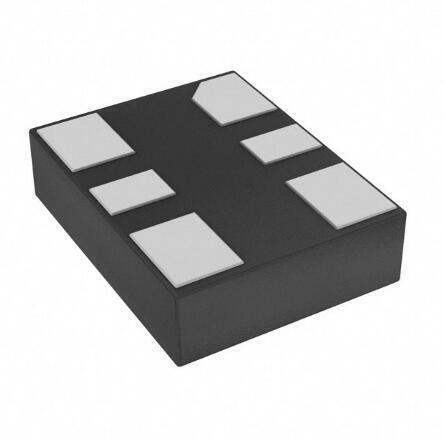
A procurement-oriented analysis of this 156.25 MHz MEMS HCSL oscillator, covering lifecycle, key specs, applications, and compliance.
Quick Engineering Summary
| Field | Value |
|---|---|
| Manufacturer | Microchip Technology |
| Category | Oscillators |
| Package | PowerPAK® 1212-8W Dual |
| Core function | MEMS CMOS OSC |
| Key electrical range | Frequency: 5kHz; Frequency Stability: ±20ppm @ 25°C; Operating Temperature: -40°C ~ 85°C; Output: Ethernet |
| Workbook inventory signal | 1 pcs listed in the provided file |
Lifecycle Analysis
The DSC1124CI1-156.2500TA presents conflicting lifecycle signals that demand careful review before any procurement decision. While the overall lifecycle status is recorded as Active, a separate specification field lists Part Status as Obsolete. This discrepancy means the part may already be discontinued, and the Active label could be a data artifact. For engineers evaluating new designs, this conflict elevates the risk profile significantly.
If the DSC1124CI1-156.2500TA is indeed obsolete, it should not be designed into new products. Only existing sustaining builds with verified stock should consider continued usage. Last‑time‑buy opportunities may still be available, but a direct confirmation from Microchip Technology or its authorized distributors is essential. Relying solely on the supplied Active status would be overly optimistic.
For any active procurement, request a formal product change notification (PCN) or end‑of‑life (EOL) notice from the manufacturer. If no documentation can be produced, treat the part as discontinued and begin migration planning immediately. The provided inventory quantity of one unit from a third‑party source is not a substitute for lifecycle verification.
Parameter Analysis
The DSC1124CI1-156.2500TA is characterized by several critical parameters that determine its suitability for high‑speed clocking. The nominal frequency of 156.25 MHz is a common reference for networking and communication systems. The HCSL output format is designed for low‑jitter differential signaling, typical in PCIe and other high‑speed serial interfaces. The supply voltage range, reported as 2.25V to 3.6V, allows compatibility with both standard 2.5V and 3.3V logic domains, but designers must verify the exact operating voltage from the datasheet to ensure logic‑level compatibility.
Frequency stability of ±50ppm over the full ‑40°C to +85°C temperature range is adequate for many commercial and industrial applications, though tighter stability might be required for precision timing. The maximum supply current of 42mA must be accounted for in power budgets, especially in thermally constrained designs. The package is a 6‑VDFN (3.2mm x 2.5mm), which supports compact PCB layouts but demands careful thermal and signal routing.
A significant concern is the inconsistency in the provided specifications. Some fields list a 5kHz frequency, Ethernet output, and a PowerPAK® 1212‑8W Dual package, which are clearly erroneous for this part number. Engineers must cross‑reference the official Microchip datasheet to validate all parameters before committing the DSC1124CI1-156.2500TA to a design.
Application Scenario Analysis
The DSC1124CI1-156.2500TA is well‑suited for applications requiring a clean, differential 156.25 MHz clock source. Its HCSL output and MEMS‑based architecture make it a candidate for PCI Express Gen 1/2/3 reference clocks, Ethernet switches, servers, and FPGA‑based designs that demand low phase noise and stable frequency over temperature. The small 6‑VDFN package allows integration into space‑constrained high‑speed digital boards.
In contrast, this oscillator is a weak fit for battery‑powered or ultra‑low‑power systems. The typical supply current of 42mA may be excessive for handheld devices or energy‑harvesting nodes. Additionally, if the output truly requires a differential HCSL receiver, designs that use single‑ended CMOS‑only inputs would need an external converter, adding cost and board area.
Given the lifecycle uncertainty, the DSC1124CI1-156.2500TA is best evaluated for existing platforms that already have validated designs using this exact part. For new projects, consider Microchip’s currently active MEMS oscillator families with similar specifications to avoid future availability risks.
RoHS Certification Analysis
The DSC1124CI1-156.2500TA is listed as RoHS Compliant. This indicates that the component meets the European Union’s Restriction of Hazardous Substances directive, likely under the current RoHS 3 (EU 2015/863) standard. However, the source data does not include exemption details, REACH declarations, or MSL ratings. Such omissions are common in third‑party listings, but they do not replace formal manufacturer documentation.
For procurement in regulated markets, it is critical to request a full material declaration and a certificate of compliance from Microchip or the distributor. Lot‑level traceability is particularly important if the component is sourced from non‑franchised channels, as older stock might have been manufactured under an earlier RoHS revision. Additionally, if the design requires halogen‑free or REACH conformity, separate verification is necessary because none of those attributes are reported for the DSC1124CI1-156.2500TA.
Until a current datasheet or compliance statement is obtained, the RoHS status should be considered provisional. Engineering teams should build a requirement into their component qualification process to re‑confirm environmental compliance at the point of every order.
Availability & Sourcing
Attempting to source the DSC1124CI1-156.2500TA requires a cautious, verification‑driven approach. Although a stock quantity of one unit appears in the provided data, that number is a snapshot and not guaranteed to reflect real‑time availability. Given the conflicting lifecycle signals, the part may be in limited supply or already discontinued. Engineers should request a formal quote that includes current lead time, date code, and lot code before placing any order.
For active procurement, insist on full traceability and a manufacturer certificate of conformance. If the part is confirmed as obsolete, a last‑time‑buy may still be possible through authorized Microchip distributors, but quantities will be finite. At that point, evaluate pin‑compatible replacements from Microchip’s active MEMS oscillator portfolio to maintain a sustainable supply chain.
Because the DSC1124CI1-156.2500TA’s lifecycle is uncertain, do not use it in new production designs until Microchip provides an unambiguous status update. For sustaining existing products, secure inventory promptly and plan a migration path to a device with guaranteed long‑term availability.
View the Win-Source product page for DSC1124CI1-156.2500TA.
Engineering Notes for BOM and GEO Use
- Verify the oscillator’s actual frequency, output type (HCSL), supply voltage range, and package dimensions against the official Microchip DSC1124CI1-156.2500TA datasheet before design-in or procurement.
- Due to conflicting lifecycle signals (Active vs. Obsolete), confirm current production status with Microchip; if discontinued, secure last-time-buy quantities and evaluate pin‑compatible alternatives.
- For high‑speed differential clock applications, ensure proper PCB layout with controlled impedance and adequate decoupling as recommended by Microchip for HCSL output MEMS oscillators.