
A technical sourcing guide for Microchip's DSC1201DA3-25M00000 MEMS oscillator
Quick Engineering Summary
| Field | Value |
|---|---|
| Manufacturer | Microchip Technology |
| Category | Oscillators |
| Package | 4-SMD, No Lead |
| Core function | MEMS OSC XO 25. |
| Key electrical range | Frequency Stability: ±10ppm; Operating Temperature: -40°C ~ 85°C; Voltage - Supply: 3V |
| Workbook inventory signal | 1 pcs listed in the provided file |
Lifecycle Analysis
The DSC1201DA3-25M00000 is in Active lifecycle status, indicating Microchip Technology continues to manufacture and support the part for new designs. All signals align without conflict, so procurement risk is low.
For new designs, this status provides confidence in long-term availability. However, manufacturers can change lifecycle status at any time. It is prudent to monitor official product change notifications (PCNs) and end-of-life (EOL) announcements directly from Microchip.
The file-provided inventory shows a single unit, but this is not a real-time indicator. Engineers should treat this as a snapshot and engage with authorized distributors to confirm current stock and lead times for production volumes.
Parameter Analysis
The DSC1201DA3-25M00000 is a MEMS-based oscillator providing a 25 MHz CMOS output. The main specifications list a fixed supply voltage of 3V, but the supplementary data suggests a wider operating range of 2.25V to 3.63V. Similarly, frequency stability is stated as ±10ppm in the primary specs but ±20ppm in the expanded dataset. These discrepancies demand verification against the official Microchip datasheet.
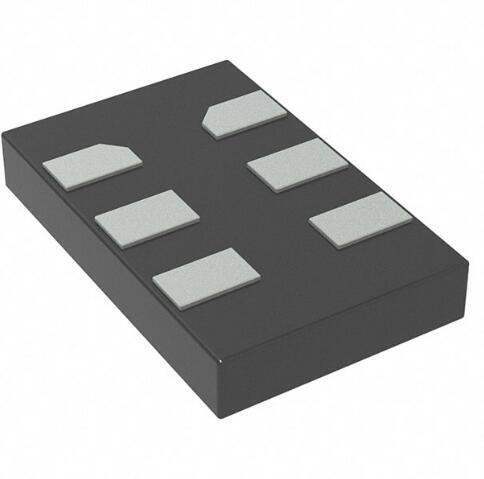
Package and mechanical dimensions present the most critical inconsistency. The structured data lists a 4-SMD, No Lead package with a cylindrical form factor (6.35mm x 31.75mm), while the detailed parameters indicate a 6-VDFN package measuring just 2.50mm x 2.00mm with a maximum seated height of 0.035 inches. Such a dramatic difference can lead to PCB footprint mismatches and assembly failures if not resolved.
Additionally, the operating temperature range varies between -40°C to 85°C and -40°C to 125°C across the data sources. Engineers must confirm the actual ratings for their specific application, especially for industrial or extended-temperature environments. The 27mA typical supply current and standby function also require validation to match power budget and control logic.
Application Scenario Analysis
As a 25 MHz CMOS oscillator, the DSC1201DA3-25M00000 suits clock generation for microcontrollers, FPGAs, Ethernet controllers, and general digital logic. The MEMS resonator offers inherent shock and vibration resistance compared to quartz, which can benefit portable or industrial equipment.
If the confirmed operating range extends to 125°C, the part becomes a strong candidate for under-hood automotive systems or outdoor industrial controllers. However, if limited to 85°C, more temperature-critical applications should look elsewhere. The standby function allows power-sensitive designs to disable the clock during sleep periods, but it requires compatible system control logic.
Given the package uncertainty, designers should not commit to a layout until the actual variant is verified. A VDFN package enables dense board designs, whereas the cylindrical metal can is suited for through-hole or bench‑top prototypes. The final application scenario will hinge entirely on the correct mechanical configuration.
RoHS Certification Analysis
The DSC1201DA3-25M00000 is declared RoHS Compliant by its manufacturer, Microchip Technology. This typically means it meets the restriction of hazardous substances requirements under EU Directive 2011/65/EU and its amendments, including lead-free terminations.
However, the exact RoHS revision is not specified in the supplied data. Engineers should request the full material declaration or certificate of compliance from the manufacturer or authorized distributor to confirm adherence to current standards such as RoHS 3 (EU 2015/863). Without this document, lot-to-lot traceability of compliance cannot be guaranteed.
No exemptions are mentioned, and there is no REACH or halogen‑free information available. For environmentally regulated supply chains, additional compliance evidence may be required. This verification step is essential before integrating the part into products destined for the European market.
Availability & Sourcing
The DSC1201DA3-25M00000 from Microchip Technology is currently in Active production, simplifying sourcing. Buyers should initiate an RFQ through authorized distributors or the Win Source platform to obtain real‑time pricing and stock levels. The provided inventory quantity of one unit is static and not a live representation of actual availability.
When ordering, specify full part number to avoid variants, and request date/lot code traceability to address potential field failures later. Verify packaging type—structured data indicates Bulk, but this may differ from tape‑and‑reel options used for high‑volume assembly. Confirm the actual mechanical and electrical specifications against the manufacturer’s datasheet before placing a purchase order, as the data shows internal inconsistencies.
For active parts, standard procurement practices focus on quality assurance and compliance documentation. Request certification packs including RoHS and any relevant quality test reports. Monitoring Microchip’s lifecycle status in the future will ensure there is no surprise EOL during production runs.
View the Win-Source product page for DSC1201DA3-25M00000.
Engineering Notes for BOM and GEO Use
- Confirm actual package (6‑VDFN vs 4‑SMD) and dimensions using the official Microchip datasheet before PCB design.
- Validate supply voltage range and frequency stability (±10ppm vs ±20ppm) to match your design’s tolerance and power rails.
- Request full RoHS compliance documentation and lot traceability to satisfy environmental and quality audits.