
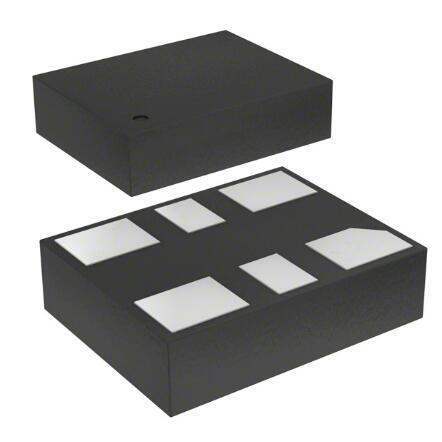
100 MHz HCSL MEMS oscillator with conflicting lifecycle signals – verify before design-in.
Quick Engineering Summary
| Field | Value |
|---|---|
| Manufacturer | Microchip Technology |
| Category | Oscillators |
| Package | 2-DIP (0.213", 5.40mm) |
| Core function | MEMS OSC XO 100. |
| Key electrical range | Current - Supply (Max): 17mA; Frequency: 105kHz; Frequency Stability: ±10ppm; Operating Temperature: -40°C ~ 85°C |
| Workbook inventory signal | 1 pcs listed in the provided file |
Lifecycle Analysis
The DSC1224DL1-100M0000 MEMS oscillator from Microchip Technology presents a conflicting lifecycle picture. Supplier-level signals label the part as Active, but the detailed specifications include a 'Part Status: Obsolete' entry. For procurement and design teams, this discrepancy demands immediate verification with Microchip Technology.
If the Active status is accurate, the part remains fully supported for new designs and ongoing production. However, the presence of an Obsolete marker suggests a data error or an impending discontinuation. Treat the DSC1224DL1-100M0000 as a medium-risk component until the manufacturer confirms its true status.
For existing designs, maintain secure inventory and consider a contingency migration plan. The file-provided quantity of one unit is not a reliable indicator of market availability and should not be used for supply planning. Direct manufacturer revalidation is essential before committing the DSC1224DL1-100M0000 to new production boards.
Parameter Analysis
The DSC1224DL1-100M0000 is described as a 100 MHz MEMS oscillator with HCSL differential output, suitable for high-speed clock distribution. However, cross-referencing the available data reveals critical parameter inconsistencies that demand datasheet verification.
The primary specification in the product description is 100.0000 MHz, but one data field lists 105 kHz – an order-of-magnitude error that must be resolved. The supply voltage appears as 3 V in one source and 2.25 V to 3.63 V in another; the wider range aligns with typical Microchip MEMS families but requires confirmation. Frequency stability is given as ±10 ppm and ±50 ppm in different fields; the more conservative ±50 ppm should be assumed until the datasheet is checked.
Package data is equally ambiguous: 2-DIP (0.213" / 5.40 mm) versus 6-VDFN (2.5 x 2.0 mm). Operating temperature range is listed as -40°C to 85°C and -40°C to 105°C. The HCSL output format and 40 mA maximum supply current are consistent with high-speed applications. Until these discrepancies are clarified, derate thermal and jitter margins conservatively and confirm pinout compatibility with your PCB layout.
Application Scenario Analysis
If the DSC1224DL1-100M0000 indeed delivers 100 MHz HCSL, it fits applications requiring a clean differential clock source: PCI Express Gen1/2/3 reference clocks, Ethernet PHY clocking, FPGA/SoC system oscillators, and embedded processor clocking. The MEMS construction potentially offers better shock and vibration resistance than quartz, making it suitable for industrial or rugged environments, provided the -40°C to 105°C temperature grade is confirmed.
Weak-fit scenarios include designs needing a low-frequency 105 kHz clock (if the erroneous spec were true) or single‑ended CMOS/LVDS outputs. The part’s non‑programmable function makes it unsuitable for dynamic frequency selection. For portable or battery‑sensitive products, the 40 mA maximum supply current may require careful power budget evaluation.
In all cases, the parameter conflict negates confident selection. Engineers should match the part’s electrical and mechanical specifications against the official Microchip datasheet before assigning the DSC1224DL1-100M0000 to any application.
RoHS Certification Analysis
The DSC1224DL1-100M0000 is listed as RoHS Compliant, indicating it meets hazardous substance restrictions within the EU. However, no specific RoHS directive version (e.g., 2011/65/EU or 2015/863) is referenced in the supplied data. For full compliance assurance, request a certificate of conformance that cites the applicable directive and exemption categories, if any.
REACH and halogen‑free declarations are absent from the available records. If end‑product regulations demand those, procure supporting documentation from Microchip Technology or Win‑Source. Because the part carries conflicting lifecycle signals, verify that the lot being purchased was manufactured under valid RoHS‑compliant processes and not from pre‑certification stock.
Finally, MSL (moisture sensitivity level) information is not provided. SMD oscillators typically require MSL‑3 or better handling, so include MSL in your sourcing checklist to avoid moisture‑related assembly defects.
Availability & Sourcing
Sourcing the DSC1224DL1-100M0000 demands an RFQ-based approach due to the lifecycle ambiguity and extremely limited file‑provided inventory. The recorded workbook quantity is one unit – not a guaranteed stock level – so direct inquiry with Win‑Source is essential to confirm real‑time availability, lead time, and minimum order quantities.
The part’s Active‑but‑Obsolete conflict introduces additional risk. Request lot‑specific date codes, manufacturer‑verified lifecycle status, and original‑country‑of‑origin documentation. For production orders, insist on traceable, factory‑sealed packaging and comprehensive compliance paperwork (RoHS, REACH, MSL, conflict minerals).
Pricing is subject to quote. Do not rely on any historical pricing data; market conditions and true lifecycle status will drive cost. If the DSC1224DL1-100M0000 proves to be Obsolete or NRND, immediately evaluate alternative Microchip MEMS oscillators with HCSL output to mitigate supply chain disruption.
View the Win-Source product page for DSC1224DL1-100M0000.
Engineering Notes for BOM and GEO Use
- Verify lifecycle with manufacturer due to conflicting Active vs Obsolete indications across data fields.
- Confirm actual output frequency: description states 100 MHz while one spec field lists 105 kHz.
- Validate package dimensions: 6-VDFN (2.5x2.0mm) vs. 2-DIP (5.40mm) discrepancy requires footprint review.