
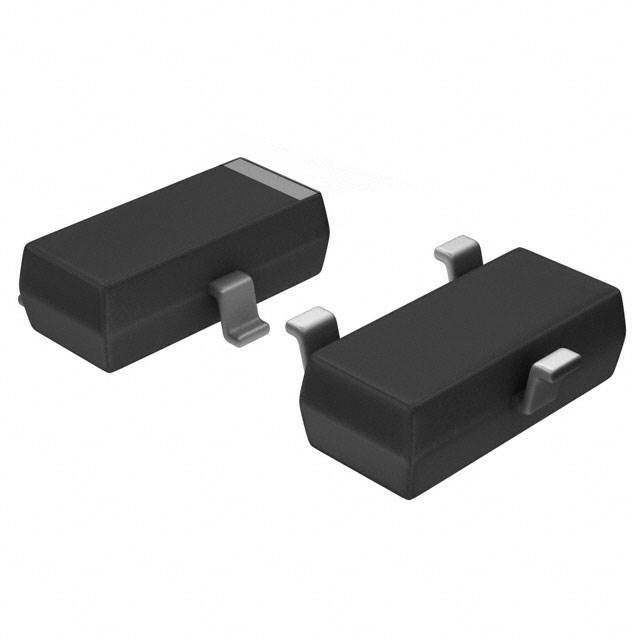
Reliable sourcing for DSC2001S0L, a common NPN BJT in SOT-23, with lifecycle caution and inventory insights.
Quick Engineering Summary
| Field | Value |
|---|---|
| Manufacturer | Panasonic |
| Category | Transistors (BJT) - Single |
| Package | Mini3-G3-B |
| Core function | TRANS NPN 50V 0. |
| Key electrical range | Collector Cut-off Current(Max): 100μA; Frequency - Transition: 150MHz; Maximum Current Collector: 100mA; Maximum Power Dissipation: 200mW |
| Workbook inventory signal | 9000 pcs listed in the provided file |
Lifecycle Analysis
The DSC2001S0L from Panasonic exhibits conflicting lifecycle signals, requiring conservative procurement planning. The internal Excel parameter indicates a '停止提供' (stop providing) status, which typically suggests an end-of-life or discontinued product, while the system-reported Lifecycle Status remains 'Active'. In such cases, engineers and buyers should treat the part as Not Recommended for New Designs (NRND). This means the DSC2001S0L may still be available for sustaining production but should not be designed into new platforms without explicit manufacturer confirmation.
Given the medium risk level, it is critical to contact Panasonic or authorized distributors to obtain the official product life cycle notice. Without verified active status, relying on the DSC2001S0L for long-term production could lead to supply disruptions. The part does appear in inventory data with a file-reported quantity of 9000 units, but this figure is not a real-time guarantee.
For existing designs, secure inventory and plan for a possible migration to an alternative NPN transistor. Review the manufacturer's PCN (Product Change Notification) system for any updates. The transition to a confirmed active replacement may be necessary to avoid production line stoppages.
Parameter Analysis
The DSC2001S0L is an NPN bipolar junction transistor from Panasonic, specified with a maximum collector-emitter voltage (Vceo) of 50V and a continuous collector current (Ic) of 100mA. These ratings position it for general-purpose low-power switching and amplification. The DC current gain (hFE) has a minimum of 290 at a test condition of 2mA collector current and 10V Vce, indicating high gain suitable for driving small loads or sensor interfaces. The saturation voltage Vce(sat) is specified at 300mV maximum at 10mA base current and 100mA collector current, which ensures efficient switching operation with low on-state losses.
The transition frequency (fT) of 150MHz allows the DSC2001S0L to be used in moderate-speed analog and digital circuits, though parasitic capacitances and layout must be considered. The maximum power dissipation is 200mW, and the junction temperature can reach 150°C, so thermal management is essential in compact SMD designs. The device comes in a Mini3-G3-B package, which is an SOT-23 compatible surface-mount form factor, making it easy to place on dense PCBs.
Key parameters missing from the provided data include the thermal resistance from junction to ambient (RθJA), safe operating area (SOA) curves, and complete hFE versus collector current characteristics. Engineers should consult the datasheet for these critical details, especially to ensure the part stays within safe limits under worst-case operating conditions. Verify that the actual gain meets the minimum requirement at your specific operating point, as hFE can vary significantly with current and temperature.
Application Scenario Analysis
As a common NPN transistor, the DSC2001S0L is well-suited for low-power switching applications such as driving LEDs, relays, or small motors where the 100mA collector current and 50V voltage rating are not exceeded. Its high hFE makes it ideal for signal amplification in audio preamplifiers, sensor interfaces, and current buffers where low base current drive is available. The 150MHz fT supports use in RF front-end stages or IF amplifiers if hFE roll-off is accounted for.
In battery-operated or portable devices, the 200mW dissipation and SOT-23 package allow compact layouts, but thermal design must respect the junction temperature limit. The DSC2001S0L can also serve as a level shifter or logic inverter in mixed-voltage systems, provided the input voltage and pull-up values are calculated correctly.
Weak-fit scenarios include high-current applications (beyond 100mA), high-voltage switching above 50V, or power management circuits where low saturation voltage at higher currents is required. Its conflicting lifecycle status makes it less attractive for new industrial or automotive designs where long-term availability is critical. While it may still be used in repair and maintenance of legacy equipment, any new product development should evaluate the manufacturer’s current production status before incorporating this device.
RoHS Certification Analysis
According to the provided data, the DSC2001S0L is RoHS Compliant. This typically indicates conformity with the EU RoHS directive (2011/65/EU) and its amendments, restricting hazardous substances such as lead, mercury, and cadmium. Panasonic, as the manufacturer, generally provides compliance documentation and material declarations for their components.
However, the data does not specify the exact RoHS version (e.g., RoHS 3 for EU 2015/863), nor is there explicit information regarding REACH compliance, halogen-free status, or moisture sensitivity level (MSL). It is important to note that REACH compliance is separate from RoHS; the presence of RoHS compliance does not automatically guarantee REACH compliance. Buyers should request the full material declaration and any relevant certificates when purchasing.
Lot-level consistency is not guaranteed; the RoHS status listed may be based on a family or typical rating. For high-reliability applications, request batch-specific test reports. When sourcing from non-authorized channels, especially given the 50% fake threat in the open market, compliance documentation verification becomes critical to ensure the parts meet environmental regulations and avoid import issues.
Availability & Sourcing
At the time this guide was prepared, file data indicated an inventory quantity of 9000 units of the DSC2001S0L, with a supply-and-demand status of 'Sufficient'. The part is classified as 'High' popularity and 'Common-used', suggesting regular demand. However, actual stock levels are dynamic and not guaranteed; the file-provided quantity should be treated as a snapshot, not a live inventory.
Given the conflicting lifecycle signals, sourcing this Panasonic NPN transistor requires extra diligence. The component is packaged in reels (TR) and requires dry storage and humidity protection per the storage condition note. The open-market fake threat is rated at 50%, so sourcing from authorized distributors or directly from Panasonic is strongly recommended. Request full traceability documentation, including date codes, lot codes, and certification of RoHS compliance.
For procurement teams, the recommended workflow is to submit a request for quote (RFQ) to verify current pricing and real-time availability. With the DSC2001S0L treated as NRND, it is prudent to evaluate existing inventories for sustaining production and to initiate a migration plan for new designs. If the part is still required, consider negotiating with suppliers for a last-time-buy arrangement, but only after confirming the official lifecycle status with Panasonic. Inventory management should account for the potential need to source from multiple reels or production dates to meet continuity needs.
View the Win-Source product page for DSC2001S0L.
Engineering Notes for BOM and GEO Use
- Verify the exact lifecycle status directly with Panasonic; the conflicting signals (active vs. discontinued) warrant a formal confirmation before using DSC2001S0L in new production.
- Given the 50% counterfeit risk, insist on full traceability and authorized distribution channels when sourcing this NPN transistor.
- The high typical gain (hFE min 290) is useful for low-current amplification, but always bench-verify gain at actual operating current and temperature to avoid saturation issues.