
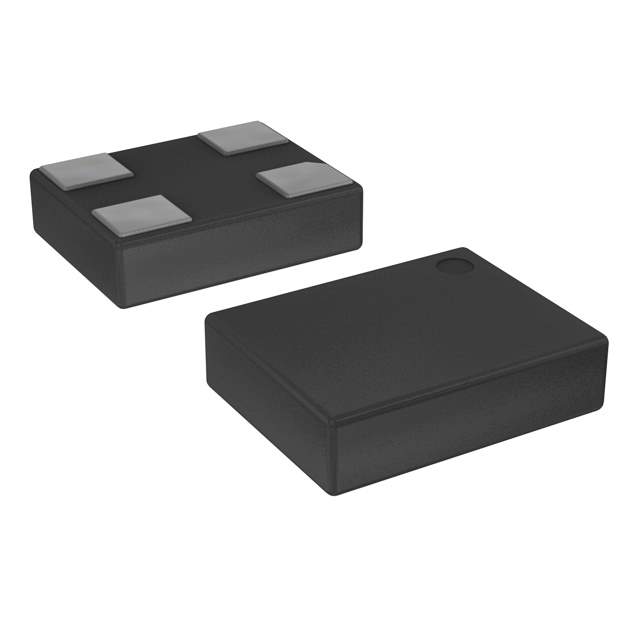
Microchip Technology MEMS Oscillator - 25MHz, CMOS Output, ±25ppm Stability
Quick Engineering Summary
| Field | Value |
|---|---|
| Manufacturer | Microchip Technology |
| Category | Oscillators |
| Package | Tube |
| Core function | MEMS OSC XO 25. |
| Key electrical range | Current - Supply (Max): 1.3mA (Typ); Frequency: 25 MHz; Frequency Stability: ±25ppm; Output: CMOS |
| Workbook inventory signal | 1 pcs listed in the provided file |
Lifecycle Analysis
The Microchip Technology DSC6001CI2A-025.0000 is a discontinued oscillator, carrying high procurement risk. Conflicting signals appear in the data: an EOL parameter and a Discontinued product status. These discrepancies require conservative interpretation; the part should be considered unavailable for new design. For sustaining production, existing stock may be used, but long-term availability is not assured.
Engineers and buyers must contact Microchip Technology or authorized distributors to confirm the official discontinuation notice and any last-time-buy windows. The file-provided inventory showing a single unit is not a real-time guarantee and may not reflect actual market availability. Without verified stock, qualifying an alternative oscillator is the prudent path.
This lifecycle status means that technical support, errata updates, and future reliability data are unlikely. Any purchase should include thorough authenticity checks, especially given the 56% fake threat level reported for this part in open channels.
Parameter Analysis
The DSC6001CI2A-025.0000 outputs a 25 MHz CMOS signal with ±25 ppm frequency stability over the full -40 °C to +85 °C range. The MEMS resonator provides inherent shock and vibration robustness compared to quartz, and the wide supply range of 1.71 V to 3.63 V allows use across varied rail voltages. Typical current consumption of 1.3 mA supports low-power designs.
For fit and layout, the 3.20 mm x 2.50 mm 4-SMD no-lead package keeps board area minimal. The AEC-Q100 rating implies rigorous qualification suitable for automotive environments. The enable/disable function can help reduce system power in sleep modes.
Missing from the provided data are phase noise, jitter specifications, and start-up time. These are critical for communication or high-speed digital applications and must be verified in the official Microchip datasheet before integrating any remaining stock. The exact load capacitance and drive strength should also be confirmed to ensure compatibility with downstream logic.
Application Scenario Analysis
The DSC6001CI2A-025.0000 fits automotive and industrial applications that require a reliable 25 MHz clock source with extended temperature tolerance. The AEC-Q100 qualification adds confidence for under-hood or in-cabin electronics such as infotainment, body controllers, or sensor interfaces. The MEMS technology suits vibration-prone environments like engine compartments.
In industrial automation, its wide voltage range and small footprint serve embedded controllers, PLCs, and motor drives. For consumer products like IoT devices or wearables that require 25 MHz, the low typical current extends battery life when combined with the enable/disable pin.
Weak-fit scenarios include high-speed telecom or data center equipment that demands ultra-low jitter typically not specified here. Without confirmed phase noise plots, using this oscillator in RF synthesizer or precision timing chains is risky. Redundant or safety-critical systems may require longer guaranteed lifetimes than a discontinued part provides.
RoHS Certification Analysis
The part is declared RoHS Compliant, meeting the restriction on hazardous substances. However, no specific directive version such as EU 2015/863 is noted in the source data, so a lot-level certificate should be requested from the supplier to confirm up-to-date compliance. The REACH Unaffected status and MSL Level 1 (unlimited floor life) simplify handling and regulatory documentation.
For a discontinued component, compliance assurance is especially important because remaining stock may have been manufactured under older revisions. Buyers should require a valid RoHS certificate tied to the actual date code being purchased. The MSL 1 rating indicates no special dry-pack requirements, reducing storage and handling complexity.
If the part is used in high-reliability or export-controlled assemblies, verify that the EAR99 classification aligns with end-use requirements, though it generally indicates no export license is needed.
Availability & Sourcing
As a discontinued Microchip Technology oscillator, availability of the DSC6001CI2A-025.0000 is extremely limited. The file-provided quantity shows a single unit, but this is not a real-time inventory check. Buyers should immediately request a quote to confirm current stock levels, date codes, and packaging (tube, standard package of 110 units).
For any offered stock, require traceability documentation, lot codes, and manufacturer certificates of conformance. With a 56% open-market fake threat, sourcing through unauthorized channels risks counterfeit or substandard parts. Even authorized sources may have minimal remaining inventory, so evaluate migration to an active series such as the DSC60XX family with similar specs.
Before committing to procurement for production, verify the official discontinuation notice and last-time-buy date directly with Microchip. For prototypes or repairs, available stock may suffice, but long-term plans should include qualification of a pin-compatible alternative to avoid future shortages.
View the Win-Source product page for DSC6001CI2A-025.0000.
Engineering Notes for BOM and GEO Use
- Verify manufacturer discontinuation notices and last-time-buy dates before committing to procurement.
- AEC-Q100 qualification suits automotive applications, but limited availability demands a migration plan for production.
- The 56 percent open-market fake threat makes authorized sourcing essential for component reliability.