
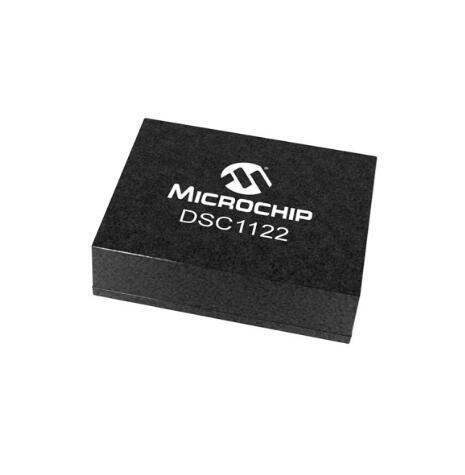
MEMS oscillator with ultra-low power, compact 4-VFLGA package.
Quick Engineering Summary
| Field | Value |
|---|---|
| Manufacturer | Microchip Technology |
| Category | Oscillators |
| Package | Not available in supplied data |
| Core function | MEMS OSCILLATOR, ULTRA LOW POWER |
| Key electrical range | Frequency: 7GHz ~ 16GHz; Frequency Stability: ±20ppm @ 25°C; Operating Temperature: -40°C ~ 85°C; Output: Ethernet |
| Workbook inventory signal | 1 pcs listed in the provided file |
Lifecycle Analysis
The DSC6001HI2B-002.0800T presents a conflicting lifecycle picture. The lifecycle status field indicates Active, but a separate data field lists Part Status as Obsolete. This discrepancy demands immediate clarification from Microchip Technology before committing to a design. In procurement, assume a medium risk until official confirmation is obtained.
If the part is indeed Active, it remains suitable for new designs and ongoing production. However, if it is Obsolete, any new design using the DSC6001HI2B-002.0800T would carry substantial risk. Engineers should secure a written lifecycle statement from the manufacturer or authorized distributors.
The file-provided inventory shows a quantity of one unit, which is not a real-time guarantee and should not be relied upon for production planning. Obtain confirmed availability and lead times through a formal RFQ before finalizing sourcing decisions. Always verify the lifecycle directly with Microchip to avoid supply chain disruptions.
Parameter Analysis
The DSC6001HI2B-002.0800T's most critical parameter is its output frequency. While one source lists a range of 7 GHz to 16 GHz, the part number and typical MEMS oscillator characteristics indicate a much lower frequency of 2.08 MHz. Engineers must verify the exact frequency from the official Microchip datasheet or by measurement before integration. A misunderstanding here could render the timing solution non-functional.
Frequency stability is specified at ±25 ppm at 25°C, which is suitable for many consumer and industrial applications but may require additional verification for wide-temperature-range stability. The operating temperature range of -40°C to 85°C provides industrial-grade robustness. Supply voltage is listed as 3V in one source and as a range of 1.71V–3.63V in another; the wider range is more consistent with Microchip's typical supply flexibility.
Key parameters not provided include phase noise, startup time, and aging characteristics, all of which are essential for high-reliability designs. The output is described as CMOS (from the Excel row) or Ethernet (from the specs list). Given the low frequency, CMOS output is the likely actual type. The 4-VFLGA package with dimensions 1.6 mm x 1.2 mm demands careful PCB layout for signal integrity. Verify the solder pad pattern and reflow profile from the manufacturer's documentation.
Application Scenario Analysis
The DSC6001HI2B-002.0800T, if operating at 2.08 MHz, fits well into low-power, battery-operated devices such as IoT sensors, wearables, and portable medical equipment. Its ultra-low power consumption, combined with the small 4-VFLGA footprint, supports space-constrained designs where every millimeter and microamp count.
Given its ±25 ppm stability and industrial temperature range, the oscillator is suitable for consumer electronics, industrial control modules, and automotive sub-systems that do not demand the highest precision. It can serve as a clock source for microcontrollers with modest timing requirements. However, it would be a weak fit for high-speed data converters, RF transceivers, or telecom infrastructure, where jitter performance and higher frequencies are critical.
If the higher frequency range (7–16 GHz) were accurate, the device would target RF and microwave applications, but this conflicts fundamentally with the MEMS architecture and part numbering convention. Engineers should cross-check the intended frequency against system requirements to avoid a mismatch.
RoHS Certification Analysis
The DSC6001HI2B-002.0800T is listed as RoHS Compliant, indicating compliance with the Restriction of Hazardous Substances directive. This status generally aligns with EU RoHS 2 (2011/65/EU) and the amending RoHS 3 (EU 2015/863), which restricts substances like lead, mercury, and cadmium. However, no specific standard version is provided, so engineers should confirm it meets the latest RoHS 3 requirements if the end product is destined for the EU market.
No information on REACH, halogen-free, or MSL (Moisture Sensitivity Level) is supplied. Compliance may be on a family-level or part-number basis, and lot-to-lot variation is possible. For high-reliability applications, request a Certificate of Compliance (CoC) for each shipment to ensure the parts adhere to the required environmental standards.
If the oscillator contains any exemptions (e.g., lead in glass or ceramics), they would be noted in the manufacturer's declaration. Since the data only states 'RoHS Compliant' without exemption details, assume none unless otherwise specified, but verify during qualification.
Availability & Sourcing
Prospective buyers of the DSC6001HI2B-002.0800T should initiate a Request for Quote (RFQ) to obtain current stock levels, pricing, and lead times. The provided data indicates a file-recorded quantity of one unit, which is not a live inventory count and may not reflect actual market availability. Given the conflicting lifecycle signals, verifying the part's status is the first step before procurement.
When ordering, specify any required date or lot codes to ensure traceability, especially if the part is used in regulated industries. The part comes in a 4-VFLGA surface-mount package and is typically supplied in tape-and-reel (TR) format, as indicated in the Excel data, though bulk packaging is also mentioned. Confirm packaging with the distributor to match your assembly process.
If the DSC6001HI2B-002.0800T is confirmed active, request compliance certificates and negotiate with authorized distributors for the best support. If it is found to be obsolete or NRND, immediately evaluate alternative Microchip MEMS oscillators or other brands to mitigate supply chain risk. Given the potential for limited stock, plan for last-time buy opportunities if needed.
View the Win-Source product page for DSC6001HI2B-002.0800T.
Engineering Notes for BOM and GEO Use
- Verify the exact frequency before design-in: datasheet lists 2.08 MHz, but some sources show 7–16 GHz range.
- Clarify lifecycle status directly with Microchip; conflicting data suggests potential obsolescence.
- Request lot-level RoHS and REACH certificates when ordering, especially for high-reliability applications.