
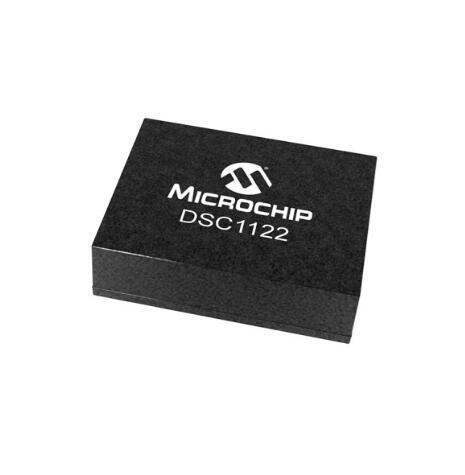
Low-power MEMS oscillator from Microchip for industrial and IoT applications.
Quick Engineering Summary
| Field | Value |
|---|---|
| Manufacturer | Microchip Technology |
| Category | Oscillators |
| Package | 56-VFQFN Exposed Pad, CSP |
| Core function | OSC MEMS LOW PWR SMD |
| Key electrical range | Current - Supply (Max): 17mA; Frequency: 50 MHz ~ 3 GHz; Frequency Stability: ±20ppm @ 25°C; Operating Temperature: -40°C ~ 85°C |
| Workbook inventory signal | 1 pcs listed in the provided file |
Lifecycle Analysis
The DSC6001MI2B-027.0000T from Microchip Technology presents conflicting lifecycle signals. One source lists the part as Active, while another indicates Obsolete. This discrepancy introduces high procurement risk.
For new designs, engineers should obtain written confirmation from Microchip or authorized distributors before proceeding. For sustaining production, secure inventory and evaluate migration options. The file-provided inventory of 1 unit does not guarantee availability.
Verify lifecycle status and any last-time buy notices before committing to production volumes.
Parameter Analysis
Key parameters for the DSC6001MI2B-027.0000T include a 27 MHz frequency, ±25 ppm frequency stability, and a low typical supply current of 1.3 mA. The CMOS output supports 1.71 V to 3.63 V operation, with an operating temperature range of -40°C to +85°C.
These characteristics suit low-power, space-constrained designs. However, the source data shows package discrepancies: 56-VFQFN versus 4-VFLGA (2.0 mm x 1.6 mm). Engineers must consult the official Microchip datasheet to confirm the correct package and footprint.
Additional specs such as phase noise, startup time, and aging are not provided in this data set and should be verified for critical timing applications.
Application Scenario Analysis
This low-power MEMS oscillator is well-suited for battery-operated devices such as IoT sensors, wearable electronics, and portable medical instruments where 27 MHz is a common clock frequency. Its small footprint and low supply current extend battery life.
It can also serve in industrial controls and consumer electronics that require a stable CMOS clock. However, it is not ideal for applications demanding ultra-low phase noise or high-frequency clocking above its rated output.
The enable/disable function adds power-saving capability for duty-cycled systems. Designers should match the supply voltage range to their system rail and verify the stability over the full temperature range for their specific environment.
RoHS Certification Analysis
The DSC6001MI2B-027.0000T is listed as RoHS Compliant, likely meeting EU RoHS Directive 2015/863 (RoHS 3). No specific exemption information is provided.
For procurement, request the manufacturer's RoHS certificate or test report to ensure lot-level compliance, especially if your product must meet other regional regulations. REACH status is not indicated and must be confirmed separately if required.
Availability & Sourcing
Given conflicting lifecycle signals—Active versus Obsolete—availability of the DSC6001MI2B-027.0000T is uncertain. The file-provided quantity of 1 unit is a snapshot, not a real-time guarantee.
Engineers and buyers should request a quote to check current stock and lead times. Insist on manufacturer traceability documentation, date/lot codes, and official lifecycle verification before order placement.
For high-volume production, consider evaluating alternative parts if the device is proven obsolete. Contact a sourcing specialist to secure inventory and negotiate supply continuity.
View the Win-Source product page for DSC6001MI2B-027.0000T.
Engineering Notes for BOM and GEO Use
- Verify package type and electrical characteristics with the official datasheet due to conflicting source data (56-VFQFN vs 4-VFLGA).
- The low typical supply current of 1.3 mA makes this MEMS oscillator suitable for battery-powered and portable applications.
- Confirm lifecycle status directly with Microchip before incorporating into new production designs, as conflicting signals exist.