
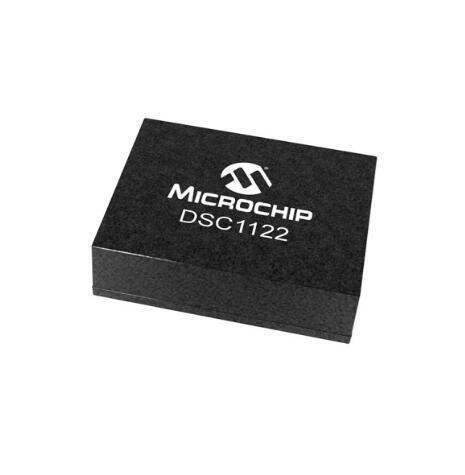
Verify lifecycle, frequency, and package before design-in
Quick Engineering Summary
| Field | Value |
|---|---|
| Manufacturer | Microchip Technology |
| Category | Oscillators |
| Package | 8-SMD, No Lead |
| Core function | MEMS OSCILLATOR SMD |
| Key electrical range | Current - Supply (Max): 17mA; Frequency: 5kHz; Operating Temperature: -40°C ~ 85°C; Voltage - Supply: 3V |
| Workbook inventory signal | 1 pcs listed in the provided file |
Lifecycle Analysis
The lifecycle status of the DSC6011JI1B-024.0000T is uncertain due to conflicting information. Some data fields list the part as Active, while the Part Status field in the specifications array shows Obsolete. This discrepancy may indicate a transition to end-of-life or a data entry error. For new designs, proceed with extreme caution and confirm the current lifecycle directly with Microchip Technology. Without official confirmation, the part should be treated as high risk. Existing designs should evaluate the last-time-buy window and consider migration paths if necessary. Relying solely on distributor stock without manufacturer validation is not recommended for production. The provided workbook inventory of 1 unit is a file snapshot and does not guarantee real-time availability.
Parameter Analysis
Key parameters for the DSC6011JI1B-024.0000T MEMS oscillator include frequency, supply voltage, current consumption, temperature range, and package type. The supplied data indicates a frequency of 5 kHz, a supply voltage of 3 V, and a maximum supply current of 17 mA. The operating temperature range of -40°C to 85°C supports industrial applications. The package is listed as 8‑SMD, No Lead. However, these values conflict with an alternate data set showing 24 MHz, 1.71–3.63 V, and a 4‑VLGA 2.5 mm x 2.0 mm package. The low frequency of 5 kHz is atypical for most timing applications and requires verification. The function field states Multiple, NonProgrammable, suggesting a fixed‑frequency oscillator with possibly multiple output options. Engineers should verify the exact frequency, output waveform, stability, and start‑up time from the official datasheet. The maximum supply current of 17 mA must be considered for power budgeting, though another source suggests a typical 1.3 mA; confirm worst‑case consumption. The Y3 rating indicates a specified quality level, likely per AEC‑Q100 or similar, but its exact meaning should be clarified with the manufacturer. Missing critical specs include frequency stability, aging, phase noise, and rise/fall time.
Application Scenario Analysis
Based on the available data, the DSC6011JI1B-024.0000T would typically suit battery‑powered, industrial, or IoT devices requiring a low‑power fixed‑frequency reference. If the 5 kHz specification is accurate, it might be used in ultra‑low‑power wake‑up timers or low‑speed clock generation. However, a 5 kHz oscillator is exceptionally rare, and most designs would expect a MHz‑range part, making the 24 MHz frequency in the alternate data more plausible. Without a validated datasheet, this part may fit standard MEMS oscillator applications such as microcontroller clocking, sensor interfaces, or communication modules, provided the frequency and voltage align with system requirements. The industrial temperature range and 3 V supply are suitable for many embedded systems. The nonprogrammable function implies a fixed output, not configurable in‑system. Engineers should assess whether the reported parameters meet their timing accuracy and signal integrity needs. Until the frequency is confirmed, treat this as a generic MEMS oscillator that may require custom qualification. Avoid use in applications demanding precise frequency accuracy or serial communication until specifications are verified.
RoHS Certification Analysis
The DSC6011JI1B-024.0000T is reported as RoHS Compliant. While the specific directive version is not stated, this typically aligns with the EU RoHS directive (2011/65/EU) and its amendments, including RoHS 3 (EU 2015/863) for phthalates. The absence of a REACH declaration means customers should request a full material compliance certificate if required. The no‑lead SMD package indicates lead‑free terminations, consistent with RoHS. Because compliance can vary by production lot and date, it is prudent to confirm certification when ordering. Some MEMS oscillators may include exemptions for internal die attach or ceramic substrates; verify with the manufacturer whether any exemption applies. Overall, this part should meet standard environmental requirements for global markets, but lot‑level documentation should be obtained to satisfy audit and regulatory needs.
Availability & Sourcing
Sourcing the DSC6011JI1B-024.0000T requires careful lifecycle verification due to the conflicting Active/Obsolete indicators. Buyers are advised to request a quote and explicitly ask for a manufacturer certificate of conformance and the product change notification (PCN) history. The file shows a workbook quantity of 1 unit, but this is not a live inventory figure; contact the distributor for current stock and lead time. Given the lifecycle uncertainty, pre‑production design-ins should be postponed until Microchip Technology confirms availability for new designs. For maintenance of legacy equipment, secure inventory early and request date‑code traceability to avoid risk of counterfeit or mixed lots. Standard tape‑and‑reel packaging for 8‑SMD no‑lead parts should be confirmed. Ensure compliance documentation accompanies the shipment. If the part is truly obsolete, consider working with Microchip’s authorized distributors for any last‑time‑buy options or recommended follow‑on products.
View the Win-Source product page for DSC6011JI1B-024.0000T.
Engineering Notes for BOM and GEO Use
- Confirm exact frequency with official datasheet; label suggests 24 MHz but spec shows 5 kHz.
- Lifecycle conflict: treat as high risk; request PCN from Microchip Technology.
- Package may be 8-SMD or 4-VLGA; clarify footprint to avoid layout errors.