
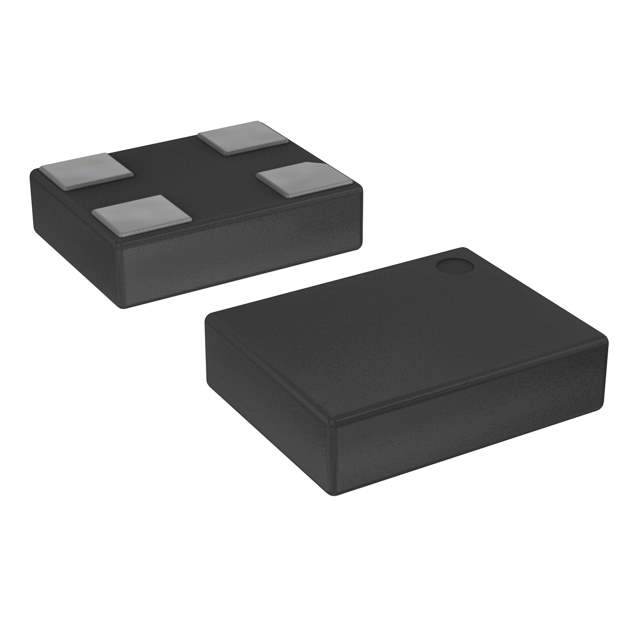
Discontinued Microchip MEMS Pin-Configurable Oscillator
Quick Engineering Summary
| Field | Value |
|---|---|
| Manufacturer | Microchip Technology |
| Category | Pin Configurable/Selectable Oscillators |
| Package | Tube |
| Core function | MEMS OSC XO 1. |
| Key electrical range | Current - Supply (Max): 1.3mA (Typ); Frequency - Output 1: 25Mhz, 50MHz; Frequency Stability: ±25ppm; Output: CMOS |
| Workbook inventory signal | 1 pcs listed in the provided file |
Lifecycle Analysis
The DSC6021CI2A-009T is officially discontinued by Microchip Technology, with lifecycle status listed as Discontinued in both product status and lifecycle fields. Conflicting signals indicate an earlier EOL designation, but the most conservative interpretation treats this part as no longer in active production. For new designs, this renders the device unsuitable, as long-term supply cannot be assured. For existing applications that still require this specific oscillator, procurement should verify any last-time-buy windows and assess remaining inventory levels with authorized sources.
The file-provided inventory quantity of a single unit should not be considered guaranteed real-time availability; stock levels change rapidly for discontinued parts. Engineers must recognize that sustaining production with a discontinued part introduces high supply risk, including potential need for redesign or accepting unvalidated alternate sources. Without manufacturer support, failure analysis and quality guarantees become limited.
A formal lifecycle revalidation with Microchip or an authorized distributor is recommended before committing to any production volume. The high risk level also necessitates exploring a pin-compatible or functionally equivalent replacement, though none are provided in this data. Any decision to use this part should be accompanied by a clear risk mitigation plan, including buffer stock and a timeline for migration.
Parameter Analysis
Key parameters for the DSC6021CI2A-009T include its configurable dual frequency output of 25 MHz and 50 MHz, a typical supply current of 1.3 mA, and a supply voltage range from 1.71 V to 3.63 V. The oscillator achieves a frequency stability of ±25 ppm over an industrial temperature range of -40 °C to 85 °C, making it suitable for moderate-precision timing. The CMOS output ensures compatibility with standard digital logic, and the tiny 3.20 mm × 2.50 mm 4-VDFN package with a 0.90 mm height enables dense PCB layouts.
The MEMS resonator technology typically offers good shock and vibration resistance, but the datasheet does not provide specifics on phase noise, jitter, or start-up time, which are critical for high-speed interfaces or noise-sensitive analog circuits. Engineers should verify these missing parameters directly from the manufacturer’s datasheet if precise timing performance is required. The typical current draw is specified but maximum current under worst-case conditions is not provided; this lack of data complicates power budget analysis.
Similarly, rise/fall times and output drive strength are not included, which may affect signal integrity in long traces or high-capacitance loads. The maximum reflow compatibility is indicated by MSL Level 1, but PCB attachment guidelines should still be reviewed. Overall, the oscillator’s core specifications fit many general-purpose applications, but any detailed design-in must account for the documented incomplete parameter coverage.
Application Scenario Analysis
This pin-configurable oscillator is well-suited to applications requiring two distinct clock frequencies in a small footprint. Typical use cases include IoT endpoints, wearable devices, and portable consumer products where board space is constrained and a dual-output oscillator eliminates the need for multiple timing components. The 25 MHz and 50 MHz outputs can serve as clock sources for microcontrollers, wireless modules, or Ethernet PHYs, and the wide supply voltage range simplifies single-cell Li-Ion or multi-rail system integration.
However, the discontinued status makes the DSC6021CI2A-009T a poor choice for any new production program; it should only be considered for legacy system maintenance where a redesign is not feasible. The part lacks explicit automotive or military-grade qualification, and the missing phase noise specification suggests it may not meet the stringent jitter requirements of high-speed SerDes or precision RF applications. For industrial environments, the -40 °C to 85 °C temperature range covers most needs, but the absence of an extended rating may exclude outdoor extreme-condition deployments.
Given the 58% fake threat in the open market, applications in safety-critical or high-reliability systems should avoid this part unless procured through fully traceable channels and subjected to authentication testing. In summary, the oscillator’s strong fit is for space-constrained, general-purpose dual-clock designs, but its weak fit arises from the high supply risk and missing advanced performance data.
RoHS Certification Analysis
The DSC6021CI2A-009T is declared RoHS Compliant, indicating adherence to the restriction of hazardous substances including lead, mercury, cadmium, and others. This compliance is typically confirmed at the part family level, and the specific lot purchased should be verified for ongoing conformity, especially since the device is discontinued and older stock may not reflect current exemptions. No specific RoHS exemptions are listed, suggesting the material composition meets the standard without special allowances.
In addition, the part is REACH Unaffected, meaning it does not contain substances of very high concern in concentrations above the threshold, which supports EU market entry. However, REACH compliance does not substitute for RoHS; both certifications should be checked when importing. The MSL Level 1 (Unlimited) indicates no moisture sensitivity concerns, simplifying handling and reflow processes.
The available data does not mention halogen-free status or extended environmental compliance such as conflict minerals reporting. For full documentation, request the manufacturer’s Certificate of Compliance and material declarations. Because the part is obsolete, lot-level RoHS compliance can differ from the original family rating, so a detailed incoming inspection is advisable for high-value or regulated applications.
Availability & Sourcing
Obtaining the DSC6021CI2A-009T is challenging due to its Discontinued status and the file-provided quantity of just one unit. This small inventory snapshot is not real-time, and actual stock may differ substantially across distributors. A high fake threat of 58% in the open market further complicates sourcing, necessitating traceability and authentication when buying from non-authorised channels.
To secure genuine components, procurement teams should initiate a request for quote (RFQ) through authorized Microchip distributors or reputable independent sources that offer third-party inspection. Specify the full part number and request documentation including date/lot codes and certificates of conformance. Since the standard package is a tube with 110 units, small lot purchases may be feasible, but minimum order quantities can vary.
Given the high lifecycle risk, it is essential to verify the manufacturer’s latest notice regarding any remaining last-time-buy programs or potential substitutes. Do not rely solely on inventory signals; direct communication with Microchip or its representatives can prevent production line stops. If no authorized stock is available, consider redesigning with an active alternative, as sustained supply cannot be guaranteed. The sourcing strategy should emphasize risk mitigation: secure enough stock for expected lifetime needs while validating a migration path in parallel.
View the Win-Source product page for DSC6021CI2A-009T.
Engineering Notes for BOM and GEO Use
- This discrete oscillator is discontinued; verify last-time-buy availability and migration path with Microchip before committing to new production.
- The dual-frequency MEMS device offers 25 MHz and 50 MHz outputs; ensure jitter and phase noise meet system requirements by consulting the full datasheet.
- With a reported 58% fake threat in the open market, procurement should authenticate components via authorized distributors or rigorous inspection.