
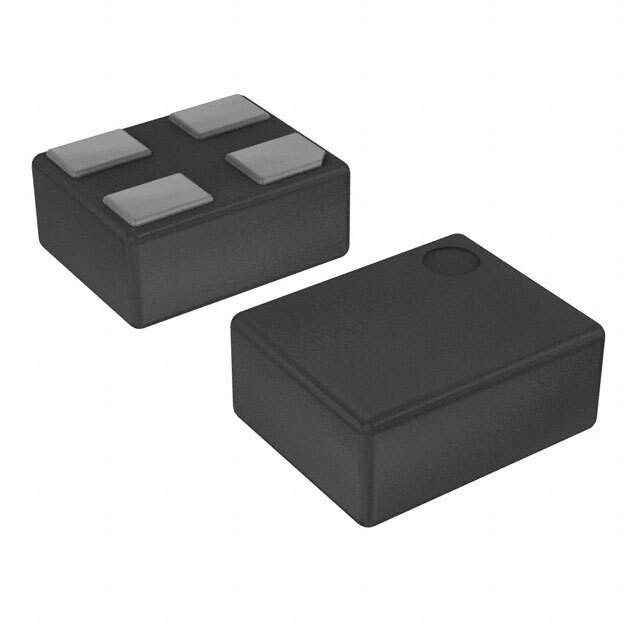
Discontinued Microchip pin-configurable oscillator with dual output frequencies of 24MHz and 27MHz.
Quick Engineering Summary
| Field | Value |
|---|---|
| Manufacturer | Microchip Technology |
| Category | Pin Configurable/Selectable Oscillators |
| Package | Bag |
| Core function | MEMS OSC XO 1. |
| Key electrical range | Current - Supply (Max): 1.3mA (Typ); Frequency - Output 1: 24MHz, 27MHz; Frequency Stability: ±50ppm; Output: CMOS |
| Workbook inventory signal | 1 pcs listed in the provided file |
Lifecycle Analysis
The DSC6021MI1A-0050 is discontinued by Microchip Technology. All available lifecycle signals—Excel lifecycle parameter (EOL), Lifecycle Status (Discontinued), and Product Status (Discontinued)—confirm the part is no longer in active production. No conflict exists; the device is end-of-life. The risk level is high for new designs, as no future supply is guaranteed. Engineers should avoid specifying this part in new projects.
For existing products that require this oscillator, procurement must center on securing residual stock through authorized channels. The source data includes a file-provided inventory quantity of 1, but this is not a real-time promise. Before committing to production, verify directly with Microchip or an authorized distributor whether any last-time-buy inventory remains. Without a formal last-time-buy notice, available stock may be eroded quickly.
Documentation verification is critical. Obtain the official Microchip discontinuation notice and product change notification (PCN) to confirm the final order date and alternative recommendations. Since the part is discontinued, no further design-in support or qualification updates should be expected. Plan a migration path to a newer DSC series MEMS oscillator or an equivalent pin-configurable solution.
Parameter Analysis
The DSC6021MI1A-0050 is a MEMS-based XO (standard oscillator) with CMOS output. Key parameters include dual output frequencies of 24MHz and 27MHz, selected by pin configuration. The supply voltage range is wide, from 1.71V to 3.63V, accommodating low-voltage logic and battery-powered designs. Maximum supply current is specified as 1.3mA typical, indicating low power consumption. Frequency stability is ±50ppm over the industrial temperature range of -40°C to 85°C, which is suitable for many embedded applications but may be marginal for high-precision timing.
The MEMS resonator provides inherent shock and vibration resistance, a distinct advantage over quartz crystal oscillators in harsh environments. The package is a 4-VFLGA with compact dimensions of 2.00mm x 1.60mm and a low profile of 0.89mm, making it ideal for space-constrained PCB layouts. The MSL 1 rating simplifies assembly and shelf-life management.
Missing from the source data are several performance parameters essential for some applications: phase noise/jitter specifications, rise/fall times, duty cycle, enable/disable function (if any), aging, and start-up time. For timing-sensitive designs, engineers should retrieve the full datasheet from Microchip to verify these values and ensure compatibility. In particular, jitter performance is critical for high-speed serial interfaces and precision clock trees.
Application Scenario Analysis
The DSC6021MI1A-0050 is well matched to compact, low-power embedded systems where dual clock frequencies are needed from a single component. Strong-fit applications include IoT sensor nodes, wearable devices, handheld instruments, and microcontroller-based designs that require both a system clock and a peripheral clock (e.g., 24MHz and 27MHz). Its MEMS construction gives it an edge in automotive cabin electronics or industrial monitoring where mechanical robustness matters, provided no AEC-Q100 qualification is required (not indicated).
The wide operating voltage range supports direct connection to batteries (e.g., dual AA, Li-ion) or 1.8V/3.3V logic rails, reducing the need for level shifting. The industrial temperature range covers most consumer and industrial environments. However, the ±50ppm stability may be too loose for precision timing such as synchronous Ethernet or GPS-disciplined references.
Weak-fit scenarios include high-speed data converters or FPGAs demanding ultra-low jitter, as phase noise figures are not provided. Applications that rely on an enable/disable function should verify its availability in the datasheet, because the source data does not list this feature. Since the part is discontinued, it should only be considered for legacy production support, not new designs. Enginners should migrate to active Microchip DSC series devices for new projects.
RoHS Certification Analysis
The DSC6021MI1A-0050 is documented as RoHS Compliant in the source data, which typically indicates conformity with EU RoHS Directive 2011/65/EU and its amendments. No specific standard version (e.g., RoHS 3 EU 2015/863) is cited, so verification of the latest compliance status is recommended. The REACH status is listed as Unaffected, meaning no SVHCs above threshold are present, but this does not substitute for RoHS conformity.
Given the part’s discontinued status, the RoHS declaration may date from its active production period. Any stock purchased on the open market should be accompanied by a current certificate of compliance for that specific lot. Request documentation showing RoHS and REACH status from the supplier.
Additionally, the part is rated MSL 1 with unlimited floor life, which eliminates moisture sensitivity concerns during PCB assembly and storage. No exemptions (e.g., lead in solders) are noted in the available data. For safety-critical applications, consider requesting full material content declaration to satisfy internal compliance procedures.
Availability & Sourcing
As a discontinued Microchip oscillator, the DSC6021MI1A-0050 faces extremely limited availability. The source data shows a file-provided quantity of 1, but this is not a real-time stock level and does not guarantee immediate purchase. Engineers and buyers must submit a request for quote (RFQ) to verify current inventory, packaging (bag, not tape/reel), and lead time.
Sourcing for a discontinued part carries elevated counterfeit risk, with the source data indicating a 39 percent fake threat in the open market. To mitigate this, purchase only from Microchip authorized distributors or strictly vetted independent suppliers. Request traceability documentation, including date/lot codes and manufacturer certificate of conformance. Insist on full compliance paperwork (RoHS, REACH) for the specific lot.
For long-term production planning, locate any official Microchip last-time-buy notification or PCN. Without it, the residual supply may be depleted unpredictably. Consider engineering a drop-in replacement using a newer Microchip DSC6xxx series MEMS oscillator with similar footprint and parameters. Engage with Microchip field applications to validate a migration path. This part should not be designed into new products, and any legacy use must be supported by a carefully vetted buffer stock.
View the Win-Source product page for DSC6021MI1A-0050.
Engineering Notes for BOM and GEO Use
- Verify remaining stock from authorized distributors; the part is discontinued with only limited file-provided inventory shown, so traceability and lot codes must be validated to avoid counterfeits (39% fake threat indicated).
- Confirm voltage supply range (1.71V–3.63V) and output frequencies match your requirements; if redesign is planned, evaluate newer Microchip DSC series or alternative MEMS oscillators.
- The MSL 1 rating simplifies handling, but review the 4-VFLGA footprint and ±50ppm stability for compatibility with existing PCB designs.