
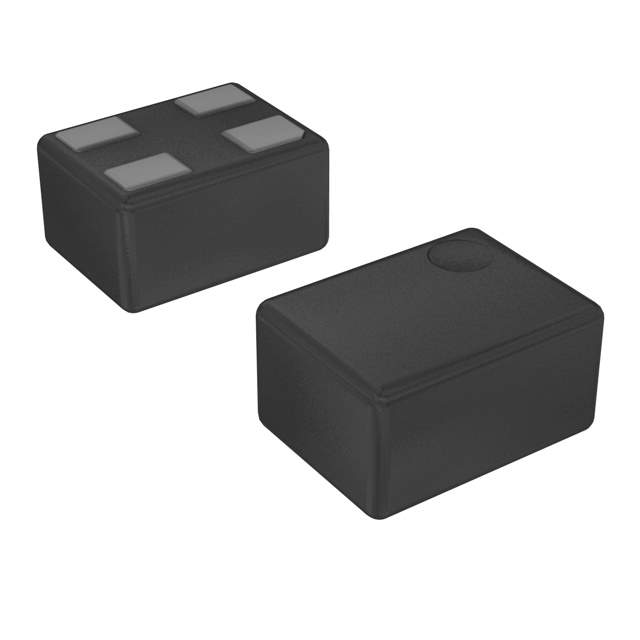
MEMS Pin Configurable Oscillator – Discontinued, Source with Caution
Quick Engineering Summary
| Field | Value |
|---|---|
| Manufacturer | Microchip Technology |
| Category | Pin Configurable/Selectable Oscillators |
| Package | Tape & Reel |
| Core function | MEMS OSC XO 1. |
| Key electrical range | Current - Supply (Max): 1.3mA (Typ); Frequency - Output 1: 20MHz, 25MHz; Frequency Stability: ±25ppm; Output: CMOS |
| Workbook inventory signal | 1 pcs listed in the provided file |
Lifecycle Analysis
The DSC6023HI2A-00A4T is confirmed Discontinued by Microchip Technology, with signals also showing an earlier EOL transition. This is a high-risk status for procurement: the part is no longer manufactured and unsupported for future designs. Any available inventory is limited to residual stock, which may be subject to date code, lot code, and authenticity concerns.
For sustaining production, this discontinuation means you must immediately evaluate migration to an active replacement. Using this part in new designs is strongly discouraged. If you must procure it, treat every purchase as a last-time buy. Cross-reference the manufacturer’s product change notification (PCN) and end-of-life notice to understand the last shipment date and any recommended alternatives.
A file‑provided inventory quantity of 1 is not a real‑time guarantee. Contact the supplier to confirm actual stock, date/lot codes, and traceability before placing orders.
Parameter Analysis
The DSC6023HI2A-00A4T is a MEMS‑based standard oscillator with two configurable output frequencies: 20 MHz and 25 MHz. The CMOS output and wide supply voltage range of 1.71 V to 3.63 V make it suitable for low‑power and battery‑operated designs. Frequency stability is ±25 ppm over the full industrial temperature range of -40 °C to +85 °C, which covers most embedded and IoT environments.
Current consumption is specified as 1.3 mA typical, although no maximum is given; designers should verify worst‑case draw from the manufacturer datasheet to size power budgets and ensure thermal margins. The tiny 1.60 x 1.20 x 0.89 mm 4‑VFLGA package enables dense PCB layouts but requires precision reflow soldering. MSL 1 is beneficial for long shelf life before assembly.
Missing datasheet parameters that procurement and engineering should confirm include phase jitter, startup time, output load capability, and long‑term aging. Without these, exact performance in timing‑critical applications cannot be fully characterized. Request the full Microchip DSC60XX datasheet before finalizing a design‑in or last‑time buy.
Application Scenario Analysis
Given its small footprint, low typical current, and industrial temperature range, the DSC6023HI2A-00A4T fits well in portable and space‑constrained embedded systems. The dual frequency selection (20/25 MHz) suits processor clocks, microcontroller timing, and wireless connectivity modules where a single oscillator can cover multiple frequency needs via pin configuration.
Strong‑fit scenarios include wearables, sensor nodes, handheld meters, and IoT edge devices that require a compact, low‑power clock source. However, because the part is discontinued, these use cases are only viable for maintenance of existing designs or aftermarket repairs. For new designs, the same application requirements can be met with an active MEMS oscillator from Microchip or an alternative supplier.
Weak‑fit scenarios include high‑reliability applications demanding low‑phase‑noise or tight jitter specifications, as the datasheet does not provide guaranteed noise figures. Also, designs requiring a single, fixed frequency may find more optimized and cost‑effective active solutions. Always consult the original datasheet and manufacturer application notes before committing to this part.
RoHS Certification Analysis
The DSC6023HI2A-00A4T is marked as RoHS Compliant according to manufacturer documentation. The REACH unaffected status indicates no substances of very high concern above threshold limits, but REACH does not replace RoHS; both declarations should be verified independently. The MSL 1 classification (unlimited floor life) is a practical advantage for procurement and assembly, reducing moisture‑related handling constraints.
Despite the part being discontinued, original compliance records remain valid for existing stock. However, certificates may not be refreshed, so buyers should request lot‑specific RoHS and REACH statements from the supplier. This is especially critical because counterfeit risk in the open market is flagged at 46%, and fraudulent components may lack proper environmental compliance documentation.
No exemptions are listed in the source data. For designs requiring halogen‑free or RoHS‑exempt components, confirm directly with Microchip or an authorized distributor. The standard compliance level is presumed to be RoHS 3 (EU 2015/863), but explicit confirmation is necessary for regulated industries.
Availability & Sourcing
As a discontinued Microchip DSC6023HI2A-00A4T, availability is extremely limited. The file‑provided quantity of 1 unit cannot be considered real‑time or guaranteed. Sourcing this part demands an RFQ process that verifies date/lot codes, factory traceability, and authenticity. The open‑market counterfeit threat is reported at 46%, making independent inspection essential.
For any procurement action, insist on full compliance documentation: RoHS, REACH, MSL, and the manufacturer’s original certificate of conformance. Request photographs of the physical stock, including markings and packaging, to cross‑reference with Microchip’s label specifications. Due to the part’s status, returns may not be accepted, so due diligence is paramount.
If a last‑time buy is necessary, place it immediately after securing authentic inventory. For new production, actively migrate to an alternate active MEMS oscillator from Microchip or an equivalent supplier. Contact Microchip or an authorized distributor for a list of recommended replacements, and avoid designing this part into any future revision.
View the Win-Source product page for DSC6023HI2A-00A4T.
Engineering Notes for BOM and GEO Use
- Verify lifecycle status with Microchip and secure inventory before committing to production.
- Validate frequency stability and supply current at your operating conditions using the manufacturer datasheet.
- Request lot-level RoHS and MSL documentation to ensure compliance and integrity.