
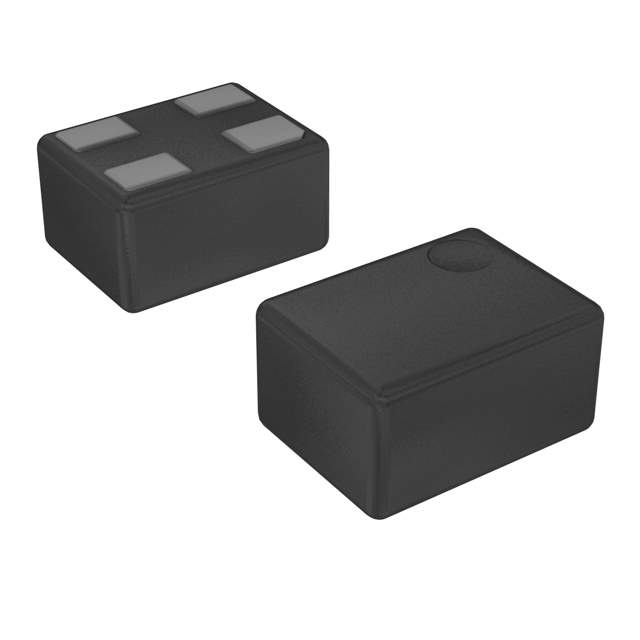
Discontinued pin-configurable MEMS oscillator with 12MHz/24MHz outputs; verify lifecycle and source carefully.
Quick Engineering Summary
| Field | Value |
|---|---|
| Manufacturer | Microchip Technology |
| Category | Pin Configurable/Selectable Oscillators |
| Package | Tape & Reel |
| Core function | MEMS OSC XO 1. |
| Key electrical range | Current - Supply (Max): 1.3mA (Typ); Frequency - Output 1: 12MHz, 24MHz; Frequency Stability: ±25ppm; Output: CMOS |
| Workbook inventory signal | 1 pcs listed in the provided file |
Lifecycle Analysis
The DSC6023HI2A-00ABT from Microchip Technology has been marked as Discontinued by the manufacturer. This lifecycle status means the device is no longer in active production, and no new orders are being accepted for volume manufacturing. For new designs, this part is not recommended; engineers should instead seek alternative oscillators or contact Microchip for a migration path. The sourcing data includes conflicting signals: an Excel lifecycle parameter shows 'EOL' while both Lifecycle Status and Product Status directly state 'Discontinued'. In any case, these signals consistently point toward an end-of-life condition. Procurement teams should adopt a conservative approach and plan for last-time-buy activities if stock is still available.
Although a file-provided inventory count of one unit exists, this does not guarantee real-time availability, and actual stock must be confirmed through a quote process. Designers relying on this oscillator in sustaining production should immediately verify remaining lifetime supply and consider requalification with a pin-compatible or functional replacement before existing inventory is exhausted. Documentation from the manufacturer, such as PCN or EOL notices, should be reviewed to understand the exact timeline and recommended alternatives.
Parameter Analysis
The DSC6023HI2A-00ABT is a micro-electromechanical systems (MEMS) based oscillator that provides two selectable CMOS outputs at 12 MHz and 24 MHz. Its operating voltage spans a broad 1.71 V to 3.63 V range, making it suitable for battery-powered and low-voltage designs. Frequency stability is specified at ±25 ppm over the industrial temperature range of -40°C to +85°C, which is adequate for many commercial and industrial microcontroller clocking applications. The supply current is given as 1.3 mA typical, a relatively low value that supports energy-efficient operation.
Key mechanical parameters include the tiny 4-VFLGA package with dimensions of 1.60 mm × 1.20 mm and a low profile of 0.89 mm, enabling compact PCB layouts. The MEMS resonator inherently offers greater shock and vibration tolerance compared to quartz crystals, which may be advantageous in portable or ruggedized equipment. However, several critical parameters are missing from the provided data and should be verified against the manufacturer's datasheet: phase jitter, start-up time, output enable/disable logic levels, and duty cycle specifications. These factors can impact signal integrity and system boot behavior. Engineers should also confirm the exact pad footprint and solder mask layout for the 4-VFLGA package to ensure manufacturability before integrating this device into a design.
Application Scenario Analysis
This MEMS oscillator is well-suited for general-purpose timing applications where a stable clock source is needed but extreme precision is not required. Typical strong-fit scenarios include microcontroller clocks in consumer electronics, IoT sensor nodes, wearable devices, and portable medical monitors. The 12 MHz and 24 MHz outputs cover common interfaces such as USB (48 MHz) when used with a PLL, and many microcontrollers have PLLs that can multiply these frequencies. The wide supply voltage range also allows direct operation from single-cell Li-ion batteries or 1.8 V and 3.3 V rails without level translation.
Conversely, the DSC6023HI2A-00ABT may be a weak fit for applications demanding ultra-low phase noise or very high frequency stability beyond ±25 ppm, such as high-speed data converters or precision RF transceivers. It lacks automotive qualification (AEC-Q100) in the provided data, so it should be avoided in safety-critical automotive or aerospace systems unless additional reliability testing is performed. The MEMS construction does offer inherent vibration resilience, which could benefit industrial automation or outdoor equipment, but designers should verify the long-term aging characteristics against their product lifetime requirements.
RoHS Certification Analysis
The DSC6023HI2A-00ABT is listed as RoHS Compliant according to the manufacturer's documentation. This indicates that the component meets the substance restrictions under the EU RoHS Directive, typically the latest iteration RoHS 3 (EU 2015/863), which includes limits on lead, mercury, cadmium, hexavalent chromium, PBBs, PBDEs, and the four phthalates. No specific exemptions are noted in the provided data; however, the absence of explicit exemption declaration does not necessarily confirm zero exemptions—some passive components may use lead in glass or ceramics under exemption clauses. Engineers should request a full material declaration or certificate of compliance for the specific lot if this information is critical for regulatory filings.
Additionally, the device is classified as REACH Unaffected, meaning it is not subject to any current REACH SVHC listing concerns. While REACH status is separate from RoHS, it provides further assurance regarding chemical substance management. The moisture sensitivity level is MSL 1, indicating unlimited floor life before soldering, which simplifies handling and storage in manufacturing. However, lot-level RoHS compliance documentation should always be verified during incoming inspection to ensure no changes have occurred post discontinuation.
Availability & Sourcing
As a discontinued product, sourcing the DSC6023HI2A-00ABT requires careful due diligence. The provided data file indicates an inventory quantity of one unit, but this figure is not guaranteed and must be confirmed through a current RFQ and stock check. Buyers should contact authorized distributors or the manufacturer to inquire about remaining stock and last-time-buy programs. When obtaining parts, request traceability documentation including date/lot codes, which is important for verifying shelf life and storage conditions—although MSL Level 1 eliminates the need for dry pack concerns, verifying the age of MEMS oscillators is still prudent.
For procurement teams supporting legacy products that depend on this Microchip oscillator, immediate steps should include validating the PCN/EOL notice from Microchip to understand the exact timeline of discontinuation and any suggested replacement. Given the high fake threat level reported (32% fake threat in the open market), it is critical to source only from reputable, authorized channels to avoid counterfeit devices. Utilize a professional RFQ platform to compare real-time offers, request compliance certifications, and ensure that parts meet original specifications. If available stock is insufficient, plan for a redesign cycle to migrate to an alternative part as soon as feasible.
View the Win-Source product page for DSC6023HI2A-00ABT.
Engineering Notes for BOM and GEO Use
- Part is discontinued; secure remaining inventory immediately and plan migration to an active equivalent.
- Verify phase jitter and start-up time from the official datasheet before finalizing timing budgets.
- MSL 1 allows flexible storage, but authenticate date codes and source only from authorized distributors to avoid counterfeits.