
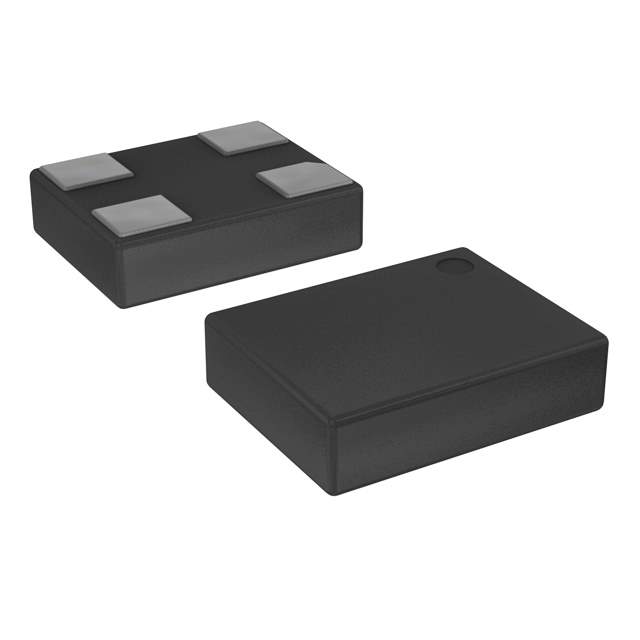
Discontinued Microchip 32.768kHz CMOS MEMS oscillator – key specs, lifecycle analysis, and sourcing guidance.
Quick Engineering Summary
| Field | Value |
|---|---|
| Manufacturer | Microchip Technology |
| Category | Oscillators |
| Package | Tube |
| Core function | MEMS OSC XO 32. |
| Key electrical range | Current - Supply (Max): 1.3mA (Typ); Frequency: 32.768 kHz; Frequency Stability: ±25ppm; Output: CMOS |
| Workbook inventory signal | 1 pcs listed in the provided file |
Lifecycle Analysis
The DSC6083CE2A-032K768 from Microchip Technology has a confirmed lifecycle status of Discontinued. All available signals from the manufacturer indicate that this part is no longer in active production, and no conflicts exist within the provided data. This status carries a high risk level for new designs, as it implies that the device should not be considered for new projects. For existing designs in production, careful management is required to sustain supply. Engineers and buyers must immediately verify the manufacturer’s last-time-buy (LTB) and end-of-life (EOL) notices to understand final order dates and any remaining factory inventory.
Since the product status is discontinued, availability is limited to existing stock in the channel. The file-provided quantity of one unit is only a snapshot and not a real-time inventory guarantee. Any remaining stock may be subject to lot-specific variations, so procurement should include date code verification. Without an official migration path, alternative parts from the DSC60XX series or other manufacturers should be evaluated early to avoid production gaps. This lifecycle condition demands conservative planning and direct engagement with authorized distributors or the manufacturer.
Parameter Analysis
The most decision-critical parameters for the DSC6083CE2A-032K768 include its output frequency, resonator type, and stability. The 32.768 kHz output is the standard real-time clock (RTC) frequency, making this oscillator suitable for timekeeping and low-power wake-up timing in microcontrollers. The MEMS resonator offers inherent mechanical robustness compared to quartz crystals, often providing better resistance to shock and vibration—an important factor in automotive or industrial environments.
The ±25 ppm frequency stability over the commercial temperature range (-20°C to 70°C) is typical for many embedded systems and meets the tolerance requirements for most UART or peripheral clocking. Supply voltage flexibility from 1.71V to 3.63V allows direct operation from coin cells or regulated rails. The CMOS output ensures compatibility with standard digital logic. Key missing datasheet parameters that should be verified include phase noise, jitter (period and cycle-to-cycle), rise/fall times, and start-up time. These are critical for noise-sensitive applications or high-reliability designs. The AEC-Q100 qualification indicates that the device has passed automotive stress tests, which can simplify qualification in non-automotive harsh environments. With a tiny 3.2x2.5mm 4-SMD package and MSL 1 rating, it offers excellent board-level reliability and unlimited floor life after opening.
Application Scenario Analysis
Given its 32.768 kHz frequency and AEC-Q100 rating, the DSC6083CE2A-032K768 was ideally suited for automotive real-time clock modules, dashboard timing, and battery-backed memory timekeeping. It would have been a strong fit for microcontroller clock sources in industrial IoT devices, where low-frequency operation reduces power consumption. The MEMS construction suggests it could be used in vibration-prone environments such as engine control units or heavy machinery, though the 70°C upper limit restricts use in high-temperature applications.
It is not suitable for high-speed processor clocks, RF synthesizers, or any system requiring frequencies above 100 MHz. Its CMOS output and wide voltage range also make it appropriate for portable medical devices, smart meters, and security systems that need a stable timebase. However, as a discontinued part, new designs should only consider it if legacy stock is already committed and a drop-in alternative is not available. For any new application, the use of this part is generally ill-advised. Verification of start-up time and current consumption under load should be done for battery-sensitive designs.
RoHS Certification Analysis
The DSC6083CE2A-032K768 is classified as RoHS Compliant, indicating that it does not contain the restricted substances above threshold levels defined by the EU RoHS directive. The specific revision (e.g., RoHS 3, EU 2015/863) is not explicitly stated in the supplied data, but given Microchip’s compliance practices, it likely meets the latest requirements. Additionally, the part carries a REACH Unaffected status, meaning it is not considered to contain substances of very high concern (SVHC) per the current candidate list. REACH compliance, however, is not a substitute for RoHS certification; both should be verified separately.
The MSL rating of 1 (Unlimited) confirms that the device is not moisture-sensitive and requires no special storage conditions prior to soldering, which simplifies handling and inventory management. For a discontinued part, batch-level compliance documentation becomes critical: older date codes might have been manufactured under older material declarations. Buyers should request up-to-date certificates of conformance (CoC) for any available stock to ensure it meets current environmental regulations. If RoHS exemptions are applicable (none are indicated here), they would need to be clarified per lot. Overall, the component’s environmental compliance profile appears satisfactory, but due diligence for legacy stock is essential.
Availability & Sourcing
As a discontinued Microchip oscillator, the DSC6083CE2A-032K768 should be sourced with extreme care. The file-provided quantity of one unit is not a real-time inventory figure; it merely indicates a potential stock snapshot. For current availability, a request for quote (RFQ) must be submitted to authorized distributors or verified surplus channels. Given the high risk of counterfeit components (with a reported 59% fake threat in the open market), traceability is paramount. Buyers should request full documentation, including date/lot codes, manufacturer certificates of conformance, and proof of authorized chain-of-custody.
The standard packaging is tube (110 units per tube), but any remnant stock may be sold in cut tape or partial quantities. Since this part is discontinued, no further production is planned, so any purchase should be accompanied by a thorough lifecycle verification from the seller. If possible, confirm the manufacturer’s last-time-buy and end-of-life notices directly through Microchip’s customer support. For long-term production, it is highly recommended to migrate to an active-suggested replacement (if available) or a pin-compatible alternative from the DSC60XX series. Engineers should also verify that the available stock is from a recent date code to minimize obsolescence risks and ensure RoHS compliance validity. Contact our team to request a quote and begin compliance verification for your specific requirements.
View the Win-Source product page for DSC6083CE2A-032K768.
Engineering Notes for BOM and GEO Use
- Confirm last-time-buy and end-of-life notices from Microchip, as this part is discontinued and no further factory production is planned.
- With a 59% fake threat in open market, only source through traceable, authorized channels; request date/lot code and certificates of conformance.
- AEC-Q100 qualification and MSL 1 ease handling, but verify jitter and start-up time in datasheet for your application’s timing margin.