
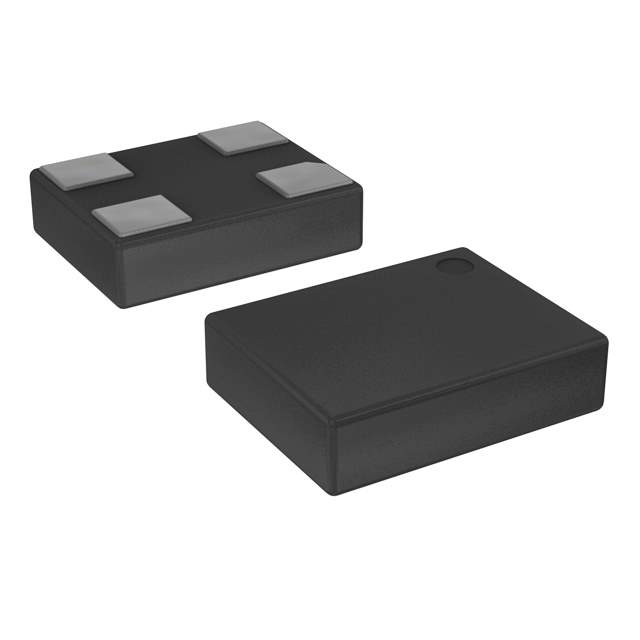
MEMS oscillator, 32.8 kHz, CMOS, AEC-Q100, discontinued by Microchip Technology — source carefully and verify availability.
Quick Engineering Summary
| Field | Value |
|---|---|
| Manufacturer | Microchip Technology |
| Category | Oscillators |
| Package | Tube |
| Core function | MEMS OSC XO 32. |
| Key electrical range | Current - Supply (Max): 1.3mA (Typ); Frequency: 32.8 kHz; Frequency Stability: ±25ppm; Output: CMOS |
| Workbook inventory signal | 1 pcs listed in the provided file |
Lifecycle Analysis
The DSC6083CI2A-032K800 from Microchip Technology is a discontinued MEMS oscillator with conflicting signals—Excel lifecycle param shows EOL while product and lifecycle status indicate Discontinued. Both conditions equate to a high-risk, end-of-life classification. This status means the component is no longer manufactured and is not recommended for new designs.
Existing production programs should verify the manufacturer’s last-time-buy window and remaining stock availability. File-provided inventory data shows a workbook quantity of 1 unit, but this is not a real-time guarantee. Engineers must re-validate lifecycle status with Microchip or authorized distributors before committing to any procurement.
For new designs, an immediate migration to an active replacement series is required. Failure to do so risks sourcing counterfeit or obsolete parts. The high risk level demands conservative supply chain planning and documentation of all purchased lots.
Parameter Analysis
Key specifications include a MEMS resonator, fixed 32.8 kHz frequency, CMOS output, wide supply voltage range of 1.71 V to 3.63 V, and a typical current consumption of 1.3 mA. Frequency stability is ±25 ppm across the -40 °C to +85 °C operating temperature range. The AEC-Q100 rating confirms automotive-grade qualification, making it suitable for severe environments. Package dimensions are 3.20 mm × 2.50 mm with a 0.90 mm maximum seated height in a 4‑SMD, no‑lead package.
From a design perspective, the low current draw and wide voltage range support battery‑powered and energy‑harvesting applications. The ±25 ppm stability is adequate for many microcontroller clocking tasks, but the 32.8 kHz frequency is not the common 32.768 kHz RTC frequency, so system PLL or divider configurations may be needed. MSL 1 (unlimited) simplifies board assembly.
Missing datasheet parameters to verify include start‑up time, jitter (period and cycle‑to‑cycle), rise/fall time, and output drive capability. Without these, timing margin analysis is incomplete. Additionally, aging characteristics and enable/disable function specifications are not provided. Designers should obtain the full Microchip datasheet for a complete evaluation before approving any design.
Application Scenario Analysis
The DSC6083CI2A-032K800 fits applications that require a rugged, low‑power fixed 32.8 kHz clock source. Its AEC‑Q100 qualification and extended industrial temperature range of -40 °C to +85 °C make it suitable for automotive subsystems such as camera modules, sensor interfaces, or body electronics that are already designed around this specific frequency.
Industrial IoT edge nodes and portable instruments that can use a 32.8 kHz reference with CMOS output also benefit from the low 1.3 mA consumption and MEMS reliability. However, its non‑standard frequency limits compatibility with standard RTC crystals (32.768 kHz). Applications requiring a drop‑in real‑time clock might need a PLL or may not function correctly without software or hardware modifications.
Given the discontinued status, this component is only viable for sustaining existing designs that have already been qualified with this exact part. New designs should avoid it, as any remaining stock may be limited and subject to market counterfeit risk. OEMs with legacy systems should evaluate the migration effort to an active Microchip MEMS oscillator or an alternative vendor’s compatible device.
RoHS Certification Analysis
The manufacturer lists the DSC6083CI2A-032K800 as RoHS Compliant, indicating adherence to EU hazardous substance restrictions. The specific RoHS revision (e.g., 2015/863) is not explicitly provided in the source data; thus it should be verified with the supplier to ensure compliance with the current RoHS 3 directive.
REACH status is reported as REACH Unaffected, meaning no substances of very high concern (SVHC) are present above threshold, simplifying compliance documentation for European markets. The MSL rating is 1 (unlimited), which is a favorable indicator for surface‑mount assembly without special moisture controls.
No exemptions are noted. Given the part is discontinued, procurement teams should request a lot‑specific Certificate of Compliance (CoC) to confirm the RoHS status of any remaining inventory. Relying solely on the catalog declaration without validation may expose designs to non‑compliance in regulated industries.
Availability & Sourcing
The DSC6083CI2A-032K800 is discontinued, making availability scarce. Workbook inventory data shows only 1 unit, which is not a real‑time or guaranteed quantity. For any existing demand, a formal RFQ is necessary to secure actual stock. The standard package is Tube, with an indicated standard package quantity of 110 parts per tube, but this does not reflect current stock levels.
Sourcing for a discontinued part requires rigorous due diligence. An open‑market ‑fake threat of 38% highlights the risk of counterfeit devices. Buyers must insist on full traceability, including date/lot codes and manufacturer‑original packaging verification. Compliance documentation (RoHS, REACH, MSL) should be audited for each lot.
Engineers and buyers are urged to request a quote through authorized channels and to evaluate migration to an active Microchip DSC60XX series member or a functionally equivalent oscillator. For systems where substitution is not yet possible, securing a last‑time‑buy quantity from verified sources is the only responsible path. Use the RFQ function to check current availability and obtain lifecycle‑verified documentation before placing any order.
View the Win-Source product page for DSC6083CI2A-032K800.
Engineering Notes for BOM and GEO Use
- Verify manufacturer discontinuation notice and secure remaining inventory for sustaining builds; no new design starts.
- High fake threat (38%) reported in open market; source only from authorized or fully traceable suppliers with lot and date code documentation.
- AEC-Q100 rating and -40°C to 85°C range suit automotive environments, but use only where 32.8 kHz is the exact frequency requirement, not standard 32.768 kHz RTC.