
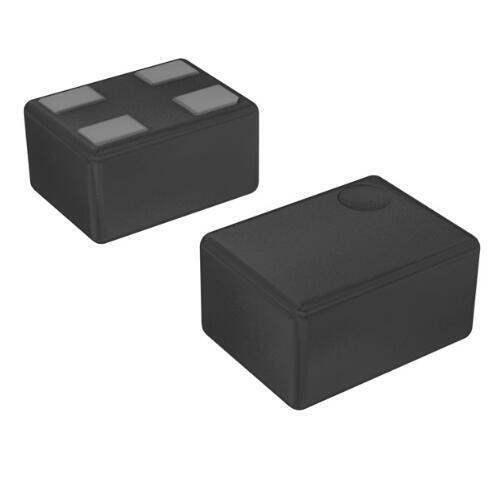
27.0000 MHz CMOS MEMS oscillator in 4-VFLGA package from Microchip Technology
Quick Engineering Summary
| Field | Value |
|---|---|
| Manufacturer | Microchip Technology |
| Category | Oscillators |
| Package | Not available in supplied data |
| Core function | MEMS OSC XO 27. |
| Key electrical range | Current - Supply (Max): 17mA; Operating Temperature: -40°C ~ 85°C; Voltage - Supply: 3V |
| Workbook inventory signal | 1 pcs listed in the provided file |
Lifecycle Analysis
The DSC6101MA3B-027.0000 from Microchip Technology presents conflicting lifecycle information in available data. Several indicators, including the Lifecycle Status field and Excel lifecycle parameter, show the part as Active, suggesting ongoing production and availability. However, a separate specification entry for Part Status lists the component as Obsolete. This contradiction creates uncertainty for procurement and new design integration.
When lifecycle signals conflict, engineers and buyers should adopt a conservative stance. An Obsolete marker, even if not consistently reported, may signal an impending discontinuation or limited remaining stock. Using this part in new designs without clarification carries risk of shortages or last-time-buy constraints.
To resolve this, direct verification with Microchip's official product page or an authorized distributor is essential. Until the manufacturer confirms Active status, designers should evaluate alternative MEMS or quartz oscillators that offer comparable 27 MHz CMOS performance and package size.
Parameter Analysis
Key parameters for the DSC6101MA3B-027.0000 center on its 27.0000 MHz output frequency, CMOS logic levels, and MEMS resonator technology. The ±20 ppm frequency stability ensures reliable timing for standard microcontroller, FPGA, and serial communication interfaces. The supply voltage range spans 1.71 V to 3.63 V, allowing integration into both 1.8 V and 3.3 V systems, though the exact operating voltage should be locked down from the datasheet.
Reported temperature ranges vary: one source specifies -40°C to 85°C, while another extends to 125°C. This difference is design-critical; the wider range would support industrial and automotive applications, whereas the narrower range limits use to commercial environments. Similarly, current consumption data show a maximum of 17 mA in one field and a typical 3 mA in another, highlighting the need for the official datasheet to determine power budgets.
The 4‑VFLGA package (2.0 mm x 1.6 mm) suits compact layouts, but PCB layout must account for the small land pattern and proper decoupling. Verify enable/disable function timing and start‑up characteristics before finalizing the design.
Application Scenario Analysis
The DSC6101MA3B-027.0000 fits well in applications requiring a stable 27 MHz CMOS clock with small footprint and MEMS robustness. Strong‑fit scenarios include microcontroller‑based systems, IoT edge devices, portable consumer electronics, and general‑purpose clock generation where the operating temperature stays within the commercial range (e.g., 0°C to 70°C or -40°C to 85°C, depending on verified specs). Its low power consumption (if the typical 3 mA figure holds) benefits battery‑powered designs.
Weaker fit scenarios involve high‑stress environments such as automotive under‑hood, avionics, or extended industrial setups. If the part is truly limited to 85°C, it cannot replace oscillators rated for 125°C or higher. The ambiguous lifecycle status further complicates long‑lifetime programs where obsolescence management is paramount.
For legacy designs currently using this oscillator, immediate verification of availability and an alternate part number identification plan are recommended. New designs should consider pin‑compatible MEMS or quartz alternatives with clearer lifecycle support from Microchip or other suppliers.
RoHS Certification Analysis
The DSC6101MA3B-027.0000 is listed as RoHS Compliant in the supplied data. Compliance generally indicates adherence to the EU Directive 2011/65/EU and its amendment 2015/863, restricting hazardous substances such as lead, mercury, and cadmium. No specific exemptions are documented in the source files.
While RoHS marking is a baseline requirement for European market access, the absence of REACH, halogen‑free, or MSL ratings suggests that additional compliance documentation should be requested for full material transparency. Lot‑level certificates of compliance may be necessary for regulated industries.
For procurement teams, it is important to note that RoHS compliance can be claimed at the product family level. When high‑reliability or military applications require substance‑level traceability, obtain the manufacturer's declaration or full material composition report for this exact part number.
Availability & Sourcing
Sourcing the DSC6101MA3B-027.0000 requires careful attention to its uncertain lifecycle status. The supply chain data indicates very limited file‑provided quantities—a workbook entry of 1 and an Excel row listing 117 units. These numbers are not real‑time inventory guarantees and must be confirmed through a request for quote (RFQ).
If the part is truly Obsolete, stock may be limited to existing distributor inventories, and procurement should prioritize secure purchase and traceability checks including date/lot codes and moisture sensitivity compliance. For Active status confirmation, a formal RFQ will clarify lead times, reel packaging (bulk or tape), and authorized distribution channels.
Given the conflicting signals, sourcing teams should request a quote with explicit lifecycle verification from Microchip’s authorized network. For production, negotiate compliance documentation and request inventory reserve options. Meanwhile, identify backup oscillators with similar footprint and performance to maintain supply continuity.
View the Win-Source product page for DSC6101MA3B-027.0000.
Engineering Notes for BOM and GEO Use
- Verify operating temperature range: datasheet may specify either -40°C to 85°C or -40°C to 125°C, impacting suitability for extended environments.
- Confirm lifecycle status directly with Microchip; one field lists Part Status as Obsolete despite other Active signals.
- For production, request full datasheet to validate supply current, stability, and start-up time, as reported values differ across sources.