
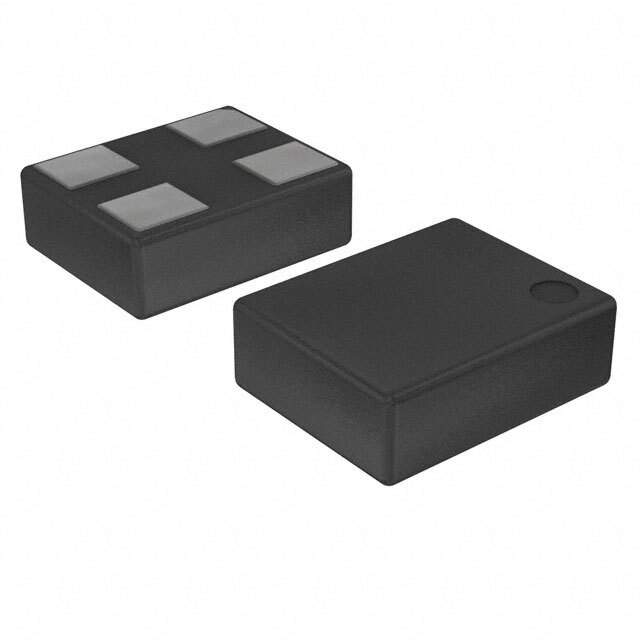
Discontinued XO (Standard) – CMOS Output, ±25 ppm, AEC-Q100, RoHS | Limited Availability
Quick Engineering Summary
| Field | Value |
|---|---|
| Manufacturer | Microchip Technology |
| Category | Oscillators |
| Package | Tape & Reel |
| Core function | MEMS OSC XO 24. |
| Key electrical range | Current - Supply (Disable) (Max): 12µA; Current - Supply (Max): 3mA (Typ); Frequency: 24 MHz; Frequency Stability: ±25ppm |
| Workbook inventory signal | 1 pcs listed in the provided file |
Lifecycle Analysis
The DSC6111JI2A-024.0000T from Microchip Technology is classified as Discontinued across all supplier signals. The lifecycle status is Discontinued, product status is Discontinued, and the Excel lifecycle parameter reads EOL. This consistent messaging confirms the part is no longer manufactured and cannot be ordered through normal distribution. For new designs, this part is unsuitable—it should not be considered for upcoming projects. For current products, immediate action is required: secure any needed buffer stock from the residual channel and initiate a redesign to replace this oscillator with an active Microchip alternative or a pin-compatible device. Microchip likely issued a discontinuation notice; obtain it to verify the official last-time-buy and last-ship dates. The provided workbook shows only 1 unit in inventory, which is file-provided and not a real-time guarantee. Given the high risk, do not depend on open-market availability for production volumes. Reach out to Microchip’s support for a formal migration path. Prolonged procurement of a discontinued MEMS oscillator increases exposure to counterfeit parts—the data indicates a 41% fake threat rate.
Parameter Analysis
Key parameters for the DSC6111JI2A-024.0000T start with its fundamental resonance technology: MEMS. This offers inherent advantages over quartz in shock and vibration resistance, though the part’s discontinuation limits leveraging that benefit. The fixed frequency of 24 MHz is a common clocking value; if your design requires exactly this frequency, alternative MEMS or quartz oscillators must be evaluated. Frequency stability is ±25 ppm, suitable for general-purpose timing but not for high-precision communication systems. The output is CMOS with a standby (power-down) function, allowing the oscillator to be disabled for power savings. Supply current is typically 3 mA maximum, with disable current just 12 µA—important for battery-operated designs, though you must verify actual numbers from the datasheet before selecting a replacement. The supply voltage range is 1.8 V to 3.3 V, providing flexibility, but note the more specific 1.71 V to 3.63 V range in the Excel parameters. The operating temperature range of -40°C to +85°C matches industrial requirements. Missing specs like rise/fall time, start-up time, jitter, and aging are critical for timing integrity; when vetting a replacement, confirm these from the candidate’s datasheet. The small 2.5 mm x 2.0 mm package with 0.90 mm height demands a compatible footprint; any substitute must match the 4-SMD, no-lead layout.
Application Scenario Analysis
The DSC6111JI2A-024.0000T was likely employed in applications where a simple, robust clock source was needed. Its AEC-Q100 rating originally qualified it for automotive systems, but with discontinuation, new automotive designs cannot adopt it. Suitable legacy uses include in-vehicle infotainment, body control modules, or sensor interfaces that still use this exact oscillator. Industrial control systems, IoT edge devices, and consumer electronics that require a 24 MHz MEMS-based clock may still have fielded units. Strong-fit scenarios assume the original design utilized the standby function to reduce power during sleep; if power consumption was not a major concern, the part was overqualified. Weak-fit scenarios: high-reliability medical or avionics applications typically demand ongoing availability and long product lifecycles, making a discontinued part unusable for them. For any residual use, verifying date/lot codes is critical to avoid counterfeit devices that could fail unpredictably. If the original design required the AEC-Q100 qualification, any replacement part must carry equivalent certification; otherwise, recertification costs may be prohibitive. Engineers should reassess the system’s jitter tolerance and aging requirements because the missing datasheet details could hide performance gaps when swapping in a different oscillator.
RoHS Certification Analysis
The Microchip Technology DSC6111JI2A-024.0000T is marked RoHS Compliant in the provided data, indicating that, at the time of production, it met the EU Restriction of Hazardous Substances directive. However, as a discontinued part, current compliance of available inventory must be verified on a lot-by-lot basis. The reported MSL Level of 3 (168 hours) means the component is moisture-sensitive and must be handled per JEDEC J-STD-020; if packaging is opened or the floor-life exceeded, baking is required before reflow. REACH status is listed as REACH Unaffected, suggesting no SVHCs above threshold, but this does not replace RoHS certification. No exemption details are available; for high-reliability or EU-bound products, request the supplier provide a full material declaration. The 41% fake threat rate in the open market makes it imperative to ask for certificates of conformance and laboratory test reports when procuring from non-franchised sources. In addition, verify that the lead-free finish (implied by RoHS) is consistent across reels to avoid soldering compatibility issues.
Availability & Sourcing
The DSC6111JI2A-024.0000T is a discontinued Microchip oscillator, and its supply chain is severely constrained. The source workbook indicates a single unit in inventory—this is a file-provided snapshot, not a live stock guarantee. For engineers or buyers who must secure this part for legacy system repair or final production runs, the recommended path is to request a quote through Win Source or similar brokers, explicitly asking for date/lot codes, traceability documentation, and RoHS compliance certificates. With a 41% open-market fake threat, visual inspection and functional testing of samples is mandatory. Because the standard package was 1,000 units on tape and reel, any small-quantity purchase may consist of cut tape, which carries risk of moisture damage. For NRND or EOL parts like this, do not commit to new production without first verifying the manufacturer’s discontinuation notice and last-time-buy window. If inventory is insufficient, engage Microchip Technology for an alternative device from an active series. Substitutes must match the 24 MHz frequency, CMOS output, ±25 ppm stability, 1.8–3.3 V supply, 2.5 mm x 2.0 mm package, and ideally the standby function. Without a formal replacement recommendation from Microchip, treat this part as Last Time Buy; act now to evaluate pin-compatible options and validate them in your design before stock depletion.
View the Win-Source product page for DSC6111JI2A-024.0000T.
Engineering Notes for BOM and GEO Use
- Discontinued: use only for existing production; verify last-time-buy with Microchip and plan immediate migration.
- Fake threat in the open market is 41%; source only through authorized or traceable channels with full lot documentation.
- MSL 3, 168-hour floor life: ensure proper handling and baking if packs are opened beyond limit during assembly.