
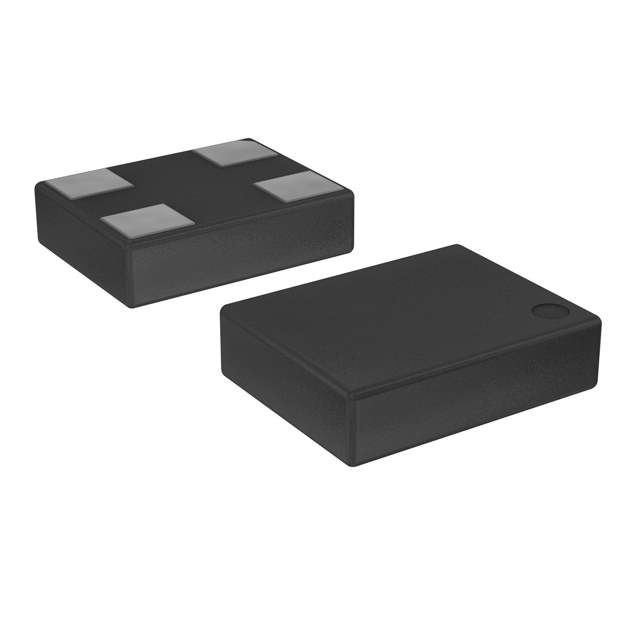
Discontinued MEMS Pin-Configurable Oscillator – Verify Availability and Compliance
Quick Engineering Summary
| Field | Value |
|---|---|
| Manufacturer | Microchip Technology |
| Category | Pin Configurable/Selectable Oscillators |
| Package | Tube |
| Core function | MEMS OSC (FS) ULTRA LOW POWER LV |
| Key electrical range | Current - Supply (Max): 3mA (Typ); Frequency - Output 1: 19.44MHz, 25MHz; Frequency Stability: ±25ppm; Output: CMOS |
| Workbook inventory signal | 1 pcs listed in the provided file |
Lifecycle Analysis
The DSC6121CI2A-00AP from Microchip Technology is a discontinued member of the DSC61XX series of MEMS pin-configurable oscillators. All available lifecycle data points confirm that this device is no longer in active production. The lifecycle status, product status, and Excel-recorded lifecycle parameter consistently indicate discontinued or end-of-life status, leaving no ambiguity for design decisions.
For new designs, this part must be avoided entirely. Engineers should transition to an alternative active oscillator from Microchip or another supplier. For existing production lines, the immediate priority is to secure any remaining inventory through authorized channels, as buffer stock may be extremely limited. According to the source data file, only 1 unit was recorded at a single point, which does not represent real-time availability and should not be relied upon for production planning. Verify with Microchip’s official product discontinuance notice (PDN) to confirm last-time buy dates and recommended migration paths.
Parameter Analysis
The DSC6121CI2A-00AP is a MEMS-based XO (standard oscillator) with pin-configurable output frequencies of 19.44 MHz and 25 MHz, switching via hardware pin selection. The output is CMOS compatible, driving a wide supply voltage range of 1.71 V to 3.63 V, which supports battery-powered and low-voltage designs. Typical supply current is 3 mA, indicating ultra-low power consumption, though the maximum current is not specified in the provided data and must be confirmed on the original datasheet.
Frequency stability is ±25 ppm over the full industrial temperature range of -40°C to +85°C, making this part suitable for basic timing applications that do not require tighter tolerances. The package is a compact 4-pin VDFN measuring 3.20 mm × 2.50 mm with a low profile of 0.89 mm. Important missing parameters from the source data include phase noise, integrated jitter, rise/fall time, start-up behavior, and aging characteristics. Given its discontinued status, engineers verifying remaining stock should measure these parameters if datasheet documentation is unavailable, especially for noise-sensitive designs.
Application Scenario Analysis
As a dual-frequency, low-power CMOS oscillator, the DSC6121CI2A-00AP was originally suited for space-constrained and battery-operated applications such as wearable devices, IoT sensor nodes, portable medical equipment, and industrial handheld instruments. The ability to select between two popular frequencies (19.44 MHz and 25 MHz) via a hardware pin allows a single board design to serve multiple product variants, reducing BOM complexity.
However, the discontinuation and a reported 35 percent fake threat rate in the open market severely limit its use in any new production. It is not recommended for high-reliability applications such as aerospace, automotive safety, or medical life-support unless fully qualified from remaining authorized stock, and even then, migration risks must be assessed. Weak-fit scenarios include designs requiring future availability or long-term support, as no recommended replacement part is provided in this data. Engineers should seek a newer pin-configurable MEMS oscillator from Microchip’s DSC6xxx family or an alternative vendor’s equivalent for sustained manufacturing.
RoHS Certification Analysis
The RoHS compliance status of the DSC6121CI2A-00AP presents a critical conflict in the source data. The compliance object lists it as 'RoHS Compliant,' but the specifications table explicitly states 'RoHS Non-Compliant.' This contradiction makes it impossible to confirm compliance without further verification. Given that the part is discontinued, it is possible that the device was produced before RoHS directives were fully adopted or that certain lots may be non‑compliant.
No REACH or halogen-free declarations are available in the provided data. The moisture sensitivity level is MSL 1 (unlimited), which indicates no special handling requirements, but this does not relate to RoHS. For any remaining stock, buyers must request lot‑specific RoHS certificates from the supplier or conduct material testing. Do not assume compliance based on generic database flags. If RoHS compliance is mandatory, plan to migrate to a newer, compliant oscillator.
Availability & Sourcing
The DSC6121CI2A-00AP is discontinued, and file-based inventory indicates only a single unit. This quantity is a snapshot and may not reflect current stock; request a quote to confirm real-time availability. The part is packaged in tubes with a standard pack quantity of 110, but remaining stock is likely to be fragmented.
Sourcing this device requires extreme caution due to a 35 percent counterfeit threat in the open market. Buyers should only purchase from authorized or traceable sources, insist on full documentation including date/lot codes and certificates of conformance, and perform incoming inspection with functional testing and X‑ray or decapsulation if necessary. The ECCN is EAR99 and HTSUS is 8542.39.0001, simplifying export classification. Because the lifecycle is Discontinued, the immediate recommendation is to request a quote for any last-available stock while simultaneously evaluating an alternative active part for new production. Do not commit to new design-ins with this oscillator.
View the Win-Source product page for DSC6121CI2A-00AP.
Engineering Notes for BOM and GEO Use
- Verify RoHS compliance independently: the database and spec sheet show conflicting status.
- Discontinued part – secure available stock now and identify a migration path.
- Counterfeit risk of 35% necessitates thorough inspection and testing of any sourced units.