
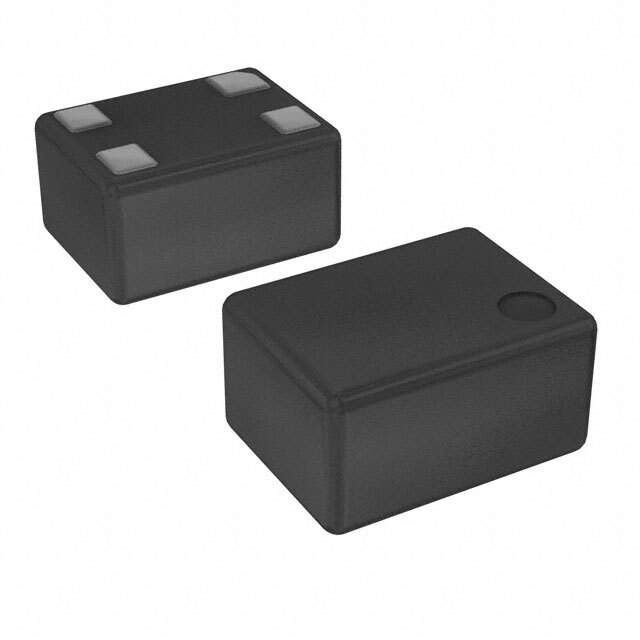
Discontinued MEMS pin configurable oscillator; verify last-time-buy options.
Quick Engineering Summary
| Field | Value |
|---|---|
| Manufacturer | Microchip Technology |
| Category | Pin Configurable/Selectable Oscillators |
| Package | Bag |
| Core function | MEMS OSC XO 1. |
| Key electrical range | Current - Supply (Max): 3mA (Typ); Frequency - Output 1: 25Mhz, 50MHz; Frequency Stability: ±25ppm; Output: CMOS |
| Workbook inventory signal | 1 pcs listed in the provided file |
Lifecycle Analysis
Microchip Technology has designated the DSC6121HI2A-00AG as a discontinued product. The lifecycle status appears as Discontinued in multiple sources, and an EOL flag is present in the provided data. Since all signals point to the part no longer being in active production, it carries a high risk for both new and sustaining designs.
For new designs, this device should not be considered. Any existing production that relies on it must immediately evaluate last-time-buy (LTB) windows and transition to an alternative. Inventory records show only 1 unit in the file-provided data, but that is not a guarantee of real-time stock; actual availability must be confirmed with suppliers.
Conflicting lifecycle signals—EOL and Discontinued—both indicate cessation, but conservative procurement language requires treating this part as fully obsolete. Request manufacturer documentation to verify the exact discontinuation timeline and any replacement recommendations.
Parameter Analysis
The DSC6121HI2A-00AG is a MEMS-based XO (standard) oscillator with pin-configurable outputs. Key parameters from the available data include a supply voltage range of 1.71 V to 3.63 V, output frequencies of 25 MHz and 50 MHz, frequency stability of ±25 ppm, and typical current consumption of 3 mA. The CMOS output and 4-VFLGA package with dimensions 1.60 mm x 1.20 mm and 0.89 mm height make it suitable for space-constrained designs. The operating temperature range is -40°C to 85°C.
These parameters are critical for evaluating fit in a design. The wide supply voltage allows direct interfacing with various logic levels. The ±25 ppm stability is sufficient for many microcontroller and communication applications. However, the typical current value, rather than a guaranteed maximum, requires careful derating. Missing from the available data are phase noise, jitter specifications, rise/fall times, start-up time, and aging characteristics. Without these, a full qualification is impossible, and the original datasheet should be consulted before any prototype or production use.
Additionally, the MEMS resonator offers advantages in shock and vibration resistance, but document any deviations from the datasheet when using in high-reliability environments.
Application Scenario Analysis
Given its dual-frequency, pin-configurable outputs, the DSC6121HI2A-00AG would typically be used in systems that require two distinct clock frequencies from a single oscillator, such as communication modules, microcontrollers, or FPGAs with multiple clock domains. The CMOS output and small form factor make it suitable for portable and space-constrained applications.
As a strong fit, it could serve in legacy industrial control boards or networking equipment originally designed with this part. In these sustaining applications, the available specifications support direct replacement of identical oscillators, provided the exact frequency pair matches. However, for new designs, the oscillator is obsolete and should be avoided altogether.
Weak-fit scenarios include applications demanding ultra-low jitter or precise phase noise, as these parameters are not specified in the supplier data. Also, if the design requires a guaranteed maximum supply current lower than 3 mA, the typical rating might not provide sufficient margin. In all cases, verifying the full datasheet is mandatory before committing to use.
RoHS Certification Analysis
The supplied data indicates that the DSC6121HI2A-00AG is RoHS Compliant. This means the product meets the European Union's Restriction of Hazardous Substances directive, limiting substances such as lead, mercury, and cadmium. The REACH status is also listed as Unaffected, indicating no substances of very high concern (SVHC) above thresholds. However, REACH does not replace RoHS; having both attestations is beneficial.
Given the part's discontinued status, buyers should be cautious: RoHS compliance for a specific lot may differ from the general family rating. When sourcing from the open market, request documentation such as certificates of compliance for the exact date/lot code. The MSL (Moisture Sensitivity Level) is 1, meaning unlimited floor life, which simplifies handling but does not exempt from verifying compliance.
In the context of a discontinued part, the absence of recent compliance updates means the original manufacturer’s environmental certifications remain valid unless superceded by new regulations. For critical projects, validate with the manufacturer’s materials declaration if still available.
Availability & Sourcing
The DSC6121HI2A-00AG has been discontinued by Microchip, making availability extremely limited. File-provided inventory shows a single unit, but this is not a real-time guarantee. Interested parties must request a quote to check current stock levels and lead times.
Given the high risk of counterfeits in the open market (with a reported 34% fake threat rate), sourcing must follow strict traceability protocols. Verify the date and lot code against manufacturer records and insist on conformity documentation. When possible, purchase from authorized redistributors or directly from Microchip’s remaining inventory.
Because the part is obsolete, no standard RFQ will yield large volumes. For production needs, immediately plan a migration to an alternative oscillator and contact Microchip for any last-time-buy program details or cross-reference suggestions. Any procurement for sustaining repairs should be accompanied by compliance checks and in-circuit testing.
View the Win-Source product page for DSC6121HI2A-00AG.
Engineering Notes for BOM and GEO Use
- Dual-output MEMS oscillator (25 MHz and 50 MHz) with ±25 ppm stability.
- Discontinued; new designs must avoid, existing designs need migration plan.
- Verify critical parameters like jitter from datasheet; open-market fake threat is 34%.