
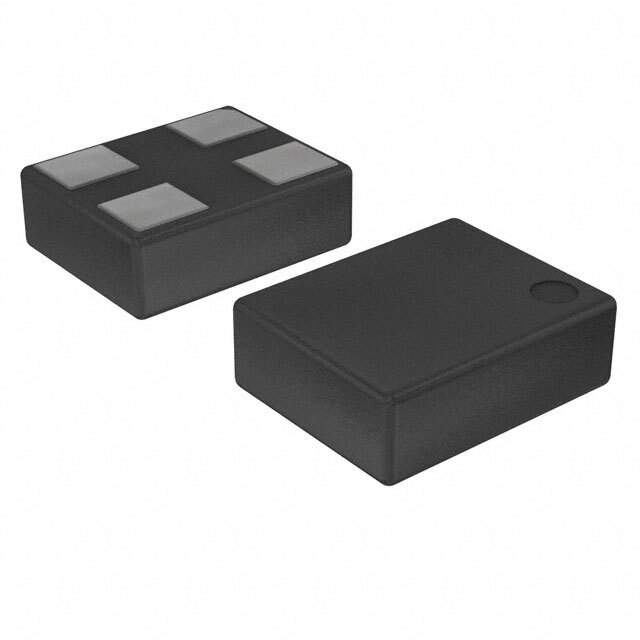
Discontinued dual-output MEMS oscillator: plan migration or verify last-time buy options
Quick Engineering Summary
| Field | Value |
|---|---|
| Manufacturer | Microchip Technology |
| Category | Pin Configurable/Selectable Oscillators |
| Package | Tube |
| Core function | MEMS OSC XO 1. |
| Key electrical range | Current - Supply (Max): 3mA (Typ); Frequency - Output 1: 4.9152MHz, 29.4912MHz; Frequency Stability: ±25ppm; Output: CMOS |
| Workbook inventory signal | 1 pcs listed in the provided file |
Lifecycle Analysis
The Microchip DSC6121JI2A-0024 is officially discontinued, as indicated by multiple source signals: the Excel lifecycle parameter lists EOL, and both the part-level Product Status and Lifecycle Status report Discontinued. This consensus means the device is no longer manufactured and should not be used in new designs.
For existing designs, the high risk level demands immediate action. Engineers and buyers must verify whether a last-time buy (LTB) is still possible through Microchip or authorized distributors. Any remaining stock is likely limited to already-built inventory; the file-provided inventory count of 6 units should be treated as a snapshot and not a guarantee of availability.
When sustained production is necessary, consider migrating to an active pin-configurable oscillator from Microchip’s DSC60XX or newer DSC61XX variants that offer equivalent or improved specifications. Review the datasheet for the original part to compare phase noise, start-up time, and output enable functions, as these details are not included in the supplied data.
Parameter Analysis
The DSC6121JI2A-0024 is a MEMS-based XO (standard oscillator) with two user-accessible CMOS outputs operating at fixed frequencies of 4.9152 MHz and 29.4912 MHz. The frequency stability is specified at ±25 ppm, which includes initial tolerance, aging, and temperature effects over the full industrial range of -40°C to 85°C. Supply voltage can range from 1.71 V to 3.63 V, allowing integration into both low-voltage and battery-powered designs.
Current consumption is typically 3 mA, though a maximum value is not given; this low draw, combined with the compact 2.50 mm x 2.00 mm VLGA package and 0.89 mm height, makes it suitable for space-constrained designs. The dual-output capability enables one component to replace two separate oscillators, saving board area and simplifying clock distribution.
Missing parameters that should be verified against the original datasheet include phase noise, period jitter, output rise/fall times, start-up time, and the presence of an output enable or standby function. These are critical for high-speed digital noise margins and power sequencing in modern FPGAs or SoCs.
Application Scenario Analysis
This oscillator fits legacy applications that require two fixed, unrelated clock frequencies (4.9152 MHz and 29.4912 MHz) generated from a single MEMS resonator. Typical use cases include clocking microcontrollers and communication ICs that need a low-frequency reference and a higher-speed peripheral clock simultaneously. The CMOS output and wide voltage range suit general-purpose digital designs.
It is not appropriate for new designs because of its discontinued status, and it lacks modern features like spread-spectrum modulation or fine frequency margining. Applications requiring differential signaling (LVDS, LVPECL) or extremely low jitter for high-speed SerDes would need a different oscillator family.
For replacement, consider pin-configurable oscillators from Microchip’s portfolio that allow factory programming of two custom frequencies, maintaining the same footprint and voltage range while offering active lifecycle support.
RoHS Certification Analysis
The DSC6121JI2A-0024 is listed as RoHS Compliant, which typically means it meets the EU RoHS Directive 2011/65/EU (including amendment 2015/863) for the restriction of hazardous substances. No exemptions are noted in the source data. Additionally, the part has an MSL Level 1 rating, indicating it is not moisture-sensitive and can be stored in normal ambient conditions.
REACH status is 'unaffected,' meaning no substances of very high concern (SVHC) above the threshold are present in the device, but REACH compliance is not a substitute for RoHS and does not address brominated flame retardants or other RoHS restricted substances.
Because the part is discontinued, it is prudent to request a certificate of compliance (CoC) for the specific date code being purchased. This ensures that any remaining stock was manufactured under the applicable RoHS regime and has not been re-marked or altered.
Availability & Sourcing
Sourcing the DSC6121JI2A-0024 is challenging due to its discontinued status. The file-provided inventory indicates only 6 pieces on hand, but this figure is not guaranteed in real time. Buyers should immediately request a quote (RFQ) to check current availability at authorized Microchip distributors or trusted surplus channels.
Given the 32% fake threat reported for this part on the open market, extreme caution is advised when purchasing from unknown sources. Verify date codes, lot codes, and request photographic documentation before shipment. Insist on full traceability and manufacturer certificates of conformance. The original packaging is tube, with a standard package quantity of 140, but any available stock may be in cut tape or partial tube form.
For new production, migrating to an active alternative is strongly recommended. If a last-time buy is still feasible, place orders with authorized distributors and secure a non-cancellable, non-returnable (NCNR) purchase to lock in inventory. Confirm lead times and minimum order quantities (MOQs) before committing.
View the Win-Source product page for DSC6121JI2A-0024.
Engineering Notes for BOM and GEO Use
- Confirm last-time buy window with Microchip; this part is discontinued with limited remaining stock.
- The oscillator provides two fixed CMOS outputs (4.9152 MHz and 29.4912 MHz) with ±25 ppm stability over -40°C to 85°C.
- Request lot-specific RoHS and MSL documentation when purchasing from non-authorized sources to mitigate counterfeit risk (32% fake threat indicated).