
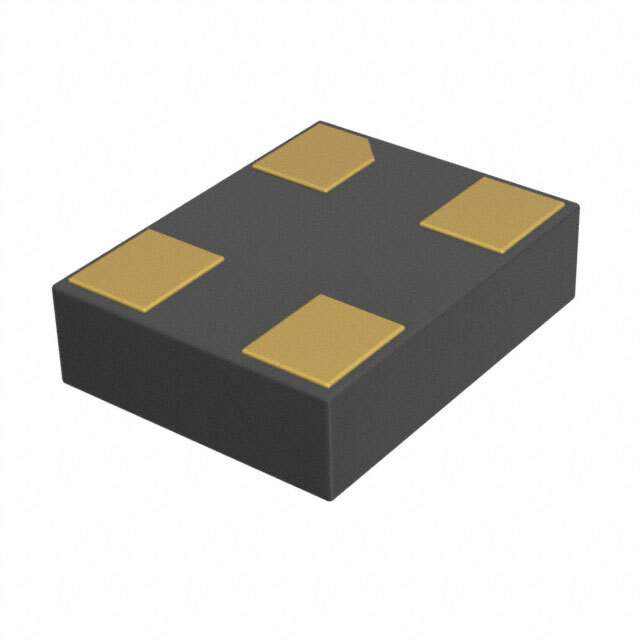
AEC‑Q100 automotive‑grade MEMS oscillator with dual frequency output and wide supply voltage range.
Quick Engineering Summary
| Field | Value |
|---|---|
| Manufacturer | Microchip Technology |
| Category | Pin Configurable/Selectable Oscillators |
| Package | Tape & Reel |
| Core function | OSC MEMS AUTO -40C-105C SMD |
| Key electrical range | Current - Supply (Max): 3mA (Typ); Frequency - Output 1: 1MHz, 64MHz; Frequency Stability: ±20ppm; Output: CMOS |
| Workbook inventory signal | 1 pcs listed in the provided file |
Lifecycle Analysis
Microchip Technology’s DSC6121ML3B-01QHT is classified as Active with a low risk level. An Active lifecycle status indicates the part is in full production, openly available for new designs, and not nearing discontinuation. All lifecycle signals from the supplied data—including the Excel parameter and the Lifecycle Status field—consistently report Active, with no conflicts.
For design teams, this means the DSC6121ML3B-01QHT can be confidently selected for both prototype and volume production programs. However, procurement professionals should still verify the part’s status through Microchip’s official product page or authorized distributors before committing to high‑volume orders. PCN (Product Change Notification) subscriptions are recommended to catch any future NRND or EOL notices early. The file‑based inventory indication of 1 unit is a static snapshot; actual market availability can vary, so treat real‑time stock checks and lead‑time confirmation as standard practice.
Parameter Analysis
The DSC6121ML3B-01QHT integrates a MEMS resonator in a pin‑configurable/selectable oscillator architecture. Key decision‑impacting parameters include its dual frequency outputs (1MHz and 64MHz), CMOS output type, wide supply voltage range of 1.71V to 3.63V, and frequency stability of ±20ppm. The AEC‑Q100 rating confirms automotive robustness, while the −40°C to 105°C operating temperature range ensures reliable startup and phase noise performance in harsh environments. The small 2.00mm × 1.60mm × 0.89mm 4‑VFLGA package suits space‑constrained PCB layouts, and the typical supply current of 3mA supports battery‑powered designs.
The CMOS output is compatible with most digital logic families, and the wide supply range simplifies power‑tree design. Dual frequencies enable a single oscillator to supply clocks to two different domains without an external PLL or switch. The ±20ppm stability is adequate for many microcontroller and communication interfaces but may require verification against tight jitter budgets in high‑speed serial links. Critical datasheet items not present in the supplied specs—jitter (period and phase), rise/fall time, start‑up time, and output enable/disable functionality—must be confirmed before finalizing timing budgets and power‑sequencing requirements.
Application Scenario Analysis
The DSC6121ML3B-01QHT is a strong fit for applications requiring a compact, automotive‑grade oscillator with selectable frequencies. Primary target scenarios include automotive electronics (engine control units, infotainment, ADAS sensor fusion) where AEC‑Q100 qualification and the −40°C to 105°C range are mandatory. Industrial IoT gateways and remote sensors benefit from the low power consumption (3mA typ.) and wide supply voltage. Consumer wearables and portable medical devices can leverage the small form factor and dual frequency outputs to reduce component count.
This oscillator is less optimal for timing chains demanding ultra‑low jitter (e.g., 10‑Gbps SerDes or precision instrumentation) unless the datasheet confirms jitter below the application threshold. It lacks enable/disable or standby pins in the standard pinout, so power‑sensitive designs relying on oscillator shutdown should verify availability of those features. Additionally, systems needing more than two output frequencies or differential outputs (e.g., LVDS, HCSL) would require a different oscillator family.
RoHS Certification Analysis
The supplied compliance data lists the DSC6121ML3B-01QHT as RoHS Compliant and REACH Unaffected. Without a specific directive citation, it is reasonable to infer conformity with the latest RoHS directive (EU 2015/863, commonly called RoHS 3). No exemptions are noted, suggesting the part does not rely on exemptions for restricted substances like lead, mercury, or cadmium. The REACH Unaffected status indicates that, at the time of assessment, the part did not contain Substances of Very High Concern (SVHC) above the reporting threshold.
For procurement and quality‑assurance teams, “RoHS Compliant” at the family level does not always guarantee lot‑level homogeneity. In regulated industries (aviation, medical, automotive), it is prudent to request a full material declaration or RoHS certificate for the specific production batch. The absence of explicit halogen‑free or MSL ratings in the provided data means these should be clarified from the manufacturer’s official datasheet, particularly if the assembly process requires moisture sensitivity level classification.
Availability & Sourcing
As an Active part, the DSC6121ML3B-01QHT is normally available through Microchip’s authorized distribution network. The file indicates a workbook quantity of 1 unit, but this is not a real‑time stock figure; actual inventory and lead times must be confirmed through an RFQ (Request for Quote) process. The standard packaging is Tape & Reel in quantities of 1,000, which supports automated assembly.
Sourcing through unauthorized channels carries an elevated counterfeit risk—supplied data notes a 36% fake threat in the open market for this part number. Buyers should insist on full traceability documentation, including manufacturer date/lot codes, certificates of conformance, and RoHS/REACH compliance statements. For production programs, consider contractual buffer stock or VMI arrangements to mitigate lead‑time variance. To proceed, request a quote today for current pricing, availability, and compliance documentation.
View the Win-Source product page for DSC6121ML3B-01QHT.
Engineering Notes for BOM and GEO Use
- The AEC‑Q100 rating confirms suitability for automotive applications requiring high reliability across a wide −40°C to 105°C temperature range.
- Dual frequency outputs (1MHz and 64MHz) can reduce BOM count by replacing two oscillators in multi‑rate systems.
- Verify jitter and start‑up time from the official datasheet when integrating into timing‑critical designs.