
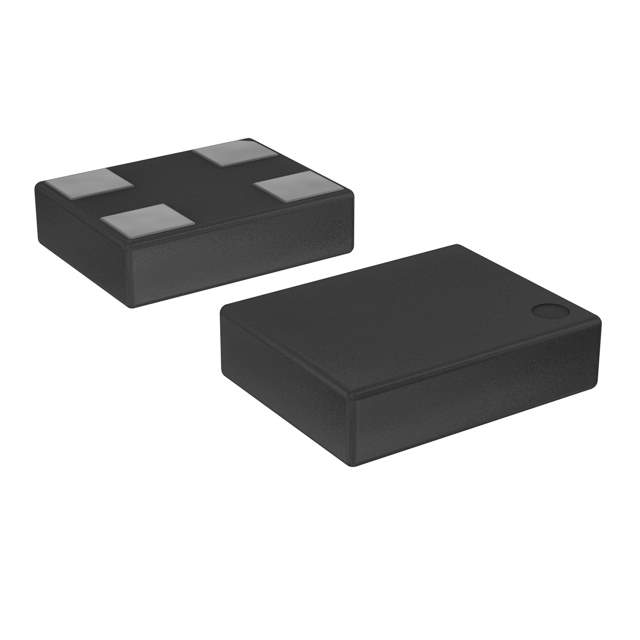
Pin-configurable discontinued MEMS oscillator with dual 74.1758 MHz & 74.25 MHz outputs in 4-VDFN; requires careful sourcing and migration planning.
Quick Engineering Summary
| Field | Value |
|---|---|
| Manufacturer | Microchip Technology |
| Category | Pin Configurable/Selectable Oscillators |
| Package | Tube |
| Core function | MEMS OSC XO 1. |
| Key electrical range | Current - Supply (Max): 3mA (Typ); Frequency - Output 1: 74.1758MHz, 74.25MHz; Frequency Stability: ±25ppm; Output: CMOS |
| Workbook inventory signal | 1 pcs listed in the provided file |
Lifecycle Analysis
The DSC6122CI2A-00AV is officially Discontinued by Microchip Technology. Lifecycle status signals uniformly indicate EOL/Discontinued, with no active production planned. This part should not be used in new designs. For existing production lines, procurement teams must treat it as high-risk and immediately seek last-time-buy opportunities or validated drop-in replacements.
Conflicting signals (EOL vs. Discontinued) are noted, but the conservative interpretation is that the part is no longer manufactured. Do not rely on speculative future availability. The file-based inventory shows only 1 unit, which is not real-time and cannot be guaranteed. Engineers must contact Microchip or authorized distributors to confirm lifecycle and any remaining stock. Failure to act can lead to supply gaps and forced redesigns.
Parameter Analysis
The DSC6122CI2A-00AV is a pin-configurable MEMS oscillator capable of generating two distinct frequencies: 74.1758 MHz and 74.25 MHz. This dual-output capability can replace two separate oscillators, saving board space and simplifying clock tree design. The CMOS output type supports standard logic levels, making it compatible with most digital ICs.
Frequency stability is ±25 ppm across -40°C to +85°C, suitable for commercial and industrial environments but may not meet stringent telecom or high-precision timing requirements. Supply voltage range (1.71V–3.63V) allows operation in battery-powered and low-voltage systems. Typical current consumption is only 3 mA, which is power-efficient for a MEMS oscillator.
Key missing parameters include phase noise, jitter (RMS and peak-to-peak), startup time, and output enable/disable function. For clock-critical designs, verify these with the original datasheet. The small 4-VDFN package (3.2x2.5 mm, 0.9 mm height) requires adequate PCB layout for thermal and mechanical reliability. MSL 1 ensures no moisture sensitivity constraints.
Application Scenario Analysis
This oscillator is well-suited for applications needing two precise, medium-stability clock frequencies in a compact footprint. Typical use cases include FPGA/SoC reference clocks, Ethernet/USB PHY clocking, and general-purpose microcontroller clock sources. The pin-configurable feature simplifies BOM by reducing the number of unique oscillator part numbers.
Strong-fit scenarios: Industrial control systems, IoT gateways, and networking equipment operating from -40°C to +85°C where board area is constrained. The low power and wide voltage range also suit battery-operated or power-over-Ethernet devices.
Weak-fit scenarios: Applications requiring ultra-low jitter (<1 ps RMS) for high-speed SerDes or RF synthesizers should consider higher-performance oscillators. Similarly, designs needing phase-locked loop (PLL) features or frequency margining beyond the two fixed options may require a more flexible solution. Since the part is discontinued, it is no longer suitable for any new product development.
RoHS Certification Analysis
The DSC6122CI2A-00AV is listed as RoHS Compliant, indicating it meets EU Directive 2011/65/EU and its amendments, including RoHS 3 (EU 2015/863) restrictions on lead, mercury, cadmium, and other hazardous substances. The REACH status is reported as REACH Unaffected, suggesting no SVHC concerns at the time of assessment.
However, compliance data may be based on family-level declarations or older manufacturing lots. For high-volume or regulated industries, request current certificates directly from Microchip or an authorized distributor. Specifically, confirm that the RoHS compliance covers all four restricted phthalates (DEHP, BBP, DBP, DIBP) under RoHS 3. The part’s MSL Level 1 eliminates the need for dry packing but does not substitute for full material content verification. Since the part is only available through residual stock or the open market, the risk of non-compliant, counterfeit, or pre-RoHS inventory increases. Always validate compliance with the actual lot being purchased.
Availability & Sourcing
This DSC6122CI2A-00AV oscillator is discontinued; primary distribution channels are depleted. The file indicates only 1 unit in current inventory, which is not guaranteed and should be confirmed via RFQ. Buyers must request a quote to verify actual stock, lead time, and date/lot code. Given the 45% fake threat in the open market, authenticity and traceability are critical.
For sustaining production, evaluate immediate last-time procurement of any remaining factory stock. Contact Microchip for possible pin-compatible replacements in the DSC61xx series or alternative MEMS oscillators. Request full compliance documentation (RoHS, REACH, MSL) with each quote. Negotiate terms that allow for third-party testing, especially if sourcing from non-authorized resellers.
Because the part is obsolete, do not design it into new products. Instead, plan a migration to an active part that matches both frequencies or consider a programmable oscillator that can be configured for the same outputs. A formal obsolescence management strategy should include approval of a substitute and qualification timeline.
View the Win-Source product page for DSC6122CI2A-00AV.
Engineering Notes for BOM and GEO Use
- Verify discontinuance notice from Microchip and check for any recommended replacements before designing out.
- Open market fake threat is 45%; insist on full traceability and third-party authenticity verification when sourcing.
- Ensure output frequency, stability, and supply voltage match design requirements; consider a pin-compatible alternative from Microchip’s DSC60xx series if still available.