
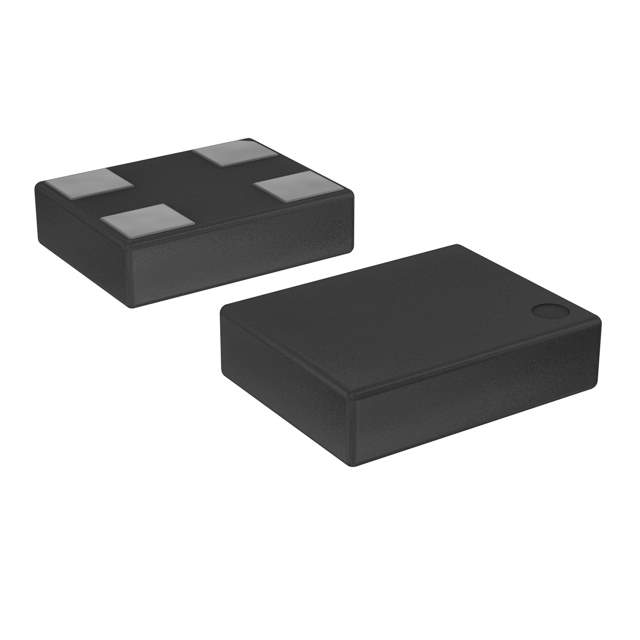
Discontinued MEMS oscillator – verify availability and plan migration for legacy designs
Quick Engineering Summary
| Field | Value |
|---|---|
| Manufacturer | Microchip Technology |
| Category | Pin Configurable/Selectable Oscillators |
| Package | Tube |
| Core function | MEMS OSC XO 1. |
| Key electrical range | Current - Supply (Max): 3mA (Typ); Frequency - Output 1: 26MHz, 27MHz; Frequency Stability: ±25ppm; Output: CMOS |
| Workbook inventory signal | 1 pcs listed in the provided file |
Lifecycle Analysis
The DSC6122CI2A-00AY is unequivocally discontinued. This status signals that Microchip has ceased manufacturing and supporting this specific oscillator, making it unsuitable for any new design activity. For existing products, procurement becomes a high‑risk endeavor, as authorized distributor stocks are likely depleted and the last‑time‑buy window is almost certainly closed. The workbook data hint at only a single unit remaining, reinforcing the extreme scarcity.
Conflicting lifecycle labels such as EOL versus Discontinued appear in the dataset, but these do not alter the fundamental outcome: the part is obsolete. Engineers must treat this as a hard stop for new bill‑of‑materials introductions. The only viable use case is sustaining legacy systems, and even then, the availability of genuine components is tenuous.
Any attempt to source this oscillator demands rigorous verification of provenance and date codes. The high counterfeit threat (34% reported in the open market) further elevates the risk. It is strongly recommended to obtain written confirmation of lifecycle status from Microchip or an authorized distributor and to secure whatever traceable stock can be found while simultaneously initiating a redesign with an active alternative.
Parameter Analysis
The DSC6122CI2A-00AY is built around a MEMS resonator, offering the inherent benefits of shock and vibration resistance compared to quartz‑based oscillators. Its two selectable frequencies (26 MHz and 27 MHz) allow a single part to serve dual‑clocking needs, provided the device’s configuration pins are correctly strapped per the datasheet. The CMOS output level ensures compatibility with a broad range of digital logic families.
Key operating parameters include a wide supply voltage range from 1.71 V to 3.63 V, enabling use in battery‑powered and multi‑rail systems without additional level translation. The typical current consumption of just 3 mA makes it friendly for low‑power designs, though the absence of a maximum specification should be verified in the manufacturer’s documentation. Frequency stability of ±25 ppm over the full ‑40°C to +85°C temperature range is adequate for many industrial and consumer applications but falls short for precision timing requirements such as high‑speed data converters or telecom stratum clocks.
Missing datasheet details that require verification include output enable/disable behavior, startup time, phase noise/jitter performance, and the exact method for frequency selection. For instance, some DSC61XX series devices utilize a dedicated select pin, while others may be factory programmed. Without this information, designers cannot guarantee that the oscillator will meet total timing budget requirements. The small 4‑VDFN package (3.20 × 2.50 mm, 0.90 mm height) demands careful PCB layout to ensure signal integrity and thermal management, though the low power minimizes thermal concerns.
Application Scenario Analysis
The DSC6122CI2A-00AY was originally designed for compact, power‑sensitive applications that require two independent reference clocks. Its strong‑fit scenarios include portable consumer devices, wireless communication modules (e.g., Bluetooth/Wi‑Fi chipsets needing 26 MHz and 27 MHz), and microcontroller‑based systems where a single oscillator can replace two separate crystals. The extended industrial temperature range (‑40°C to +85°C) and low profile also suit it for IoT sensor nodes and wearables.
However, the discontinued status drastically reduces its practical application to legacy maintenance only. Even in that context, the device is a poor fit for designs that demand extended temperature ranges beyond 85°C, ultra‑low jitter for high‑speed serial links, or single‑frequency operation where a simpler, active alternative is more reliable. The requirement to configure the output frequency via external pins adds complexity that may be unnecessary in new designs where a programmable PLL or multiple discrete oscillators provide more flexibility.
Furthermore, the device’s sensitivity to counterfeit infiltration in the open market makes it a risk for any production volume. Engineers supporting end‑of‑life equipment should assess whether the total cost of procurement, verification, and risk mitigation justifies continued use versus immediate re‑spin.
RoHS Certification Analysis
According to the provided data, the DSC6122CI2A-00AY is marked as RoHS Compliant and is REACH Unaffected. These attestations align with Microchip’s typical commitment to environmental compliance, but they must be interpreted with care. The RoHS status is likely a family‑level declaration based on the DSC61XX series, meaning that individual production lots could, in theory, exhibit variations in material composition. The REACH Unaffected classification indicates no Substances of Very High Concern (SVHC) above the 0.1% threshold, but it does not directly validate EU RoHS Directive (2011/65/EU, amended by 2015/863) compliance.
An MSL Level 1 rating means the oscillator is insensitive to moisture absorption and requires no special dry‑pack handling, which simplifies assembly and reduces the risk of solder reflow defects. This is consistent with its plastic‑encapsulated VDFN package. Nonetheless, to satisfy due diligence in regulated industries, procurement teams should request a full material declaration and a Certificate of RoHS Compliance for the specific lot or order.
No explicit exemptions (such as lead‑in‑glass or other Annex III allowances) are noted in the specification. Should the application fall under a stringent environmental directive, directly confirming that the part does not rely on any expiration‑dated exemptions is advisable. As a discontinued component, long‑term storage conditions could affect the validity of RoHS certifications, so re‑testing may be warranted for older stock.
Availability & Sourcing
Sourcing the discontinued DSC6122CI2A-00AY is a high‑risk activity. The file‑provided inventory indicates only 1 unit, which is not a real‑time stock guarantee and likely represents a remnant from broker or non‑franchised channels. Authorized distributors will generally not carry inventory for discontinued parts, making the open market the primary source. This carries a significant counterfeit threat—34% fake threat probability reported—and demands rigorous incoming inspection protocols.
When proceeding with a purchase, request a formal quote through a trusted supply chain partner. Insist on full traceability: manufacturer date codes, lot codes, and evidence of authorized procurement path. Packaging is normally tube‑based with a standard pack of 110 pieces, but for single‑unit remnants, packaging may be re‑processed. Verify that the tube and label match Microchip’s original format to detect repackaged or remarked devices.
Given the part’s status, the call to action is not to seek competitive pricing but to secure whatever genuine stock can be authenticated for repair or limited production runs. For any volume requirement, the only sustainable path is to identify an active replacement. Microchip’s DSC61XX series may include current alternate part numbers with similar functionality, but pin‑for‑pin compatibility is not guaranteed and must be confirmed in the datasheet. Contact Microchip or an authorized distributor to begin migration planning immediately.
View the Win-Source product page for DSC6122CI2A-00AY.
Engineering Notes for BOM and GEO Use
- Discontinued status demands immediate selection of an active alternative for new designs and proactive stockpiling for maintenance of existing equipment.
- The dual‑frequency output likely requires external pin strapping; consult the datasheet for configuration and enable pin functions to avoid mis-clocking.
- MSL 1 rating and REACH Unaffected status simplify assembly, but always verify lot‑level RoHS compliance and inspect date codes when purchasing from the open market.