
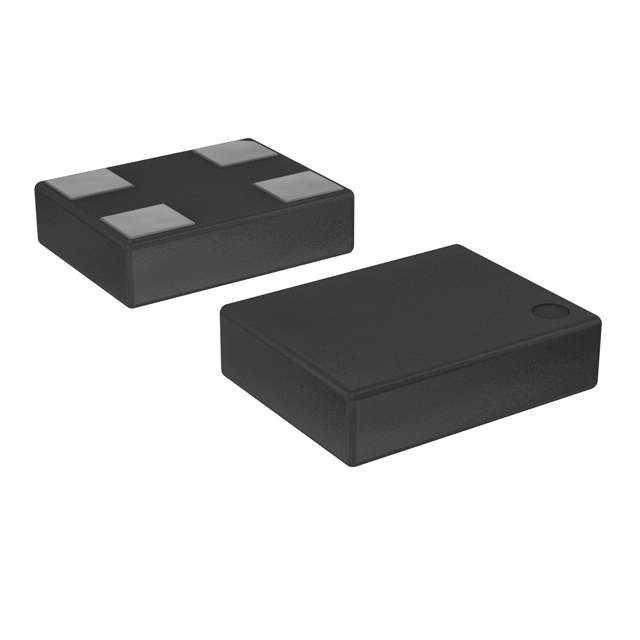
Discontinued dual-output MEMS oscillator in 4-VDFN package. Verify lifecycle and availability before procurement.
Quick Engineering Summary
| Field | Value |
|---|---|
| Manufacturer | Microchip Technology |
| Category | Pin Configurable/Selectable Oscillators |
| Package | Tube |
| Core function | MEMS OSC XO 1. |
| Key electrical range | Current - Supply (Max): 3mA (Typ); Frequency - Output 1: 24MHz, 48MHz; Frequency Stability: ±25ppm; Output: CMOS |
| Workbook inventory signal | 1 pcs listed in the provided file |
Lifecycle Analysis
The DSC6122CI2A-00B2 from Microchip Technology is officially discontinued, as indicated by multiple lifecycle signals. This status carries a high procurement risk for any application. New designs should not incorporate this part, and existing designs must transition to a replacement solution.
For production systems currently using this oscillator, immediate action is required to qualify an alternative or secure end-of-life inventory. The file-provided quantity of 1 unit does not guarantee real-time availability; actual stock may be extremely limited or exhausted. Verify directly with Microchip or authorized distributors for any last-time buy remnants.
Designers should note that discontinued MEMS oscillators may lack long-term technical support and datasheet updates. A migration to an active DSC61XX series variant or a different pin-configurable oscillator platform should be evaluated to ensure supply continuity.
Parameter Analysis
Key decision-relevant parameters for the DSC6122CI2A-00B2 include its dual frequency outputs of 24MHz and 48MHz, CMOS output type, and ±25ppm frequency stability. The supply voltage range of 1.71V to 3.63V enables use in both 1.8V and 3.3V systems, while typical current consumption of only 3mA supports power-sensitive designs.
The MEMS resonator provides inherent shock and vibration immunity compared to quartz, and the 4-VDFN package (3.2mm x 2.5mm) with 0.9mm height suits space-constrained PCBs. The extended industrial temperature range (-40°C to 85°C) covers most embedded applications.
Important parameters missing from the available data include phase noise, integrated jitter, start-up time, and aging characteristics. These profoundly affect clock tree performance in high-speed digital or RF designs. Engineers must consult the original Microchip datasheet for these values before considering this part for any legacy replacement or limited production run.
Application Scenario Analysis
The DSC6122CI2A-00B2 is tailored for applications requiring dual reference clocks, such as microcontrollers with multiple clock domains, FPGAs needing a primary and secondary oscillator, or communication interfaces that demand two distinct frequencies. The pin-configurable nature allowed single-part inventory for different frequency combinations.
Strong-fit scenarios include legacy industrial controls, IoT gateways, and consumer electronics where this part was originally designed in and field-proven. However, its discontinued status makes it unsuitable for any new product introduction. Weak-fit scenarios are high-reliability systems (automotive, medical) unless rigorous requalification is performed, and RF designs sensitive to phase noise where MEMS oscillators may exhibit higher jitter than low-noise quartz alternatives.
The wide supply voltage and small footprint also align with battery-operated portable devices, but the unavailability of the part negates its original advantages. Any existing design should verify that the specific output frequency combination matches, as these devices are factory programmed and not user-configurable.
RoHS Certification Analysis
The DSC6122CI2A-00B2 is documented as RoHS Compliant, aligning with EU directive 2015/863 (RoHS 3). This compliance is stated at the product family level; for discontinued parts, it is prudent to request a specific lot-level certificate of compliance from the supplier to ensure the exact stock meets current standards.
REACH status is listed as unaffected, indicating no SVHC concerns based on manufacturer declarations. While REACH is not a direct substitute for RoHS, it complements the environmental compliance profile. MSL Level 1 (unlimited) means the device is not moisture-sensitive, simplifying handling during prototyping or rework.
Given the part's obsolescence, any remaining inventory may have been stored for extended periods. Validate that RoHS compliance applies to the actual date of manufacture and that no exemptions have expired. For export-controlled designs, the EAR99 ECCN and HTSUS 8542.39.0001 coding are noted, but trade compliance should be rechecked at the time of procurement.
Availability & Sourcing
As a discontinued MEMS oscillator, the DSC6122CI2A-00B2 presents significant sourcing challenges. The file-provided inventory of 1 unit must be treated as a snapshot and not real-time availability; actual stock may differ. Request a current quote through authorized Microchip distributors or specialized obsolete-component brokers to confirm any existing lot.
Traceability is critical: ask for date and lot codes, packaging condition (Tube, standard pack of 110), and full compliance documentation. The open-market fake threat is 36%, so insist on Microchip-authorized supply chain provenance. Do not rely on secondary sources without rigorous incoming inspection.
Given the discontinued lifecycle, the recommended action is to source carefully for any short-term repair needs while actively evaluating a replacement. If you must procure, verify lifecycle status with the manufacturer directly, inspect for physical integrity, and plan for last-time buy volumes. For new designs, this part should not be considered; transition to an active pin-configurable oscillator from Microchip or an alternative vendor.
View the Win-Source product page for DSC6122CI2A-00B2.
Engineering Notes for BOM and GEO Use
- Verify all stock authenticity using Microchip's authorized distribution channels due to 36% fake threat risk in open market.
- The dual 24MHz/48MHz outputs are factory configured and not field-programmable; ensure frequency combination matches your design.
- Despite RoHS compliance, request lot-level certification and MSL handling records for any remaining inventory to ensure long-term reliability.