
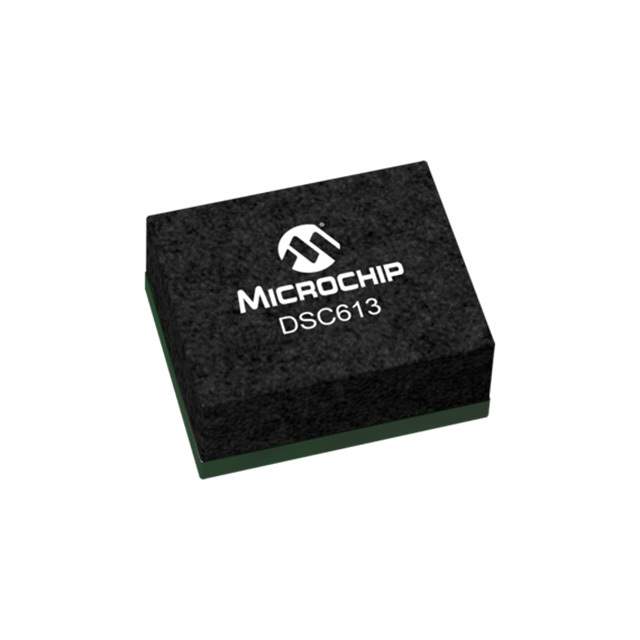
Microchip Technology 3-Output MEMS Clock Generator
Quick Engineering Summary
| Field | Value |
|---|---|
| Manufacturer | Microchip Technology |
| Category | Pin Configurable/Selectable Oscillators |
| Package | Bag |
| Core function | 3-OUTPUT MEMS CLOCK GENERATOR, 2 |
| Key electrical range | Current - Supply (Disable) (Max): 1.5 µA; Current - Supply (Max): 6.5mA; Frequency - Output 1: 25MHz; Frequency - Output 2: 12MHz |
| Workbook inventory signal | 1 pcs listed in the provided file |
Lifecycle Analysis
The DSC613NI3A-0105 from Microchip Technology is classified as Active with a low lifecycle risk. All lifecycle signals in supplier data align, confirming full production status. This means the device remains in volume manufacturing and is fully supported for new design-ins and ongoing production purchases. No NRND or EOL notices have been issued for this part.
Engineers planning long-lifetime products can confidently select this part, but should periodically reconfirm lifecycle status through official Microchip PCN/PDN systems, as unforeseen obsolescence can occasionally occur. The file-provided inventory shows one unit, which serves only as a static snapshot and does not reflect real-time stock availability; always request current stock and lead time before committing to production runs.
For projects where longevity exceeds five years, registering with Microchip’s customer notification service is recommended to receive immediate alerts on any status changes.
Parameter Analysis
The DSC613NI3A-0105 integrates three MEMS oscillators in a single 2.0 mm × 1.6 mm VFLGA package. Output frequencies of 25 MHz, 12 MHz, and 32.768 kHz address mixed-clock domains. The LVCMOS output standard ensures straightforward interfacing with most MCUs, FPGAs, and SoCs. Supply voltage ranges from 1.71 V to 3.63 V, allowing direct operation from common 1.8 V, 2.5 V, or 3.3 V rails without level shifting, while the 6.5 mA maximum active current and 1.5 µA disable current support battery-powered and Always-On designs.
Frequency stability of ±20 ppm over the full –40°C to +85°C range provides adequate timing accuracy for industrial and commercial applications. The MEMS resonator inherently offers better shock and vibration tolerance compared to quartz, which improves reliability in mechanically harsh environments. The 0.89 mm height suits low-profile modules.
Critical missing datasheet parameters that should be verified include phase jitter (integrated over 12 kHz to 20 MHz), output rise/fall times, output‑enable timing, and aging over lifetime. These directly affect signal integrity, power sequencing, and long‑term frequency drift. Designers must consult the full Microchip datasheet for these specifications to ensure compatibility with their system’s clocking tree.
Application Scenario Analysis
The dual‑output configuration of the DSC613NI3A-0105 makes it a strong candidate for embedded systems requiring a system clock and a real‑time clock (RTC) reference. The 25 MHz output can drive an MCU or Ethernet PHY, the 12 MHz can serve a USB or display controller, and the 32.768 kHz provides an RTC time base, all from one chip, reducing BOM and board space. Industrial IoT gateways, portable medical monitors, and smart metering devices benefit from this integration.
In contrast, applications demanding ultra‑low jitter (below 1 ps RMS) for high‑speed SerDes or RF PLLs may find this part unsuitable without additional filtering, as the datasheet jitter performance is not specified in the provided summary. Similarly, systems requiring operation beyond the industrial temperature range or in radiation‑prone environments should evaluate the MEMS resonator’s suitability more carefully. The device’s small footprint is ideal for wearables, but thermal management may be needed if all three outputs are heavily loaded at high ambient temperatures.
RoHS Certification Analysis
The DSC613NI3A-0105 is marked RoHS Compliant, indicating it meets EU Directive 2011/65/EU including the 2015/863 amendment (RoHS 3). Its REACH status is unaffected, meaning no SVHCs above threshold are present. The moisture sensitivity level is MSL 1, which allows unlimited floor life and avoids complex storage conditions prior to reflow soldering.
For procurement teams, these certifications simplify import into the EU and similar regulated markets. However, compliance documentation should be requested on a per‑lot basis, as family‑level declarations do not guarantee batch uniformity. High‑reliability sectors (automotive, medical) should request full material declarations and, if necessary, commission third‑party RoHS testing to close any compliance gaps before production release.
Availability & Sourcing
Microchip’s DSC613NI3A-0105 is an Active, full‑production part, yet the file‑provided inventory shows only a single unit. This snapshot is not real‑time; actual global availability may vary significantly. Engineers and buyers should request a quote through authorized distribution channels to confirm current stock, lead time, and minimum order quantities. The standard package quantity is 100 units, shipped in bags, but tape‑and‑reel options may exist per part number variant.
Of particular concern is a 57% fake‑threat rating in the open market, which highlights the risk of counterfeit or gray‑market parts. To mitigate this, source exclusively from Microchip‑authorized distributors and insist on full traceability, date/lot code documentation, and manufacturer‑backed test reports. Verify lifecycle status and RoHS/REACH certificates with every shipment. For long‑term production, negotiate a supply agreement or buffer stock to guard against allocation. Request a quote now to lock in your requirements and ensure genuine, compliant components for your design.
View the Win-Source product page for DSC613NI3A-0105.
Engineering Notes for BOM and GEO Use
- Verify output enable/disable timing and startup time from the official Microchip datasheet to avoid power‑sequencing issues.
- The 57% open‑market fake threat demands sourcing only through authorized Microchip distributors with full traceability documentation.
- MSL 1 classification simplifies PCB assembly: no dry‑packing or bake requirements, reducing handling costs.