
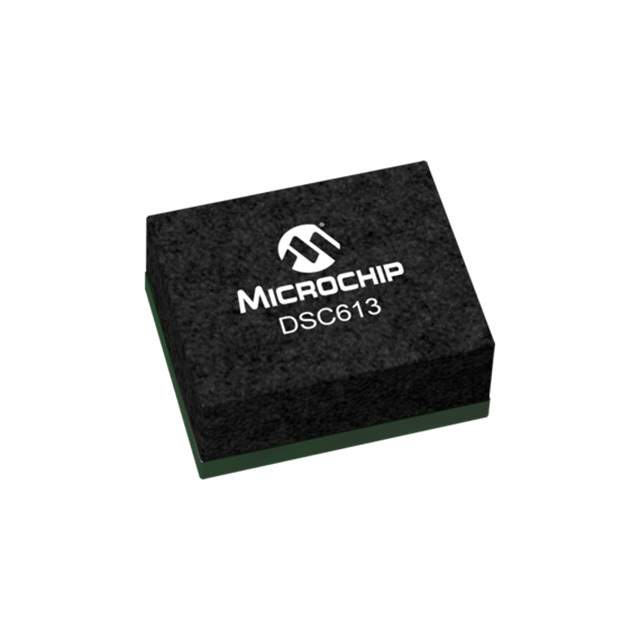
Triple-output MEMS clock generator from Microchip Technology, ideal for space-constrained multi-clock designs.
Quick Engineering Summary
| Field | Value |
|---|---|
| Manufacturer | Microchip Technology |
| Category | Pin Configurable/Selectable Oscillators |
| Package | Bag |
| Core function | 3-OUTPUT MEMS CLOCK GENERATOR 1. |
| Key electrical range | Current - Supply (Disable) (Max): 1.5 µA; Current - Supply (Max): 6.5mA; Frequency - Output 1: 25MHz; Frequency - Output 2: 12MHz |
| Workbook inventory signal | 1 pcs listed in the provided file |
Lifecycle Analysis
The DSC613PI3A-0105 is in Active lifecycle status according to manufacturer signals. This indicates full production, ongoing support, and availability for new designs without any announced discontinuation. Engineers can confidently incorporate this Microchip clock generator into new projects and rely on stable supply for production ramp-up.
All lifecycle indicators align without conflict. The provided inventory snapshot lists a workbook quantity of one unit, but this is not a real‑time stock level and does not reflect market availability. As an Active device, standard distributor lead times apply, and volume pricing can be negotiated through Microchip’s authorized channels.
For programs with long lifecycles, it is still advisable to subscribe to Microchip’s product notification system to stay informed of any future changes. Ensuring firmware and board designs can accommodate an alternative pin‑compatible or functionally similar device is a prudent engineering practice even for Active parts.
Parameter Analysis
Key decision parameters for the DSC613PI3A-0105 center on its three independent frequency outputs: 25 MHz, 12 MHz, and 32.768 kHz. The 25 MHz and 12 MHz outputs serve typical processor or interface clocks, while the 32.768 kHz output is ideal for real‑time clock (RTC) or low‑power always‑on domains. All outputs are LVCMOS, compatible with most digital logic families, supporting a wide supply range from 1.71 V to 3.63 V.
Frequency stability is rated at ±20 ppm, sufficient for many industrial and consumer applications where precise timing is required but not to telecom‑grade specifications. Supply current is maximally 6.5 mA during operation and drops to only 1.5 µA when outputs are disabled, enabling aggressive power budgeting in battery‑operated devices. The 6‑VFLGA package measures just 1.60 mm × 1.20 mm with a low 0.89 mm height, saving significant board space.
Critical parameters not provided in the summary data include output jitter, phase noise, rise/fall times, and start‑up time. These directly affect signal integrity and timing closure in high‑speed designs. Engineers must consult the full Microchip DSC613 data sheet to verify these values. The enable/disable function is included but the specification lacks details on disable timeout or glitch behavior, which should also be confirmed.
Application Scenario Analysis
The DSC613PI3A-0105 fits applications requiring multiple clock frequencies from a single miniature component. Its triple‑output configuration targets microcontrollers, FPGAs, or SoCs that need separate reference clocks for core, peripherals, and RTC functions. The combination of 25 MHz, 12 MHz, and 32.768 kHz is a common provisioning set for IoT edge nodes, wearables, and industrial sensor modules.
Strong‑fit scenarios include battery‑powered portable devices where low active and disable currents extend runtime. The wide 1.71 V to 3.63 V range accommodates both coin‑cell and Li‑ion battery direct operation without additional regulation. The MEMS‑based resonator inherently provides better shock and vibration immunity compared to quartz‑based oscillators, suiting harsh environments. The industrial temperature range of -40°C to +85°C further broadens its use in outdoor or factory‑floor equipment.
Weak‑fit scenarios involve applications demanding ultra‑low jitter for high‑speed SERDES links, RF transceivers, or precision ADCs. The data sheet’s missing jitter specifications make it impossible to assess suitability without measurement. Likewise, systems requiring differential outputs (e.g., LVDS, HCSL) would need external converters. For purely RTC‑only applications, a dedicated 32.768 kHz crystal oscillator may be more cost‑effective.
RoHS Certification Analysis
Microchip states the DSC613PI3A-0105 is RoHS Compliant, implying adherence to European Union hazardous substance restrictions. The specific directive version is not enumerated in the supplied data, but typically this aligns with EU 2015/863 (RoHS 3) unless otherwise noted. The REACH Unaffected status indicates the device does not contain Substances of Very High Concern above the regulatory threshold.
MSL classification is Level 1 with unlimited floor life. This eliminates the need for dry packing and controlled storage before reflow, simplifying logistics and reducing manufacturing risk. However, compliance documentation should be obtained at the lot level to satisfy audit trails, as family‑level declarations may not capture batch‑specific variations.
No exemption information is listed. If the design contains lead in exempted applications (e.g., internal solder bumps for flip‑chip), it would still be considered RoHS compliant. Engineers should request the full Material Declaration Certificate from Microchip or their distributor to confirm the absence of any non‑exempt restricted substances.
Availability & Sourcing
As an Active part, the DSC613PI3A-0105 can be procured through Microchip’s authorized distribution network with standard lead times. The workbook shows a snapshot single‑unit quantity, but this is not indicative of real‑time channel inventory. Request a quote from your preferred franchised distributor for current stock levels and pricing.
Sourcing strategy must address the reported 36% counterfeit threat in the open market. Always buy from Microchip‑authorized sources and insist on full traceability, including date and lot code verification. Legitimate devices are supplied in bag packaging with a standard package quantity of 100 units. Ensure the compliance certificate (RoHS/REACH) accompanies each shipment.
For design‑in evaluation, sample quantities are available through Microchip’s direct sales or approved distributor programs. Given the active lifecycle, no last‑time‑buy or end‑of‑life negotiations are necessary. To secure supply for production, place scheduled orders with a blanket agreement and verify production readiness with the manufacturer. The MSL 1 rating reduces storage concerns, but inspect for physical damage upon receipt.
View the Win-Source product page for DSC613PI3A-0105.
Engineering Notes for BOM and GEO Use
- Verify phase noise and jitter performance from Microchip datasheet, as these critical timing parameters are not listed in current summary spec data.
- With a 36% counterfeit threat reported in open market, source exclusively through authorized Microchip distributors and request date/lot code traceability.
- The MSL 1 rating and -40°C to +85°C operating range support standard industrial reflow processes and field use.