
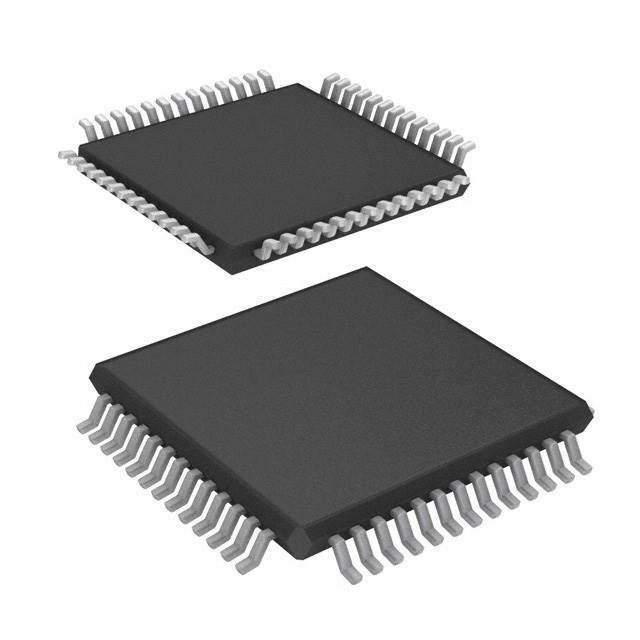
Get specifications, lifecycle analysis, and procurement guidance for the DSD1608PAHR 8-channel audio DAC.
Quick Engineering Summary
| Field | Value |
|---|---|
| Manufacturer | Texas Instruments |
| Category | Data Acquisition - ADCs/DACs - Special Purpose |
| Package | 52-TQFP (10x10) |
| Core function | IC DAC/AUDIO 24BIT 200K 52TQFP |
| Key electrical range | Supply and Demand Status: Balance; Supply Voltage - Operating: 3 V to 3.6 V, 5V; Temperature Range - Operating: -25°C to 85°C; Voltage Supply Source: Analog and Digital |
| Workbook inventory signal | 5535 pcs listed in the provided file |
Lifecycle Analysis
Texas Instruments has designated the DSD1608PAHR as end-of-life (EOL). This means the part is no longer recommended for new designs, and its production pipeline has been or will be closed. For existing designs, engineers must verify the last-time buy (LTB) and last-time ship (LTS) dates directly with Texas Instruments or authorized distributors, as these dates determine the final window for securing inventory.
The provided data file indicates a stock quantity of 5,535 units, but this figure is file-based and does not reflect live market depth. Buyers should not rely on this number without real-time quotation. The EOL status raises risks for long-life applications; procurement teams should immediately evaluate alternative solutions or initiate lifetime buy negotiations. Without an official product change notification (PCN) on hand, the exact obsolescence timeline remains uncertain, so direct engagement with TI’s product group is essential.
All lifecycle signals in our dataset align on EOL, leaving no ambiguity about the part’s status. For sustaining production, securing a sufficient buffer stock and qualifying a drop-in replacement ahead of time will mitigate supply disruption. Do not allocate the DSD1608PAHR in new designs without a waiver and a clear migration path.
Parameter Analysis
The DSD1608PAHR is an 8-channel audio DAC with 24-bit resolution and a maximum sampling rate of 200 kHz. The 8-channel architecture makes it suitable for multi-channel audio systems, while the 24-bit depth ensures high dynamic range potential. The supported data interfaces—DSD and PCM—offer flexibility for both direct stream digital and pulse-code modulation audio inputs, which is crucial in audiophile and professional audio equipment.
The analog and digital supply voltages are specified at 3 V to 3.6 V and 5 V, requiring careful power sequencing and decoupling, especially the 5 V supply for analog stages. The operating temperature range of -25°C to 85°C indicates industrial-grade capability, but designers must derate for thermal conditions inside enclosures. However, critical audio performance parameters such as signal-to-noise ratio (SNR), total harmonic distortion plus noise (THD+N), and output drive capability are absent from the provided data. These values directly impact sound quality and must be pulled from the official Texas Instruments datasheet before committing to board design.
Additionally, the 52-TQFP (10x10 mm) package requires standard SMD assembly and offers moderate routing density, but thermal resistance details should be checked to ensure adequate heat dissipation. For new designs, the absence of these key specs underscores the need to evaluate TI's recommended successor part, which should be fully characterized.
Application Scenario Analysis
Given its 8-channel configuration and support for DSD and PCM audio formats, the DSD1608PAHR is ideally suited for multi-channel digital audio playback systems. Strong application fits include AV receivers, surround-sound processors, and digital audio workstations where high channel count and DSD compatibility are valued. Professional recording and mixing consoles may also benefit from the 24-bit resolution and 200 kHz sampling rate, which allow for high-fidelity conversion.
In automotive audio amplifiers that require multi-channel outputs with robust temperature tolerance (-25°C to 85°C), this DAC could be deployed, provided that the power management and EMC requirements are met. Weak-fit scenarios arise in ultra-compact, battery-powered consumer devices where power efficiency is critical, as the supply voltage range suggests operation may not be optimized for low-power sleep modes. Also, cost-sensitive, high-volume products are less suited because the EOL status limits long-term availability and the benefit of integrating a 24-bit, 8-channel DAC may be overkill for simpler mono or stereo applications.
Designers should reference the complete datasheet for total harmonic distortion and dynamic range figures to confirm suitability for audiophile-grade gear. No application-specific certifications (e.g., automotive qualification) are reported, so for automotive or medical use, additional qualification would be necessary.
RoHS Certification Analysis
The DSD1608PAHR is listed as RoHS Compliant, indicating that it meets the European Union’s Restriction of Hazardous Substances directive. This means the part is manufactured without lead, mercury, cadmium, hexavalent chromium, polybrominated biphenyls (PBBs), and polybrominated diphenyl ethers (PBDEs) above permitted thresholds. However, the specific RoHS revision (e.g., RoHS 2 or RoHS 3) is not detailed in the source data; engineers should confirm with Texas Instruments whether additional substances restricted under RoHS 3 (such as certain phthalates) are absent.
Since compliance is often declared at the product family level, lot-level variations can occur. Therefore, procurement teams should request a Certificate of Compliance (CoC) with each shipment, especially if the end product requires documented lead-free assembly for regulatory markets. The part is a surface-mount device packaged in tape and reel, which is compatible with standard RoHS-compliant reflow soldering processes.
No REACH data is provided, so buyers must not assume REACH compliance without separate confirmation. The absence of halogen-free or moisture sensitivity level (MSL) information in the tile means these attributes are unverified; verify packaging labels for MSL to prevent moisture-induced damage during assembly. Overall, the RoHS status is favorable for markets such as Europe, but due diligence on accompanying documentation is required to avoid non-compliance penalties.
Availability & Sourcing
The DSD1608PAHR is an end-of-life component with a high risk of diminishing supply. Our database indicates 5,535 units in stock on reel packaging (TR), but this is file-provided and not a real-time guarantee; actual availability may change rapidly. Given a 44% fake threat in the open market, sourcing from unauthorized channels carries substantial counterfeit risk.
Engineers and buyers must prioritize authorized Texas Instruments distributors or franchised partners, and demand full traceability documentation including date codes and lot codes. Request a Certificate of Compliance and any remaining manufacturer’s notice of discontinuance to confirm the legitimacy of the parts. For sustaining production, we recommend initiating a last-time buy (LTB) immediately if not already done, and contacting TI for possible excess inventory or end-of-life alternatives.
The reel packaging is suitable for automated assembly, but verify that the storage conditions (dry storage and humidity protection) have been maintained to avoid soldering defects. Users should request a quote to lock in current availability and negotiate fixed delivery schedules. Since the lifecycle is definitively EOL, do not commit to new designs; instead, consider a pin-compatible replacement from TI’s current audio DAC portfolio. By securing a certified source and acting before inventory depletion, you can maintain product lines without costly redesigns.
View the Win-Source product page for DSD1608PAHR.
Engineering Notes for BOM and GEO Use
- The DSD1608PAHR is an end-of-life (EOL) part; new designs should use a recommended replacement from Texas Instruments if available, or evaluate pin-compatible alternatives from the audio DAC product line.
- Verify the exact RoHS compliance certificate for any procured lot, especially if design requires lead-free soldering processes, as compliance status may vary by date code.
- Given a 44% fake threat in the open market, source only through authorized distributors or brokers with strong traceability and authenticity verification procedures.