
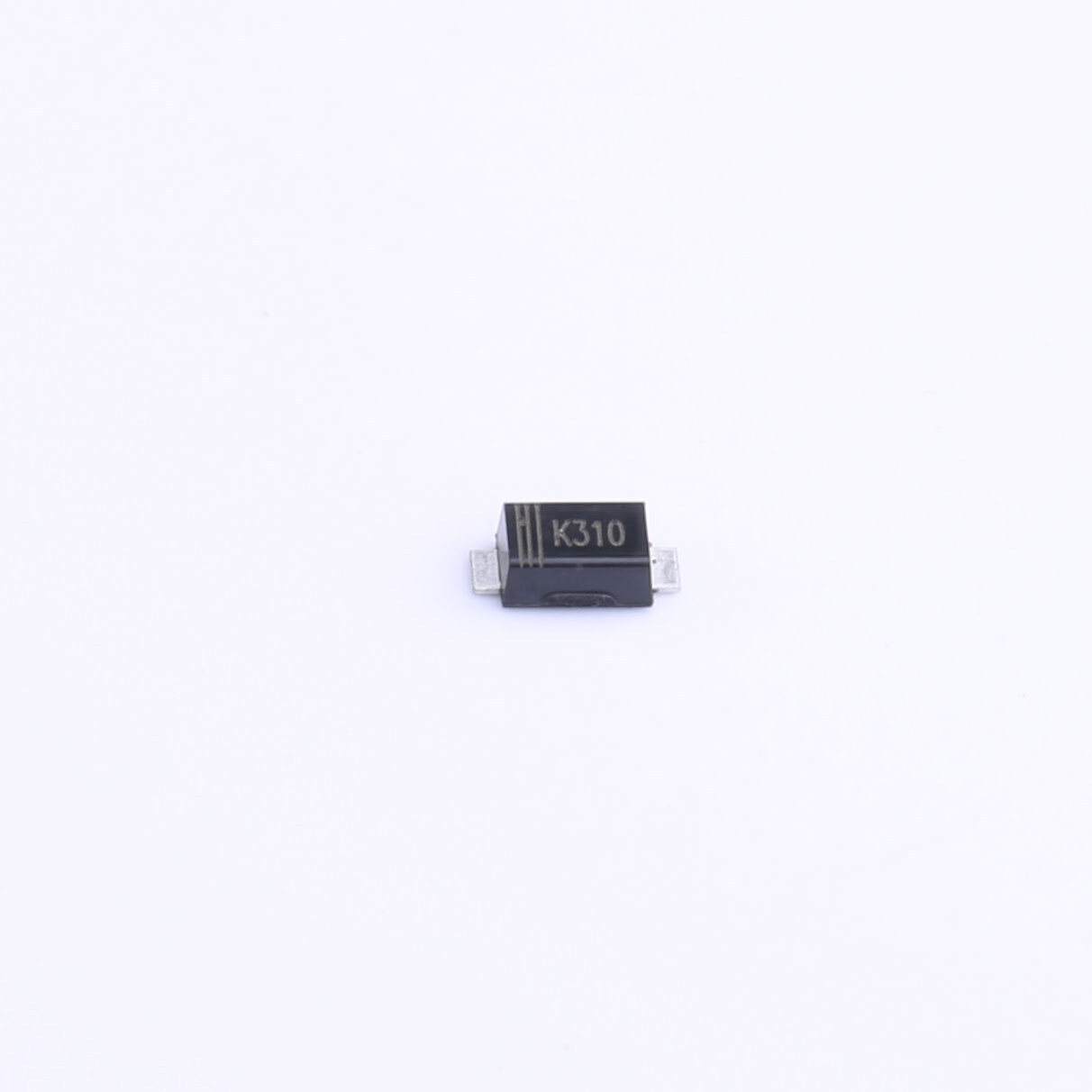
Active lifecycle, 100V, 3A, SOD-123FL. Fast recovery Schottky diode for efficient power rectification.
Quick Engineering Summary
| Field | Value |
|---|---|
| Manufacturer | ShenZhen SlkorMicro Semicon Co. Ltd |
| Category | Schottky Diodes |
| Package | Tape & Reel (TR) |
| Core function | DIODE SCHOTTKY 100V 3A SOD123FL |
| Key electrical range | Capacitance @ Vr, F: 160pF @ 4V, 1MHz; Current - Average Rectified (Io): 3A; Current - Reverse Leakage @ Vr: 300µA @ 100V; Operating Temperature - Junction: -55°C ~ 150°C |
| Workbook inventory signal | 495000 pcs listed in the provided file |
Lifecycle Analysis
The DSK310 from ShenZhen SlkorMicro Semicon is currently listed as Active across all lifecycle indicators, including product status, lifecycle status, and Excel parameters. This means the part is in full production, supported for new design-in and ongoing volume procurement. With no conflicting end-of-life signals, engineers can confidently incorporate the DSK310 into new designs without immediate risk of obsolescence. Standard lifecycle management practices apply, such as monitoring manufacturer notices.
While the file indicates an inventory quantity of 495,000 units, this should not be treated as guaranteed real-time availability. Buyers should request a quote to confirm actual stock, lead times, and lot traceability. Active lifecycle status typically ensures reliable supply, but periodic revalidation is recommended for long-term programs.
Parameter Analysis
The DSK310 Schottky diode offers a DC reverse voltage (Vr) rating of 100V and an average rectified current (Io) of 3A, making it suitable for moderate power rectification tasks. The forward voltage (Vf) is specified at a maximum of 850mV at 3A, which is competitive for a 100V Schottky and indicates low conduction losses. Reverse leakage current is 300µA at 100V, a value that should be factored into thermal and efficiency budgets, as it rises with junction temperature. Capacitance is 160pF at 4V, 1MHz, which is low enough for many switching applications but should be evaluated against high-frequency requirements.
Key parameters not detailed in the provided data include thermal resistance (junction-to-ambient and junction-to-case), peak repetitive reverse voltage, surge current capability, and total power dissipation. These are critical for thermal design and reliability assessment. Engineers should refer to the full DSK310 datasheet to obtain these values and perform derating analysis, particularly for elevated ambient or high-duty-cycle operation. The SOD-123FL surface-mount package provides a compact footprint but requires adequate PCB copper area for heat spreading to keep the junction within the -55°C to 150°C operating range.
Application Scenario Analysis
The DSK310 is well-suited for low-voltage power supply output rectification, such as in AC/DC adapters, DC/DC converters, and battery charging circuits. Its 100V rating and fast recovery characteristics make it appropriate for secondary-side rectification in flyback and forward converters, freewheeling diodes in buck regulators, and reverse polarity protection in 48V or 24V systems. The low forward voltage enhances efficiency, especially in battery-operated equipment where every milliwatt counts.
In applications requiring extremely low leakage or ultra-high switching frequencies above 1MHz, the DSK310’s 160pF capacitance and 300µA leakage may be a limiting factor. Similarly, in high-temperature environments pushing the junction limit, careful thermal simulation is required. It is not designed for primary-side rectification of mains voltage directly without a transformer. Overall, the DSK310 fits best in compact, surface-mount power designs where a balance of voltage, current, and packaging is needed.
RoHS Certification Analysis
The DSK310 is listed as RoHS Compliant by ShenZhen SlkorMicro Semicon. While the specific EU directive version (such as RoHS 3 (2015/863)) is not explicitly stated in the provided data, the RoHS Compliant designation typically implies conformance to the current applicable standards at the time of manufacture. For regulated industries or EU market access, it is advisable to request a formal certificate of compliance that details the lab testing reports and covers the specific lot received.
No exemptions are indicated in the supplied data. Since RoHS compliance is often declared at the product family level, lot-level documentation should be obtained to confirm absence of restricted substances beyond the certificate. REACH status is not provided, so if REACH compliance is required, it must be verified separately with the manufacturer. RoHS compliance alone does not guarantee REACH compliance.
Availability & Sourcing
To procure the DSK310, buyers should engage through an RFQ process that validates current inventory, lead times, and lot/date code traceability. The part is supplied in Tape & Reel packaging, suitable for automated pick-and-place assembly. While a file quantity of 495,000 units is noted, this figure is not a real-time availability guarantee and should be confirmed via a quotation request. Ensure that the supplier provides lifecycle status confirmation and RoHS compliance certificates as part of the sourcing documentation.
As an Active lifecycle part, standard sourcing practices apply: request a quote and secure compliance documentation. For high-volume production, consider negotiating supply agreements and verify the manufacturer’s authorized distribution channels. Also confirm that the supplied parts meet the latest revision of the DSK310 datasheet. For design-in support or reliability data, contact ShenZhen SlkorMicro Semicon or authorized distributors.
View the Win-Source product page for DSK310.
Engineering Notes for BOM and GEO Use
- Verify actual forward voltage drop and reverse leakage current under your operating conditions against the datasheet limits, especially at elevated temperature.
- The 100V Vr rating provides margin for 48V bus or automotive load-dump environments; evaluate peak reverse voltage transients.
- SOD-123FL package requires proper thermal management; ensure PCB copper area for heat dissipation to avoid exceeding 150°C junction temperature.