
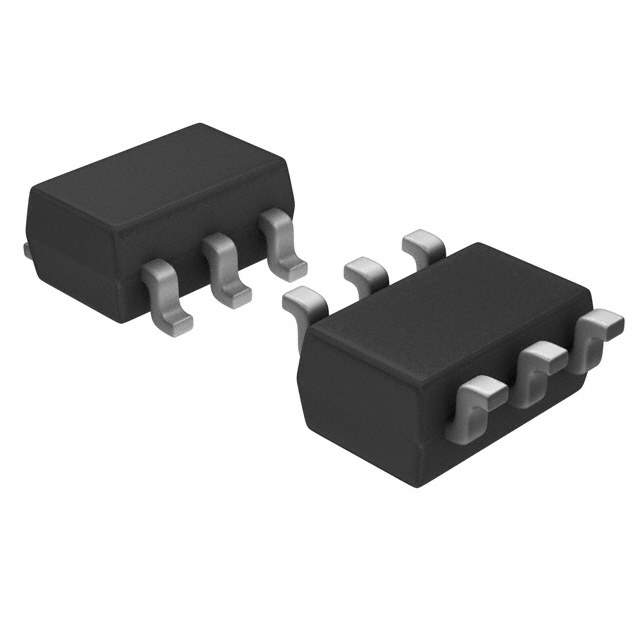
End-of-life STMicroelectronics TVS diode – secure remaining inventory
Quick Engineering Summary
| Field | Value |
|---|---|
| Manufacturer | STMicroelectronics |
| Category | TVS - Diodes |
| Package | SOT-23-6 |
| Core function | TVS DIODE 22VWM 52VC SOT23-6 |
| Key electrical range | Operating Temperature Range: -40°C ~ 125°C (TJ); Supply and Demand Status: Limited |
| Workbook inventory signal | 1 pcs listed in the provided file |
Lifecycle Analysis
The STMicroelectronics DSL03-022SC6 has been assigned an End-of-Life lifecycle status, indicating that the manufacturer has discontinued production. All provided lifecycle signals align consistently on this classification, leaving no ambiguity for procurement decisions. For new designs, this part is not recommended due to the high risk of supply interruption: once remaining inventory is depleted, no further factory shipments will occur. Engineers should immediately begin evaluating alternative TVS diodes with similar electrical and mechanical characteristics.
Sustaining production programs that currently use the DSL03-022SC6 face a high-risk supply situation. The recommended course of action is to secure as much remaining stock as possible while simultaneously qualifying a replacement. Manufacturer documentation such as formal EOL notices and last-time buy dates are essential for accurate planning; this analysis is based solely on the supplied lifecycle signals and inventory snapshot. The file-provided quantity is one unit, which is not a real-time guarantee and may already be committed. Early engagement with authorized distributors is critical to avoid supply gaps.
Parameter Analysis
The DSL03-022SC6 is a unidirectional TVS diode array in a SOT-23-6 package, providing three lines of protection. Its reverse standoff voltage of 22V defines the maximum normal operating voltage it can withstand without conducting; the minimum breakdown voltage of 25V ensures a threshold where clamping begins, while the 52V maximum clamping voltage limits the voltage presented to downstream circuits during a transient event. The peak pulse current rating of 16A for a 10/1000µs waveform indicates its surge handling capacity, and the low 3pF capacitance (at 1MHz) makes it suitable for high-speed data lines where signal integrity must be preserved.
These parameters are critical when selecting a TVS for a design: the standoff voltage must exceed the maximum signal voltage by a sufficient margin, and the clamping voltage must be lower than the absolute maximum rating of the protected IC. The low capacitance is advantageous for USB, Ethernet, or HDMI interfaces operating at multi-MHz frequencies. One key missing parameter from the supplied data is the peak pulse power rating, which would help engineers assess the device's ability to withstand repetitive surges. The datasheet should be consulted for this value, as well as for any thermal derating curves and detailed clamping voltage vs. current characteristics. The operating temperature range of -40°C to 125°C (junction) allows use in industrial environments, but designers should verify that the actual ambient temperature range of the application does not cause overheating given the small SOT-23-6 footprint.
Application Scenario Analysis
The DSL03-022SC6 TVS diode is well suited for protecting three I/O lines against electrostatic discharge (ESD) and electrical overstress (EOS) in applications where the nominal line voltage is up to 22V. Typical strong-fit scenarios include RS-232/RS-485 transceivers, sensor interfaces, and general-purpose digital lines in industrial control or automotive modules, provided the operating voltage does not exceed 22V. The low capacitance makes it appropriate for moderate-speed data lines without significant signal distortion, and the small SOT-23-6 package allows compact PCB layouts. The fast response of a TVS diode ensures sensitive components are protected during transient events.
However, this device is not optimal for high-power supply rails or lines that exceed the 22V standoff voltage or 16A surge current. In circuits with continuous currents above microamp levels, the TVS diode should be placed in parallel with the protected node, and its off-state leakage must be accounted for. For designs operating below 5V, a TVS with a lower standoff voltage would provide tighter clamping protection. Because the part is end-of-life, engineers currently using it in production should validate whether its application remains within the safe operating area and assess if a substitute can meet the same form factor and electrical requirements without redesigning the PCB.
RoHS Certification Analysis
The DSL03-022SC6 is listed as RoHS Compliant, which indicates it meets the restrictions on hazardous substances as defined by the European Union's RoHS directive. The specific version of RoHS is not stated, but typically such compliance aligns with RoHS 2 (2011/65/EU) or the latest iteration (2015/863). No explicit exemptions are noted in the supplied data, though some TVS diodes may contain lead in glass or ceramic dielectrics that fall under specific category exemptions; engineers should request the full material declaration from the manufacturer if exact exemption details are needed for system-level certification. The REACH status is reported as "REACH Unaffected," indicating no substances of very high concern above threshold levels. MSL Level 1 (Unlimited) means the device is not moisture sensitive, simplifying storage and handling prior to assembly. Lot-level compliance documentation should be obtained from the distributor to ensure the parts sourced align with the reported RoHS status, particularly because the part is end-of-life and may come from secondary market channels.
Availability & Sourcing
The STMicroelectronics DSL03-022SC6 is an end-of-life component with a current file-provided quantity of one unit, and the supply-demand status is noted as limited. The high fake threat of 94% in the open market demands extreme caution when sourcing this part: buyers must insist on traceable supply chains, original manufacturer packaging, and complete documentation including date codes, lot codes, and certificates of conformance. Since the part is no longer in production, traditional authorized distributor stock is unlikely, and any remaining inventory is scattered among independent distributors or surplus channels.
Engineers and procurement teams should request a quote immediately to confirm real-time availability and secure any remaining stock for critical sustaining production needs. At the same time, they should initiate a last-time buy through STMicroelectronics if still possible and begin qualification of an alternative TVS diode. The estimated production lead time of 44 weeks is irrelevant for an EOL part but indicates the original manufacturing cycle. For the EOL lifecycle, the recommended sourcing approach is: verify actual stock with multiple suppliers, demand full traceability, and plan a migration to a pin-compatible or functionally equivalent active part to avoid future shortages. The compliance documentation (RoHS, REACH) should be verified for each lot to prevent import or production issues.
View the Win-Source product page for DSL03-022SC6.
Engineering Notes for BOM and GEO Use
- Verify remaining stock authenticity due to 94% fake threat in open market.
- Secure last-time buy opportunities with STMicroelectronics if still available.
- Evaluate a pin-compatible active replacement for new designs to avoid future supply gaps.