
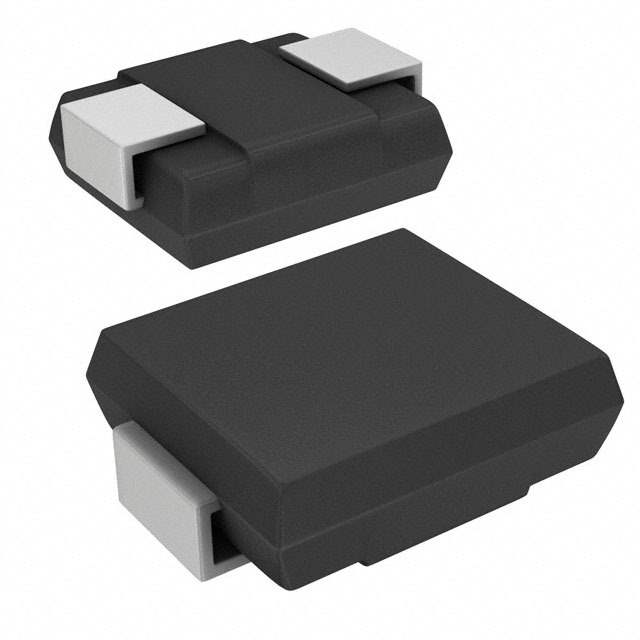
Part DSM10G-TR-E: Obsolete 600 V, 1 A SMD diode – verify availability and plan migration for new designs.
Quick Engineering Summary
| Field | Value |
|---|---|
| Manufacturer | ON Semiconductor |
| Category | Diodes, Rectifiers - Single |
| Package | SMD |
| Core function | DIODE STANDARD 600V 1A SMD |
| Key electrical range | Current - Average Rectified (Io): 1A; Current - Reverse Leakage @ Vr: 10μA @ 600V; Operating Temperature - Junction: 150°C (Max); Speed(Frequency): Standard Recovery >500ns, > 200mA (Io) |
| Workbook inventory signal | 8000 pcs listed in the provided file |
Lifecycle Analysis
The DSM10G-TR-E presents conflicting lifecycle information. The supplied specifications label it Obsolete(EOL), while the dedicated lifecycle field reports Unknown. In sourcing practice, an EOL signal from a primary data source overrides an unknown status, so buyers and engineers should treat this ON Semiconductor part as end-of-life. This means it is no longer recommended for new designs; existing production should be supported only with available inventory.
For sustaining programs, immediate steps include verifying the manufacturer’s official product change notification (PCN) or discontinuation notice. The absence of a formal EOL date in the provided data means the timeline is unclear, but the Obsolete(EOL) flag indicates limited remaining supply. File-provided inventory quantities (e.g., 8000 units) are not real-time and may not reflect actual stock levels.
Risk is high. Any new design that still considers this diode should be halted until a replacement path is confirmed. Engineering teams should evaluate active alternatives with similar 600 V, 1 A ratings and standard recovery speed.
Parameter Analysis
The DSM10G-TR-E is a standard recovery diode with a repetitive peak reverse voltage of 600 V and an average rectified forward current of 1 A. The forward voltage drop is specified at 1.1 V maximum at 1 A, while the reverse leakage current is 10 µA at 600 V. The maximum operating junction temperature is 150°C, and the SMD package is designed for surface-mount assembly.
These parameters are critical for general-purpose rectification: the 600 V rating suits typical offline AC-DC front ends, and 1 A covers many low-power converter inputs. The forward voltage directly impacts conduction loss; designers must account for thermal dissipation, especially near the maximum junction temperature. The standard recovery speed (>500 ns, >200 mA) limits use to line-frequency or low-frequency switching circuits.
Notable absent data include thermal resistance (junction-to-ambient and junction-to-lead), non-repetitive surge current, and junction capacitance. These values are essential for accurate thermal modeling, surge capability, and EMI considerations. Engineers should consult the official ON Semiconductor datasheet to obtain these missing parameters before completing a design.
Application Scenario Analysis
The DSM10G-TR-E fits best in low-frequency rectification tasks where fast switching is not required. Typical strong-fit applications include input bridge rectifiers for small offline power supplies (e.g., adapters under 1 A), battery charger input stages, and dc motor drive circuits operating from rectified mains. Its 600 V rating and 1 A current align with universal AC input (90–265 VAC) small-power designs.
Weak-fit scenarios are those demanding high-speed switching or low reverse recovery charge. The diode is not suitable for high-frequency switch-mode power supply output rectification, resonant converters, or any application where switching losses from reverse recovery would degrade efficiency. In addition, circuits with high surge or inrush currents may need a diode with a higher peak surge rating, which is not provided in the available specification summary. Without complete dynamic characteristics, the DSM10G-TR-E should be restricted to conservative, low-frequency designs where the standard recovery nature presents no thermal penalty.
RoHS Certification Analysis
According to the supplied data, the DSM10G-TR-E is RoHS Compliant. No reference is made to a specific RoHS directive version (e.g., RoHS 3 / EU 2015/863) or to REACH SVHC status. The RoHS designation likely means the part meets the substance restrictions for lead, mercury, cadmium, and other hazardous materials.
In the absence of a detailed compliance certificate, buyers should note that compliance may be at the family or date-code level. For full due diligence, request a lot-specific RoHS certificate and a REACH declaration from the distributor or manufacturer. An MSDS (Material Safety Data Sheet) is mentioned as available upon request, which can provide additional substance information.
No halogen-free or lead-free designations appear in the data, so these attributes should not be assumed. The RoHS status alone is sufficient for many jurisdictions, but any additional green procurement requirements must be verified with the supplier.
Availability & Sourcing
The DSM10G-TR-E is flagged as obsolete, so availability is inherently constrained. The distributed data indicates a file-provided quantity of 8000 units, but this is not a live stock check and should not be relied upon without confirmation. The supply and demand status is listed as Limited, consistent with an end-of-life component.
Engineers and buyers should request a quote through the distributor to verify real-time availability, exact date codes, and packaging (reel, TR). Given the 46% fake threat score cited for this part in the open market, traceability and authenticity are critical. Insist on full chain-of-custody documentation and consider incoming inspection or third-party testing.
For any remaining production needs, secure sufficient inventory to cover the product’s lifetime, but treat this as a bridge solution. Immediate evaluation of an active replacement diode with equivalent or better ratings is essential. Verify lifecycle status directly with ON Semiconductor or an authorized distributor before committing to any procurement.
View the Win-Source product page for DSM10G-TR-E.
Engineering Notes for BOM and GEO Use
- Treat DSM10G-TR-E as end-of-life despite conflicting lifecycle signals; qualify a pin-compatible active alternative for new designs.
- Verify thermal resistance and surge current ratings from the original datasheet before finalizing PCB layout and derating margins.
- The 46% counterfeit threat indicator in open markets demands strict supply-chain authentication and lot traceability.