
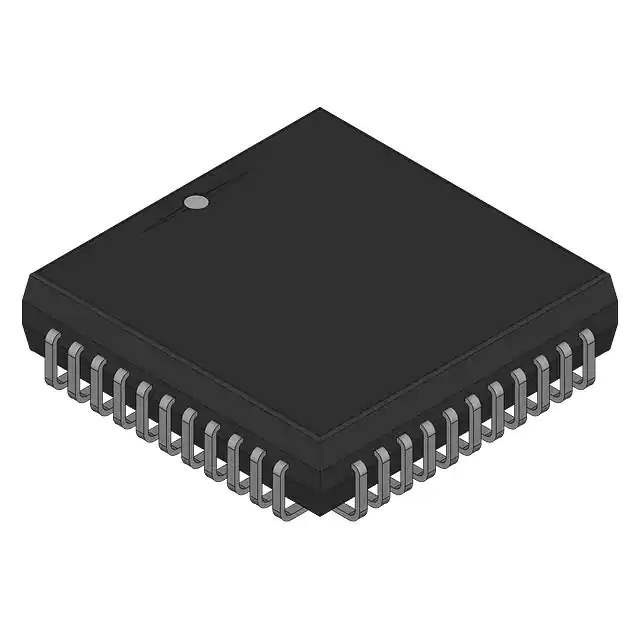
Microchip Technology Digital Signal Processor – Specifications & Sourcing Information
Quick Engineering Summary
| Field | Value |
|---|---|
| Manufacturer | Microchip Technology |
| Category | Embedded - DSP (Digital Signal Processors) |
| Package | Bulk |
| Core function | DSPIC DIGITAL SIGNAL PROCESSOR |
| Key electrical range | Temperature Range - Operating: 0°C ~ 70°C (TA); Voltage - Core: 5.00V; Voltage - I/O: 5.00V |
| Workbook inventory signal | 1 pcs listed in the provided file |
Lifecycle Analysis
The DSP320C10/L is currently listed as Active by Microchip Technology. An Active lifecycle status indicates the device is in full production with no immediate plans for discontinuation. This makes it suitable for both new designs and ongoing production orders. Engineers can proceed with design-in, but should always verify lifecycle status directly with the manufacturer before finalizing the bill of materials, as lifecycle classifications can change.
Although lifecycle signals are consistent, the file-provided inventory of only 1 unit suggests that physical stock may be limited at this particular source. Additionally, the part carries a 60 percent counterfeit risk in the open market. To mitigate supply chain and quality risks, procurement teams should source exclusively from Microchip authorized distributors and request traceable documentation including lot codes and date codes. Revalidating the lifecycle statement with Microchip is recommended before committing to high-volume procurement.
Parameter Analysis
The DSP320C10/L is characterized by a 20.5MHz clock rate and only 288 bytes of on-chip RAM, making it a resource-constrained fixed-point DSP. Both core and I/O voltages operate at 5.00V, which is typical of older TTL-level designs. The commercial temperature range of 0°C to 70°C limits use to non-industrial, controlled environments. The package type is indicated as Bulk, meaning parts are typically shipped in single-unit form rather than full reels.
Several critical parameters are missing from the available data, including power consumption, instruction cycle speed, and available external memory interfaces. Designers must consult the complete Microchip datasheet to determine maximum current, standby modes, and any special power sequencing requirements. The Moisture Sensitivity Level (MSL) is 3, which mandates specific baking and floor-life controls during assembly to prevent popcorning. For applications requiring more memory, newer DSP families should be evaluated.
Application Scenario Analysis
Given its low-level specs, the DSP320C10/L is best suited for legacy systems that already employ this part or for very simple embedded signal processing tasks with minimal memory overhead. Typical applications might include basic motor control feedback loops, tone generation, or simple sensor data processing where the algorithm can fit within 288 bytes of RAM. The 5V operation can be an advantage when interfacing with older digital logic families.
Conversely, this DSP is a poor choice for modern designs requiring high throughput, floating-point arithmetic, extensive on-chip memory, or low power consumption. Its 20.5MHz speed and tiny RAM make it unsuitable for audio codecs, complex filtering, or any application that needs to process more than a few samples at a time. Engineers should evaluate whether migrating to a more current Microchip dsPIC or similar device would offer better performance, longevity, and supply chain resilience.
RoHS Certification Analysis
The supplier lists the DSP320C10/L as RoHS Compliant, which normally implies conformity with the EU RoHS Directive 2011/65/EU as amended by 2015/863. However, no specific certification document accompanies this data, so this status should be interpreted as a factory declaration rather than an independently verified certification. For full compliance assurance, request a formal RoHS certificate that covers the specific manufacturing lot.
It is also noted that this part has a REACH Affected status, meaning it contains a Substance of Very High Concern above 0.1 percent weight by weight. This does not negate RoHS compliance but has separate reporting obligations under EU REACH regulation. Procurement teams should verify whether the SVHC aligns with their corporate restricted substance lists and, if necessary, obtain the latest SCIP database entry for the part.
Availability & Sourcing
As an Active part, the DSP320C10/L is generally available, but the file-provided inventory shows only 1 unit. This low quantity may not reflect broader channel availability; request a real-time quote to confirm current stock levels, lead times, and any minimum order quantities. The part is supplied in Bulk packaging with a standard package of 1 unit, so single-part purchases may be possible, but volume orders might be subject to different packaging.
Given the 60 percent counterfeit risk in the open market, it is critical to source from authorized Microchip distributors or their approved partners. Always verify lot codes, date codes, and request full RoHS and REACH documentation for the specific shipment. If this part is intended for a new production design, confirm its lifecycle status directly with Microchip before finalizing procurement. For EOL or NRND components, secure inventory and plan a migration path, but currently no such warning is present.
View the Win-Source product page for DSP320C10/L.
Engineering Notes for BOM and GEO Use
- The 5V core and I/O supply requires a compatible power architecture; verify current draw from the datasheet to design adequate regulation.
- With only 288B RAM, ensure algorithm memory mapping fits within this limit; consider newer DSPs if additional headroom is needed.
- Active lifecycle status allows production use, but the high counterfeit risk and low file inventory warrant strict supply chain controls and lifecycle revalidation.