
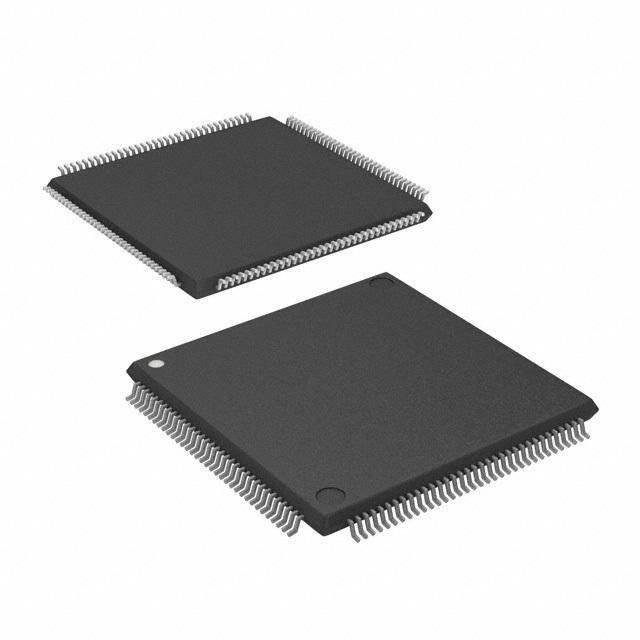
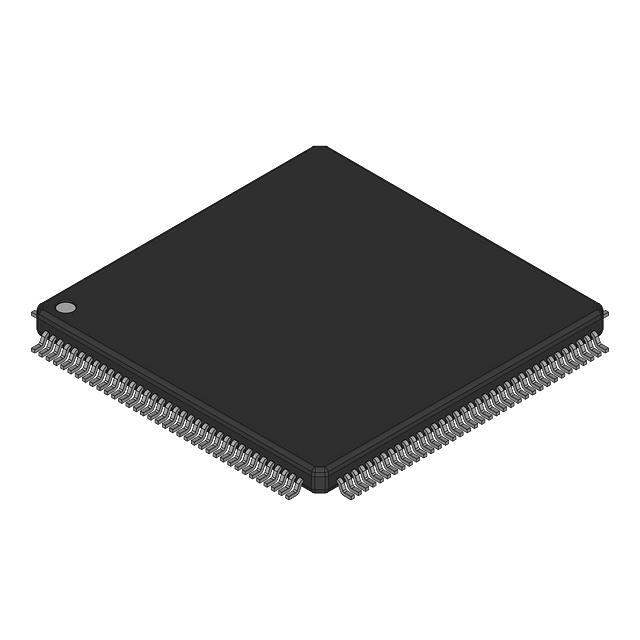
Fixed-point DSP with 100MHz clock, 24kB on-chip RAM, 144-LQFP package, and EOL lifecycle status.
Quick Engineering Summary
| Field | Value |
|---|---|
| Manufacturer | Freescale Semiconductor - NXP |
| Category | Embedded - DSP (Digital Signal Processors) |
| Package | 144-LQFP (20x20) |
| Core function | IC DSP 24BIT 100MHZ 144-LQFP |
| Key electrical range | Supply and Demand Status: Limited; Temperature Range - Operating: -40°C to 100°C (TJ); Voltage - Core: 3.30V; Voltage - I/O: 3.30V |
| Workbook inventory signal | 50 pcs listed in the provided file |
Lifecycle Analysis
This part number DSP56303AG100R2 from Freescale Semiconductor - NXP is confirmed End-of-Life (EOL) based on all supplied lifecycle signals, including the manufacturer’s lifecycle status and the “Not For New Designs” status. For new designs, this device is not recommended; it is intended only for sustaining existing production where no redesign is planned. The EOL status carries a high risk level, and procurement teams should immediately verify the last-time buy (LTB) date with NXP to plan final purchases. The supplied file indicates a workbook quantity of 50 units, but this is not real-time inventory and should be confirmed. Designers must not base new products on this DSP, as future availability is uncertain and long-term support is unavailable.
Because the part is EOL, any existing designs should have a migration plan to an alternate NXP DSP or another platform. All lifecycle signals align, so there is no conflicting data to resolve. Conservatively, treat this part as out of production and source only for legacy repair or replacement needs. Re-validation of the part’s specifications and datasheet from NXP is essential if this has not been done recently, as documentation may no longer be updated.
Parameter Analysis
The DSP56303AG100R2 is a 24-bit fixed-point digital signal processor operating at a 100 MHz clock rate. Its core and I/O voltages are both 3.30 V, simplifying power supply design but requiring careful decoupling and possibly heat sinking if the ambient temperature approaches the upper limit of 100°C Tj. The package is a 144-LQFP with a 20x20 mm footprint, suitable for surface-mount assembly. On-chip memory includes 24 kB of RAM and a small ROM (576 B) that likely holds bootloader or fixed firmware, which means software cannot be modified beyond the RAM space, and any code must fit within the available memory or rely on external memory interfaces.
Key missing specifications from the provided data include details on I/O interfaces (though the description hints at host interface, SSI, SCI), precise power consumption, and the number of timers or serial ports. Engineers should consult the full NXP datasheet to verify maximum operating conditions, AC timing, and thermal resistance values for derating. The 144-pin package may offer various peripherals, but without knowing the exact pinout, a detailed fit analysis for a specific PCB layout is not possible here. The temperature range (-40°C to 100°C Tj) classifies it for industrial applications, but the “grade” field is empty, so extended temperature ratings are not confirmed.
Application Scenario Analysis
This DSP is well-suited for applications requiring moderate-speed digital signal processing such as audio processing, motor control, instrumentation, and industrial control systems. Its 100 MHz clock and fixed-point architecture can handle typical filtering, FFT, and control algorithms. The on-chip RAM and ROM suggest it can run stand-alone firmware without external boot memory, which is beneficial in cost-sensitive or space-constrained designs. The temperature range supports extended industrial environments, but without a specific qualification grade, use in automotive or mission-critical systems may require additional reliability testing.
However, due to its EOL status, it should not be used in new product development. It is only appropriate for maintaining legacy systems where a direct replacement is mandated by existing firmware and toolchain compatibility. The limited ROM (576 B) implies a minimal bootloader; if larger firmware is needed, an external memory interface is essential, but no such interface is explicitly listed in the provided data, so this must be verified. For high-volume or long-life products, consider migrating to a newer NXP DSP with similar core architecture or a compatible fixed-point DSP from another vendor.
RoHS Certification Analysis
The DSP56303AG100R2 is listed as RoHS Compliant according to the provided data. However, the specific RoHS standard (e.g., EU 2015/863) is not stated, so buyers should request the manufacturer’s RoHS certificate to confirm compliance with the latest directive levels and any applicable exemptions. No REACH compliance information is provided, and REACH is a separate regulation; RoHS compliance does not automatically imply REACH compliance. For full environmental assurance, it is advisable to obtain both RoHS and REACH declarations from NXP for this exact part number and date code batch.
Given that this part is EOL, the compliance documentation may be based on the last production lots. It is prudent to check if any materials changes occurred late in production that might affect RoHS status. The absence of an MSL (moisture sensitivity level) rating in the data means proper handling for moisture-sensitive SMD devices should follow standard LQFP guidelines, typically MSL-3, but this should be confirmed from the datasheet. Lot-level compliance may differ from family-level certifications, so always verify with the current certificate for the exact manufacturer’s part number.
Availability & Sourcing
As an EOL part with high fake threat in the open market (45 pct.), sourcing the DSP56303AG100R2 demands caution. The workbook indicates a limited quantity of 50 units, but this is a file-provided value and not a live inventory check. Buyers should request a quote from authorized distributors or specialized obsolete component suppliers to confirm current stock, date codes, and packaging (reel - TR). Requesting photographic evidence of the parts and verifying original packaging can mitigate counterfeit risks.
Given the EOL lifecycle, purchase only what is needed for existing production or repair programs, and consider a last-time buy with NXP if still available directly. Authorized traceability documentation is critical; insist on certificates of conformance, RoHS compliance, and test reports when feasible. Storage conditions are specified as dry and humidity-protected, so ensure parts have been properly stored if sourced from the open market. For any new procurement, verify the lifecycle status with NXP directly, as the information provided may be subject to change post-EOL notification. This DSP56303AG100R2 unit should be sourced with full compliance and authenticity verification.
View the Win-Source product page for DSP56303AG100R2.
Engineering Notes for BOM and GEO Use
- EOL part: do not use in new designs; plan last-time buy immediately.
- Verify boot ROM content and memory limits for firmware compatibility.
- Counterfeit risk is high (45%); insist on authorized sourcing and visual inspection.