
EOL 24-bit fixed-point DSP: parameter, lifecycle, and sourcing analysis for DSP56303VF100B1
Quick Engineering Summary
| Field | Value |
|---|---|
| Manufacturer | Freescale Semiconductor - NXP |
| Category | Embedded - DSP (Digital Signal Processors) |
| Package | 196-MAPBGA (15x15) |
| Core function | IC DSP 24BIT 100MHZ 196-BGA |
| Key electrical range | Supply and Demand Status: Balance; Temperature Range - Operating: -40°C to 100°C (TJ); Voltage - Core: 3.30V; Voltage - I/O: 3.30V |
| Workbook inventory signal | 3100 pcs listed in the provided file |
Lifecycle Analysis
The DSP56303VF100B1 is confirmed End-of-Life (EOL) across all available lifecycle signals, leaving no ambiguity. EOL status means the manufacturer has ceased production and no longer recommends this part for new designs. Engineering teams must avoid incorporating the DSP56303VF100B1 into new products, as supply disruptions are inevitable. For existing systems in production, procurement should focus on securing enough inventory to cover remaining product lifecycle needs while initiating a migration to a recommended alternative.
Risk level is high because EOL parts often suffer from dwindling availability, long lead times, and increased counterfeit exposure. Although the file indicates 3100 units on hand, this quantity is not guaranteed in real time and should be reconfirmed before any design-in commitment. Buyers should directly request current lot availability from authorized distributors and verify that the stock is genuine and properly stored.
The Freescale Semiconductor - NXP DSP56303VF100B1 may still be found through independent brokers, but such channels demand rigorous incoming inspection and lot-code verification. For long-term projects, a bill-of-material review should be initiated to evaluate pin-compatible or functional replacements from current DSP families.
Parameter Analysis
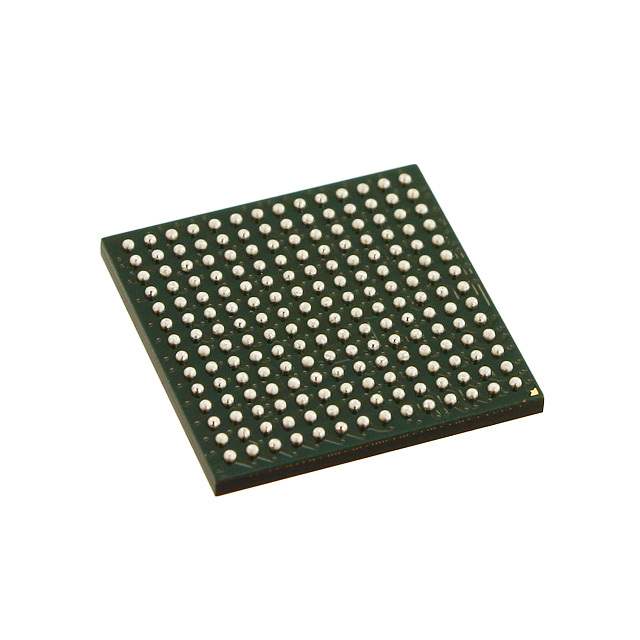
Key parameters for the DSP56303VF100B1 include a 100MHz clock rate, 24-bit fixed-point DSP core, on-chip 24kB RAM, and 576B ROM. The device operates from a 3.30V core and I/O voltage, simplifying power rail design. It is packaged in a 196-MAPBGA (15x15) with SMD mounting, supporting compact board layouts. The industrial operating temperature range of -40°C to 100°C (TJ) enables use in harsh environments.
These parameters determine suitability for real-time signal processing tasks. Clock speed directly impacts algorithmic throughput, while memory size constrains code and data buffers—engineers must verify that 24kB RAM meets application requirements. The BGA package demands careful PCB layout for thermal and signal integrity, especially at 100MHz. The missing datasheet details, such as peripheral interfaces (host interface, SSI, SCI), I/O timing, power consumption curves, and instruction set specifics, must be obtained from the official NXP datasheet before design finalization.
Without full electrical characteristics, designers should prototype with worst-case timing margins. The single 3.30V operation eliminates level-shifting complexity but may limit compatibility with newer low-voltage components. For sustaining engineering, confirming these parameters against the original design is essential.
Application Scenario Analysis
The DSP56303VF100B1, as a fixed-point DSP, suits applications demanding deterministic real-time processing such as telecom echo cancellation, audio compression, motor control, and industrial instrumentation. Its 24-bit precision offers adequate dynamic range for many control loops and narrowband signal processing tasks. The industrial temperature range and BGA packaging target embedded systems with space constraints and moderate thermal requirements.
Strong-fit scenarios include sustaining engineering for legacy telecom equipment, factory automation, or medical devices originally designed around this DSP. These applications benefit from a drop-in replacement approach using remaining stock. Weak-fit scenarios involve new product development where modern floating-point or ARM-DSP hybrids provide greater performance, lower power, and better software ecosystem support. Given the EOL status, using the DSP56303VF100B1 in any new design is strongly discouraged.
Engineers should also consider the 28% fake threat statistic when sourcing for prototyping or low-volume production. The part may still be viable for repairing fielded units, but each lot should be tested for authenticity and proper functionality in the target circuit.
RoHS Certification Analysis
RoHS compliance for the DSP56303VF100B1 carries conflicting data: the compliance block indicates 'RoHS Compliant,' whereas the detailed specifications list 'RoHS Non-Compliant.' This discrepancy likely arises from different production lots or data sources. Because EOL parts often originate from older, non-RoHS batches, buyers must not assume compliance without lot-level verification.
The EU RoHS directive (2011/65/EU and amendment 2015/863) restricts hazardous substances. If a lot is truly non-compliant, it may be unusable in products sold in RoHS-enforced regions unless an exemption applies. The data provides no exemption details. Absence of REACH or MSL information further limits environmental compliance assessment.
To resolve this, request the manufacturer's certificate of compliance (CoC) or a lab test report for the specific date/lot code before purchase. If RoHS compliance is mandatory, confirm that the stock shown as 3100 units meets this requirement; otherwise, seek compliant surplus or expedite migration to a RoHS-compliant replacement. The DSP56303VF100B1 should be treated as RoHS status unknown until verified.
Availability & Sourcing
As an EOL part, the DSP56303VF100B1 faces constrained supply and elevated sourcing risk. The file shows an inventory of 3100 units, but this is not a real-time guarantee; stock may deplete rapidly. Packaging is tray, suitable for production pick-and-place when moisture sensitivity is managed (storage condition: dry storage cabinet with humidity protection). The counterfeit risk is estimated at 28%, emphasizing the need for authorized or vetted sources.
Procurement teams should follow an RFQ workflow that includes lifecycle status confirmation, RoHS compliance verification, and date/lot-code traceability. Request a current quote through the provided product URL or from known NXP distributors. Avoid open-market purchases without full inspection and component testing, given the high fake threat.
For EOL components, a balanced approach is recommended: secure enough inventory to support legacy product lifetime while actively evaluating migration paths. Verify all documentation—certificates of conformance, test reports, and storage condition logs—before accepting delivery. The DSP56303VF100B1 can still serve its purpose in maintenance, but proactive replacement planning is essential.
View the Win-Source product page for DSP56303VF100B1.
Engineering Notes for BOM and GEO Use
- Verify RoHS compliance per lot; specifications show a conflict between RoHS Compliant and Non-Compliant data points.
- Assess counterfeit risk (28% fake threat) and source only from authorized distributors with traceability.
- Plan migration for new designs; secure remaining inventory for legacy system support only.