
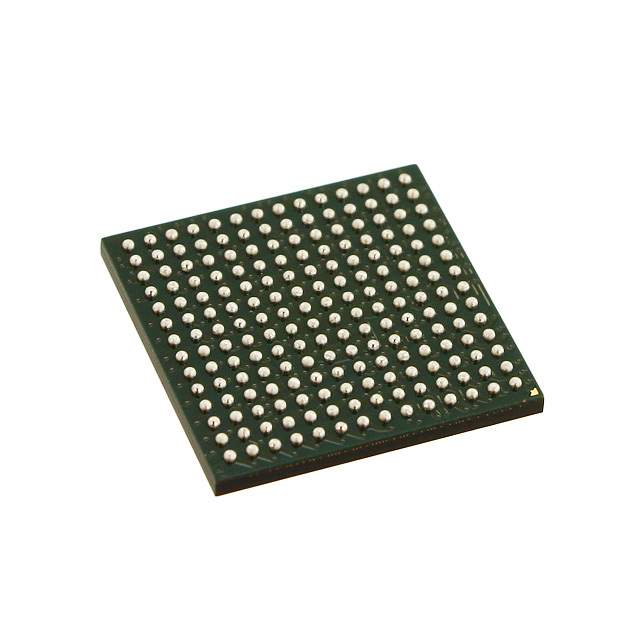
End-of-life fixed-point digital signal processor with 100MHz clock, 24kB RAM, 196-MAPBGA. Verify lifecycle and conflicting RoHS compliance before procurement.
Quick Engineering Summary
| Field | Value |
|---|---|
| Manufacturer | NXP / Nexperia |
| Category | Embedded - DSP (Digital Signal Processors) |
| Package | 196-MAPBGA (15x15) |
| Core function | IC DSP 24BIT 100MHZ 196-BGA |
| Key electrical range | Supply and Demand Status: Balance; Temperature Range - Operating: -40°C to 100°C (TJ); Voltage - Core: 3.30V; Voltage - I/O: 3.30V |
| Workbook inventory signal | 1 pcs listed in the provided file |
Lifecycle Analysis
The DSP56303VF100R2 is officially marked End-of-Life (EOL) by NXP. This status means the manufacturer has discontinued the device and no longer accepts new design orders. For existing production lines, buyers should immediately verify the last-time-buy (LTB) date and last-time-ship (LTS) commitments with NXP. The “Not For New Designs” indicator reinforces that the part should not be used in any upcoming projects. Risk level is high because EOL DSPs face rapid availability decline, rising costs, and increased counterfeit infiltration—this dataset reports a 32% fake threat in the open market.
Without an active lifecycle, design teams must budget for lifetime buys or migrate to a newer DSP architecture. Second-source and aftermarket options may exist, but each lot requires thorough authentication and date code validation. The provided inventory signal (1 unit in file) is not a real-time guarantee; actual stock must be confirmed through an RFQ. Any procurement activity should include a written confirmation of EOL status from the manufacturer to avoid uncertain gray-market supply.
Parameter Analysis
The DSP56303VF100R2 operates at a 100 MHz clock, delivering fixed-point digital signal processing with 24 kB of on-chip RAM and 576 bytes of non-volatile ROM. The core and I/O voltages both require 3.30 V, simplifying power supply design but demanding careful decoupling and layout due to the 196-ball MAPBGA package. The junction temperature range of -40°C to 100°C supports industrial-grade applications, though thermal management must account for the BGA’s limited heat dissipation path.
Key missing parameters include the specific host interface, serial peripheral types (SSI/SCI are mentioned but not detailed), and exact electrical characteristics such as I/O drive strength and timing margins. Engineers must retrieve the official datasheet to verify these values, along with power consumption and signal integrity requirements. The fixed-point architecture suits legacy algorithms but lacks the dynamic range of floating-point DSPs, so performance benchmarks should be validated against the original design intent before committing to a substitute.
Application Scenario Analysis
As a fixed-point DSP, the DSP56303VF100R2 was typically deployed in embedded systems requiring deterministic signal processing: motor control, voice coding, legacy telecommunication infrastructure, and industrial sensors. Its 100 MHz speed and 24 kB RAM suit moderate-complexity algorithms such as FIR/IIR filtering, FFTs up to 512 points, and basic control loops. The BGA package indicates a compact footprint suitable for space-constrained boards in automation or medical devices.
However, the EOL status severely limits its fit. Only existing designs that need exact form/fit/function replacements for repair or sparing should consider this part. New designs face high risks due to obsolescence, lack of support, and the 32% counterfeit threat. The part is weak for applications demanding floating-point precision, higher processing throughput, or modern connectivity. Any new project should instead evaluate current NXP DSPs or ARM-based processors with DSP extensions to ensure long-term availability and performance headroom.
RoHS Certification Analysis
RoHS compliance for the DSP56303VF100R2 is ambiguous: the high-level compliance flag reports “RoHS Compliant,” yet the detailed specification field explicitly states “RoHS Non-Compliant.” This conflict must be resolved before procurement, especially for EU-bound products. A non-compliant lot would violate EU RoHS Directive 2011/65/EU and its amendments, leading to possible market withdrawal. No REACH, halogen-free, or MSL data is available, so further environmental compliance cannot be assumed.
Buyers should request a full material declaration and test reports from the supplier. Even if the part predates RoHS adoption, some lots may have been re-qualified as compliant; others may contain legacy lead finishes. Given the EOL status, the original manufacturer may no longer provide updated compliance documents, making independent lab testing advisable for high-reliability applications. Storage conditions (dry cabinet) and humidity protection are noted, but these do not alter the underlying RoHS status.
Availability & Sourcing
Sourcing the DSP56303VF100R2 demands extreme caution due to its EOL status and the 32% fake threat rate reported in the open market. The file indicates just one unit in stock, which is not a real-time guarantee; actual availability must be confirmed through a formal RFQ. Packaging is reel (TR), so partial reels are possible, but quantities are likely very limited.
To mitigate counterfeits, insist on full traceability: original manufacturer packaging, date/lot code verification, and supplier proof of purchase from authorized distribution. Compliance documentation, especially the conflicting RoHS status, must be clarified before shipment. For critical production, consider last-time-buy quantities now and physically inspect samples. If no stock is available, explore alternative DSPs from NXP’s current portfolio or partner with an aftermarket vendor that offers authenticity testing. Always verify the EOL notice directly with NXP before committing to any large purchase.
View the Win-Source product page for DSP56303VF100R2.
Engineering Notes for BOM and GEO Use
- Resolve the RoHS compliance conflict by obtaining a certificate from the supplier or testing a sample; the detailed specification shows non-compliance.
- With a 32% fake threat rate in the open market, enforce rigorous incoming inspection, including date/lot code checks and X-ray or decapsulation if needed.
- Plan immediate migration for new designs; this EOL fixed-point DSP is not advisable beyond legacy sustainment.