
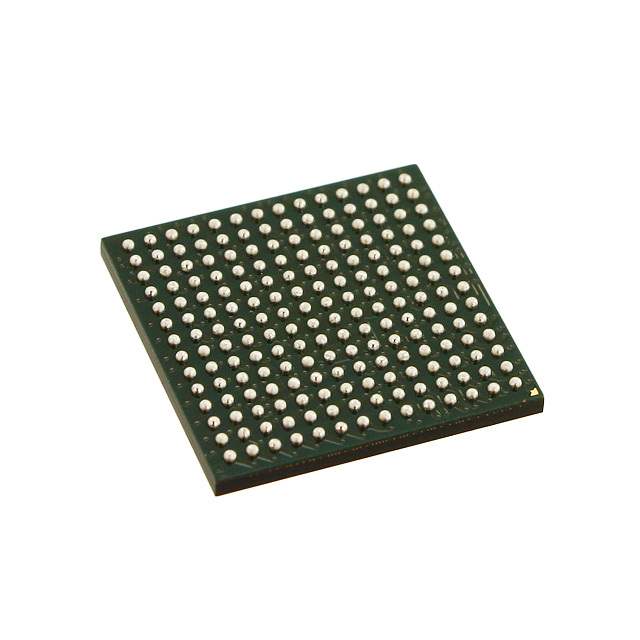
Navigating end-of-life sourcing for the NXP DSP56311 series digital signal processor.
Quick Engineering Summary
| Field | Value |
|---|---|
| Manufacturer | Freescale Semiconductor - NXP |
| Category | Embedded - DSP (Digital Signal Processors) |
| Package | 196-MAPBGA (15x15) |
| Core function | IC DSP 24BIT 150MHZ 196-BGA |
| Key electrical range | Supply and Demand Status: Limited; Temperature Range - Operating: -40°C to 100°C (TJ); Voltage - Core: 1.80V; Voltage - I/O: 3.30V |
| Workbook inventory signal | 80 pcs listed in the provided file |
Lifecycle Analysis
Based on multiple lifecycle signals, the DSP56311VF150R2 has been designated End-of-Life (EOL) by NXP. The part is listed as EOL in lifecycle status fields and is marked Not For New Designs. This status indicates the manufacturer has ceased volume production, and remaining inventory is limited to existing stock or last-time buy allocations. Engineers should not use this device in new designs; for sustaining production, immediate action is required to secure inventory and evaluate migration paths. Verify the manufacturer's product change notification (PCN) and discontinuation timeline to avoid unexpected supply gaps.
The file-provided inventory shows a quantity of 80 units, but this figure is not guaranteed real-time and may change. Given the high obsolescence risk, procurement teams should treat available stock as transient and plan accordingly. All lifecycle signals align, so there is no ambiguity about the part's end-of-life status.
Parameter Analysis
The DSP56311VF150R2 is a fixed-point DSP with a 150 MHz clock, making it suitable for moderate-performance signal processing tasks. It includes 384 kB of on-chip RAM and 576 B of ROM, which define the memory ceiling for code and data. The device operates with a 1.80V core and 3.30V I/O supply, important for power budgeting and level translation. Its 196-MAPBGA (15x15 mm) package provides a compact footprint for dense PCB layouts but requires careful reflow profiling during assembly.
Key interface peripherals include a host interface, SSI, and SCI, enabling connection to external processors and serial devices. The operating temperature range of -40°C to 100°C (junction) supports industrial environments. Missing from the provided data are critical parameters such as core current consumption, timing specifications, and available peripherals details beyond the interface list. Engineers should obtain the full datasheet to verify instruction cycle timing, PLL lock ranges, and I/O drive strengths before qualification.
Application Scenario Analysis
This fixed-point DSP targets applications that require deterministic real-time processing without floating-point arithmetic. Typical strong-fit scenarios include motor control, automotive audio processing, industrial automation, and telecom infrastructure where 24-bit precision and 150 MHz performance were sufficient at the time of original design. The presence of on-chip RAM and serial interfaces supports standalone operation or co-processing roles.
However, the EOL status makes it unsuitable for new product introductions. Even in existing designs, the part's high counterfeit threat (70 percent open market risk) introduces significant sourcing challenges. The DSP56311VF150R2 is a weak fit for applications needing floating-point computation, higher performance, or extended longevity. Designers considering this device for repair or aftermarket support must weigh the cost of authentication and limited availability against migrating to an active NXP DSP or alternative architecture.
RoHS Certification Analysis
The RoHS compliance status for DSP56311VF150R2 presents a conflict in the supplied data. One source lists it as RoHS Compliant under a general compliance field, while the detailed specification states RoHS Non-Compliant. This discrepancy suggests either a data entry error or the existence of multiple manufacturing lots with different material compositions. Without a clear lot-level certificate, the part cannot be assumed RoHS compliant for regulatory purposes.
The applicable standard is therefore uncertain; it could be an older lead-free exemption or a non-RoHS variant. No REACH, MSL, or halogen-free data is provided. Engineers and buyers must request a supplier certificate of compliance that references the specific production date code and the RoHS status for that lot. If the part is indeed non-compliant, its use in EU markets or other RoHS-regulated regions is restricted.
Availability & Sourcing
Given the confirmed EOL status, sourcing DSP56311VF150R2 requires careful due diligence. The file indicates a limited quantity of 80 units, but this is not a live inventory figure and should be verified by requesting a quote. The open market carries a high counterfeit threat rating of 70 percent, making authenticity testing and visual inspection essential steps. The device is supplied in tape and reel packaging with recommended dry storage, so moisture-sensitive handling procedures apply.
To secure authentic parts, engage authorized distributors or qualified independent brokers who provide date/lot code traceability and RoHS certificates. Since the part is EOL, buyers should act on available stock quickly and consider alternative sourcing strategies, such as authorized aftermarket suppliers or last-time buy consolidation. Always confirm the manufacturer's discontinuation documentation to ensure the parts are not from an unauthorized scrapped lot. For new production, migration to a recommended active replacement is strongly advised.
View the Win-Source product page for DSP56311VF150R2.
Engineering Notes for BOM and GEO Use
- Resolve the conflicting RoHS compliance signals by obtaining a lot-specific certificate from the supplier before purchase.
- With EOL status and high counterfeit risk, implement strict incoming inspection including decapsulation and electrical testing.
- For on-going production, evaluate migration to an active NXP DSP like the DSP563xx series successors or other architectures.