
EOL Part: Verify Lifecycle, RoHS, and Source with Extreme Caution
Quick Engineering Summary
| Field | Value |
|---|---|
| Manufacturer | Freescale Semiconductor - NXP |
| Category | Embedded - DSP (Digital Signal Processors) |
| Package | Bulk |
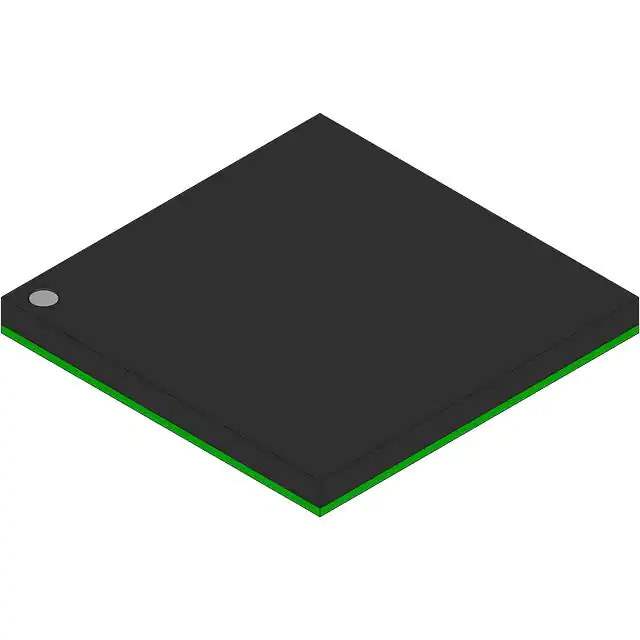
| Core function | IC DSP 24BIT 240MHZ 196MAPBGA |
| Key electrical range | Temperature Range - Operating: -40°C ~ 100°C (TJ); Voltage - Core: 1.60V; Voltage - I/O: 3.30V |
| Workbook inventory signal | 21 pcs listed in the provided file |
Lifecycle Analysis
The DSP56321VL240 carries an overall lifecycle status of End-of-Life (EOL), though one record shows Active. This contradiction forces a conservative approach: treat the part as discontinued for new designs. Engineers and buyers must not incorporate the DSP56321VL240 into new projects, as ongoing supply cannot be assured.
For existing production lines, immediate risk mitigation is required. Contact NXP to clarify the official lifecycle, and if EOL is confirmed, implement a last-time buy while any stock remains. The file-provided inventory quantity of 21 units should not be considered real-time or guaranteed; actual availability may be lower.
Given the high risk level, any procurement of DSP56321VL240 should include date-code and lot-code verification to ensure usability over the intended production lifetime.
Parameter Analysis
Key specifications for DSP56321VL240 include a 240 MHz clock rate, a 1.60V core voltage, and 3.30V I/O voltage. The 196-MAPBGA package has a 15x15 mm footprint and operates from -40°C to 100°C junction temperature. On-chip memory provides 576kB RAM and 576B ROM, supporting fixed-point DSP workloads.
These parameters define the part’s integration envelope. The core voltage and clock rate influence power supply design, while the package size and pin-out dictate PCB layout. Interfaces—Host, SSI, SCI—enable connection to external peripherals, but missing datasheet details such as I/O timing, power dissipation curves, and peripheral specifics must be verified before designing any supporting circuitry.
Critical missing specifications include typical and maximum power consumption, ESD ratings, and detailed electrical characteristics. Without these, thermal management and signal integrity cannot be fully assessed. Engineers should obtain the full datasheet from NXP and not rely solely on summary parameters.
Application Scenario Analysis
The DSP56321VL240, as a 24-bit fixed-point DSP from the Symphony family, is suited for applications requiring moderate signal processing: telecom infrastructure, audio processing, industrial motor control, and legacy military systems. Its built-in host interface and serial ports make it capable of handling real-time data flows.
However, because DSP56321VL240 is EOL, it is only appropriate for sustaining existing designs where redesign is impractical. Any new product development should avoid this part due to uncertain supply and counterfeiting risks. In legacy systems, the part may still serve if stock can be secured and verified.
Weak-fit scenarios include high-volume consumer products, safety-critical systems without redundancy, and designs requiring long-term availability guarantees. Migration to an active NXP DSP or an alternative from another manufacturer is strongly recommended for these cases.
RoHS Certification Analysis
RoHS compliance for DSP56321VL240 is ambiguous. Source data contains both “RoHS Compliant” and “RoHS Non-Compliant” statements, making it impossible to determine the true status without additional verification. No REACH information is provided, so neither directive can be confirmed.
This conflict likely stems from different production lots or data sources. For compliance in the EU or other regulated markets, engineers must obtain a supplier certificate for the specific lot being purchased. Assuming compliance based on product-family claims is risky, especially for an EOL part that may have been manufactured under older standards.
Exemptions, if any, are not listed. If RoHS non-compliance is confirmed, use of DSP56321VL240 may be restricted in certain markets. Documentation from the distributor or manufacturer is essential to avoid customs delays or product recalls.
Availability & Sourcing
DSP56321VL240 is an EOL component with a high counterfeit threat level of 60%. The file-provided stock quantity of 21 units is not a real-time figure and should be confirmed via RFQ before any purchasing decisions. Authorized distribution channels are strongly preferred to mitigate counterfeit risk.
When sourcing, request full traceability documentation including manufacturer certificate of conformance, date codes, and lot codes. Verify that parts are stored and handled per moisture sensitivity requirements, even though MSL data is not provided here. For EOL parts, securing a sealed bulk or tray packaging from a trusted source adds a layer of assurance.
Given the lifecycle status, buyers should secure inventory only for confirmed sustaining needs and simultaneously plan for an alternative solution. Contact Win Source or other suppliers for a current availability quote, but always validate lifecycle and compliance directly with NXP or authorized partners before committing to a purchase.
View the Win-Source product page for DSP56321VL240.
Engineering Notes for BOM and GEO Use
- EOL status and conflicting lifecycle signals require direct manufacturer confirmation before any procurement.
- High counterfeit threat (60%) on the open market demands strict traceability and authorized sourcing.
- RoHS compliance is ambiguous due to conflicting data; verify lot-level certification before purchase.