
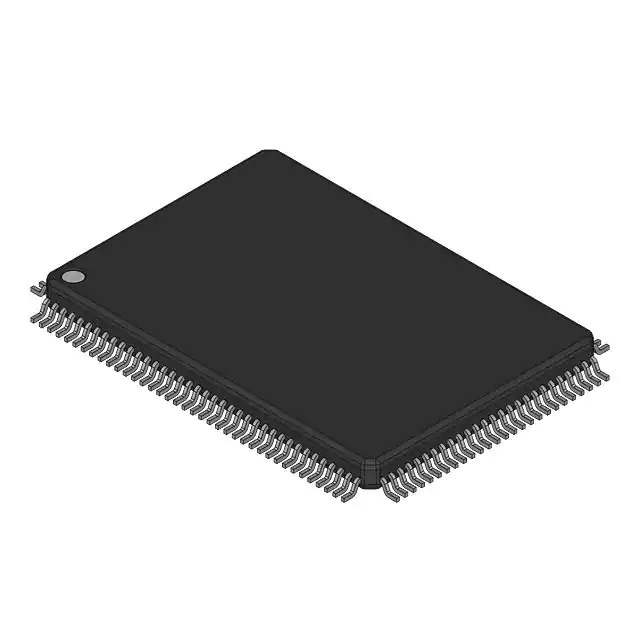
16-bit, 120 MHz, 56800E core DSP from NXP – lifecycle, parameters, and procurement insights.
Quick Engineering Summary
| Field | Value |
|---|---|
| Manufacturer | Freescale Semiconductor - NXP |
| Category | Embedded - DSP (Digital Signal Processors) |
| Package | Bulk |
| Core function | DIGITAL SIGNAL PROCESSOR, 16-BIT |
| Key electrical range | Not available in supplied data |
| Workbook inventory signal | 1 pcs listed in the provided file |
Lifecycle Analysis
The DSP56854FGE is classified as Active by Freescale Semiconductor – NXP, with no conflicting lifecycle signals present. This status indicates the part is in full production and can be confidently designed into new projects with a standard procurement plan.
For sustaining production, Active status provides a stable supply outlook; however, it is prudent to monitor NXP’s official product longevity communications. Even for Active parts, occasional die revisions or packaging changes may occur, so requesting a current PCN report from the manufacturer or authorized distributor is recommended during qualification.
File-based inventory data shows a single unit on record, which is not a real-time commitment. Buyers should treat this as a representative snapshot and obtain a formal quote for current availability when planning production quantities.
Parameter Analysis
Key parameters for the DSP56854FGE begin with its 56800E core running at 120 MHz, making it suitable for real‑time signal processing tasks. The 16‑bit architecture and 32 KB of on‑chip SRAM program memory paired with 16 KB of data RAM allow execution of moderate‑complexity filter and control algorithms without external memory latency.
The supply voltage range of 1.62 V to 1.98 V requires tight regulation, and the 128‑LQFP surface‑mount package with 14x20 mm body size dictates careful PCB layout for thermal management and signal integrity. With 41 I/O pins and peripherals including DMA, SPI, SCI, and SSI, integration into mixed‑signal boards is straightforward, but I/O count should be verified against application needs.
Missing from the provided data are details such as ADC/DAC resolution, timers, core current consumption, and exact package thermal resistance. These are critical for power budgeting and should be pulled from the official NXP datasheet. Additionally, the oscillator type (external) and connectivity specifics (EBI/EMI) are mentioned but not elaborated; designers should confirm bus timing and memory mapping.
Application Scenario Analysis
The DSP56854FGE, as a 16‑bit fixed‑point DSP with 120 MHz performance, is well‑suited for motor control, digital power conversion, industrial sensor processing, and automotive body electronics where deterministic real‑time response is needed. Its on‑chip SRAM program memory supports fast execution without external flash, ideal for code‑tight control loops.
For cost‑sensitive applications, the lack of integrated analog‑to‑digital converters (ADCs) may require external converters, adding board space. The device is not optimal for high‑precision audio or video processing where 24‑bit or floating‑point architectures are common. Similarly, designs needing large program storage beyond 16K words may find the SRAM limitation restrictive and should evaluate the 32 KB total carefully.
Given the 128‑LQFP package, this part targets designs where surface‑mount assembly is standard and space is not extremely constrained. The operating temperature range of -40°C to 85°C supports industrial grade, but automotive qualification (if needed) should be verified directly with NXP.
RoHS Certification Analysis
The DSP56854FGE is marked RoHS Compliant, which typically means it meets EU Directive 2011/65/EU and its amendments (e.g., 2015/863). No exemptions are listed, but this does not guarantee homogeneity at the lot level. For formal compliance, request a full material declaration from NXP or an authorized distributor.
REACH status is Vendor Undefined, meaning it hasn’t been evaluated in this data set. REACH compliance is a separate regulatory requirement; do not assume a part is REACH‑compliant just because it is RoHS‑compliant. If REACH is mandatory for your market, obtain a statement from the manufacturer.
The moisture sensitivity level (MSL) is also vendor undefined, which is a risk for reflow soldering. Without an MSL rating, the default handling per J‑STD‑020 cannot be assumed. Secure the MSL classification from NXP to avoid popcorn failures during assembly. Despite these gaps, the explicit RoHS flag gives a positive starting point for compliance documentation.
Availability & Sourcing
Procurement begins with a request for quote (RFQ) through authorized NXP distributors or platforms like Win Source, which lists this part. The dataset indicates a file‑provided inventory of a single piece, but this is not a guaranteed live stock level. Standard package quantity is 22 units per order, though this may vary by distributor.
Given Active lifecycle status, lead times should be consistent with NXP’s published schedule. Always verify date/lot codes and request certification of conformance and RoHS documentation with each shipment. For production orders, traceability back to NXP is essential to avoid counterfeit risk, especially since open‑market sources may carry risk.
Buyers should specify packaging requirements (Bulk is listed, but confirm if reel/tray options exist) and any required test attributes like gold‑plated leads or extended temperature screening. A formal quote process will also clarify minimum order quantities and current factory allocation for the DSP56854FGE.
View the Win-Source product page for DSP56854FGE.
Engineering Notes for BOM and GEO Use
- Confirm 120 MHz performance margins under your system’s worst-case temperature and voltage conditions.
- Request the latest product change notice (PCN) from NXP to double‑check lifecycle status before production release.
- Plan for moisture‑sensitivity handling if reflow soldering – MSL is vendor undefined in this file and must be obtained from NXP.