
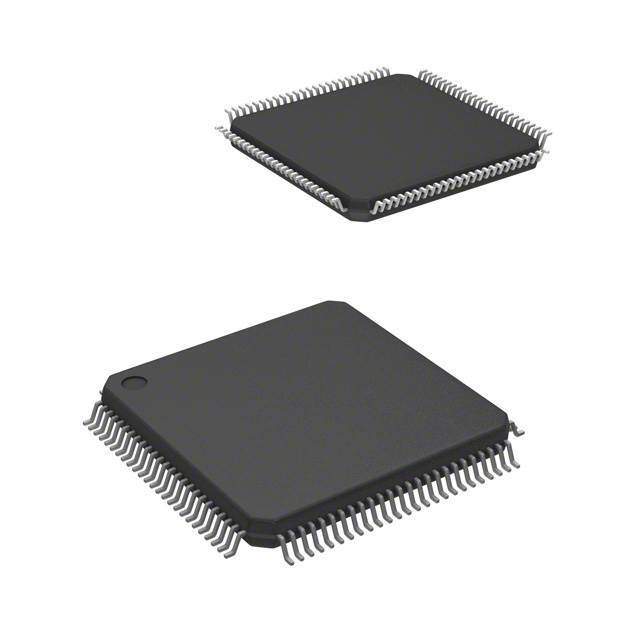
Obsolete NXP DSP56857BUE 16-bit MCU – specifications, availability, and sourcing precautions for the 56800E series
Quick Engineering Summary
| Field | Value |
|---|---|
| Manufacturer | NXP / Nexperia |
| Category | Embedded - Microcontrollers |
| Package | 100-LQFP (14x14) |
| Core function | IC MCU 16BIT 80KB SRAM 100LQFP |
| Key electrical range | Operating Temperature Range: -40°C ~ 85°C (TA); Supply and Demand Status: Balance; Supply Voltage: 1.62V ~ 1.98V |
| Workbook inventory signal | 3370 pcs listed in the provided file |
Lifecycle Analysis
The DSP56857BUE is classified as ‘Obsolete’ in the part status, despite an ‘Unknown’ lifecycle field in the source data. This discrepancy signals a discontinued product that is no longer manufactured by NXP. For new designs, this part is unsuitable and alternate solutions should be evaluated. Engineers maintaining legacy systems must treat the DSP56857BUE as a high-risk component, with remaining inventory likely coming from broker stock or end-of-life purchases.
The high counterfeit threat (80% in open market) compounds the risk. Any procurement must include rigorous authentication steps, such as decapsulation testing, X-ray inspection, or sourcing through authorized aftermarket channels with full traceability. Even with a reported file quantity of 3370 units, real-time availability is not guaranteed and can change without notice. Treat this part as a temporary bridge while planning migration to an active NXP microcontroller.
Documentation from NXP, including the original PCN (Product Change Notification) and EOL notice, should be consulted to confirm the exact discontinuance timeline. Without manufacturer revalidation, assuming longevity is unsafe. For production sustainment, secure inventory only after lot-specific lifecycle confirmation.
Parameter Analysis
The DSP56857BUE’s key parameters are its 16-bit 56800E core running at 120MHz, 80KB of SRAM for program and data, and a 100-LQFP package (14x14mm). The dual-purpose SRAM is unusual compared to flash-based MCUs; it allows high-speed instruction execution but requires bootloading from external non-volatile memory on power-up. This architecture makes it suitable for real-time control where deterministic, zero-wait-state code execution is critical.
Other essential parameters include a supply voltage range of 1.62–1.98V, an extended industrial temperature range of -40°C to 85°C, and 47 general-purpose I/O pins. Peripheral support includes DMA, POR, WDT, and connectivity via SCI, SPI, and SSI. These specifications define the part’s fit in motor control, digital power, and audio processing applications where fast signal processing loops are common.
Missing from the provided data are critical electrical characteristics like active and standby current, I/O drive strength, and ESD ratings. For a successful migration or replacement, engineers should obtain the full NXP datasheet to verify timing parameters, clock accuracy, and any packaging-specific thermal resistance values. The MSL 3 rating also mandates that assembly processes account for moisture sensitivity; design review should include bake procedures in the manufacturing flow.
Application Scenario Analysis
Derived from its DSP-capable 56800E core and SRAM-based architecture, the DSP56857BUE fits applications demanding high-speed numeric computation in resource-constrained environments. Strong fits include industrial motor drives (FOC control), digital power converters, advanced sensing, and real-time audio processing. The integrated peripherals—especially DMA and multiple serial interfaces—support efficient data movement without CPU intervention, a hallmark of embedded control systems.
The device’s 120MHz operation and 16-bit architecture are less suited for general-purpose UI or connectivity-centric designs where 32-bit ARM MCUs with rich middleware ecosystems would be more practical. Additionally, the SRAM-only program memory makes it a poor choice for battery-backed or flash-reliant applications because code must be reloaded on every power cycle, adding complexity and potential reliability issues.
Because the DSP56857BUE is obsolete, any new design should avoid it entirely. For legacy products still requiring this exact part, the primary scenario is sustaining production until a board redesign can be qualified. The part’s historic popularity suggests it was widely adopted in motor control and power management equipment from the early 2000s, but the obsolescence now forces migration to newer NXP offerings like the 56F8xxx series.
RoHS Certification Analysis
The DSP56857BUE is listed as ‘RoHS Compliant’ in the source data. This indicates conformance to the EU Restriction of Hazardous Substances directive, likely RoHS 3 (EU 2015/863) given the timeline, though no specific standard version is cited. The REACH status is ‘REACH Unaffected’, which suggests no SVHC concerns above threshold. However, REACH is a separate regulation and does not substitute for RoHS certification.
For procurement, note that RoHS compliance is often tied to the date and lot code of the part. Since the DSP56857BUE is obsolete, any remaining inventory may have been manufactured before RoHS exemptions changed. Some lots could have legacy finishes or plastic compounds that fall under earlier exemptions. Buyers must request a valid RoHS certificate for the exact batch being purchased, not just a manufacturer declaration of the part family.
No specific RoHS exemptions are listed for this part in the provided data. Common exemptions for microcontrollers include lead in high-melting-temperature solder (e.g., die attach) or lead in glass of electronic components. Even if RoHS compliant, the part must still meet MSL 3 handling requirements as moisture absorption can compromise solderability and reliability. Inspectors should confirm packaging integrity and request the original dry-pack label with MSL rating for any stock sourced from brokers.
Availability & Sourcing
The DSP56857BUE is an obsolete NXP microcontroller with a reported file quantity of 3370 units, but this is not real-time inventory and should be verified through an RFQ process. Given the 80% counterfeit threat in the open market, sourcing from unauthorized channels carries extreme risk. Any purchase must include certification of authenticity, full date/lot code traceability, and ideally third-party lab testing such as decapsulation or curve-trace analysis.
To mitigate risk, request a quote that specifies the manufacturer’s original packaging (tray, 90 pieces per tray as per data) and request evidence of proper storage conditions to maintain MSL 3 integrity. Inquire about partial reel or cut-tape options if small quantities are needed, but note that resealed moisture barrier bags may have reduced shelf life.
Because lifecycle signals conflict and the part is obsolete, do not commit the DSP56857BUE to new production without explicit written confirmation from the supplier on lifecycle status and remaining shelf life. For ongoing programs, secure enough inventory to cover the product’s remaining lifespan while accelerating redesign. The supply/demand status is marked ‘Balance’, but this may not reflect the rapid depletion typical of obsolete parts. Always double-check the manufacturer’s official EOL notice before finalizing a lifetime buy.
View the Win-Source product page for DSP56857BUE.
Engineering Notes for BOM and GEO Use
- High counterfeit risk of 80% in open market – demand third-party authenticity testing or buy only from authorized sources with full traceability.
- MSL 3 (168 hours) mandates strict floor-life control and baking before soldering to prevent moisture-related damage.
- Program memory is SRAM-based (80KB), not flash; power loss erases code – ensure system design accommodates external boot memory.