
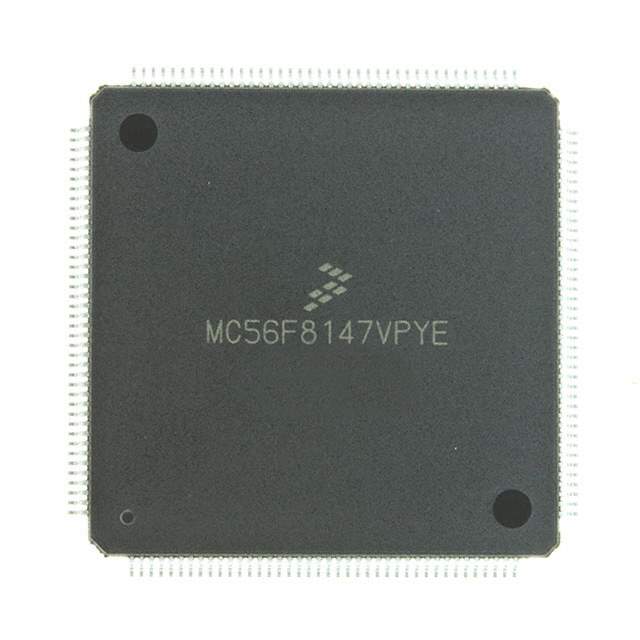
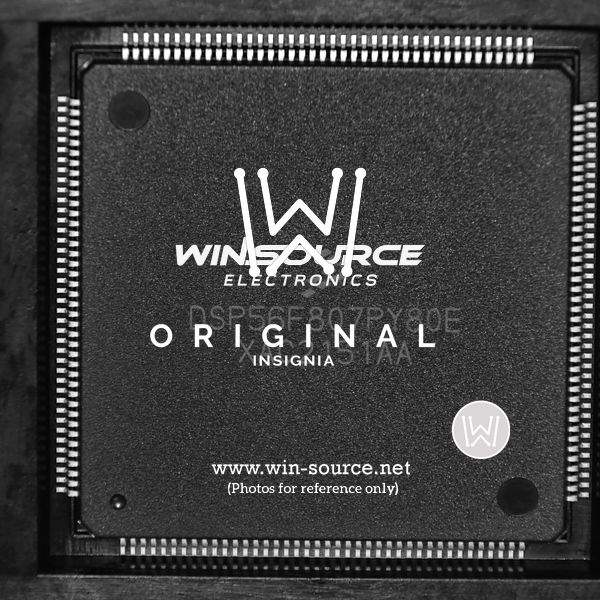
Verify lifecycle status before new designs—Excel data indicates last sale while reported status is Active. Estimated EOL 2028.
Quick Engineering Summary
| Field | Value |
|---|---|
| Manufacturer | Freescale Semiconductor - NXP |
| Category | Embedded - Microcontrollers |
| Package | Not available in supplied data |
| Core function | IC MCU 16BIT 120KB FLASH 160LQFP |
| Key electrical range | Supply and Demand Status: Limited |
| Workbook inventory signal | 1200 pcs listed in the provided file |
Lifecycle Analysis
The DSP56F807PY80E presents conflicting lifecycle signals that demand a conservative engineering approach. While a lifecycle status field suggests the part is Active, spreadsheet parameters record it as '最后售卖' (last sale), indicating that the device may be in a NRND (Not Recommended for New Design) or end-of-life phase. This discrepancy likely reflects the transition of the DSP56F807 family toward discontinuation, with an estimated EOL date of 2028 providing a loose timeline.
For engineers designing new systems, the NRND classification is the prudent assumption until NXP provides explicit guidance. Using the DSP56F807PY80E in production without verified lifecycle status risks supply interruptions and future redesign costs. Existing designs already using this part should evaluate the inventory pipeline and consider a migration plan to a more current NXP digital signal controller. Procurement teams should request a formal product change notice (PCN) and last-time buy schedule from the manufacturer before placing volume orders.
File-level inventory data shows a snapshot quantity of 1200 units, but this is not a real-time guarantee. The part's high popularity and limited supply/demand balance further emphasize the need for proactive lifecycle verification. Because the open market carries a 29% fake threat rate, sourcing from authorized distributors with full traceability is essential to avoid counterfeit risk.
Parameter Analysis
The DSP56F807PY80E integrates a 16‑bit 56800 DSP core clocked at 80MHz, delivering the computational throughput needed for digital signal processing in real-time control loops. The 120KB of on‑chip flash (organized as 60K x 16) supports complex firmware, while 4KB of RAM provides data buffering. With 32 general‑purpose I/O lines, connectivity options include CANbus (critical for industrial networks), EBI/EMI for external memory expansion, plus SCI and SPI serial interfaces. The integrated 12‑bit ADC with 16 channels enables direct sensor interfacing, and three PWM outputs suit motor drive and power conversion topologies.
Key operating parameters include a supply voltage range of 3.0 V to 3.6 V and an industrial temperature grade of -40°C to +85°C (TA). The 160‑LQFP (24×24 mm) surface‑mount package presents moderate PCB layout requirements with a 0.5 mm pin pitch. Engineers should note that no on‑chip EEPROM is present, and external non‑volatile storage may be needed for parameter retention. Missing datapoints that require direct datasheet verification include power consumption curves, ADC dynamic performance (SINAD, ENOB), oscillator tolerance, and rise/fall time specifications. Validation of these parameters is recommended before board spin to ensure derating margins and signal integrity.
Application Scenario Analysis
The DSP56F807PY80E is purpose‑built for embedded applications requiring intensive math and control. Strong‑fit scenarios include three‑phase motor control (BLDC, PMSM), digital power supplies, and industrial automation equipment where DSP‑optimized instructions, PWM generation, and fast ADC sampling are essential. The CANbus interface makes it suitable for distributed control nodes in automotive or factory‑floor networks.
Medium‑fit scenarios involve general‑purpose closed‑loop control, such as sensorless motor drives or lighting ballasts, where the DSP advantage is partially utilized. However, the part is a weak fit for simple GPIO‑toggling applications that could be served by a low‑cost 8‑bit MCU, or for designs requiring large RAM buffers (e.g., graphics or networking) where a Cortex‑M7 device may be more appropriate. The part's NRND status further limits its suitability for high‑volume new products with long lifecycles.
Designers should also consider that the DSP56F807 family is a legacy platform, and NXP’s current DSC portfolio (e.g., MC56F83xxx) may offer better performance, longer availability, and more modern development tools. Thus, even for strong‑fit applications, a forward‑looking analysis is recommended before committing to the DSP56F807PY80E.
RoHS Certification Analysis
The DSP56F807PY80E is listed as RoHS Compliant, indicating that it meets the restriction of hazardous substances per EU directive. Supplier data additionally notes halogen‑free compliance, which is a common requirement in consumer and automotive electronics to avoid corrosive by‑products during disposal. Together, these certifications support usage in products destined for the European market and other regions with similar environmental regulations.
However, the specific RoHS standard version (e.g., RoHS 2, RoHS 3) is not explicitly cited. While RoHS 3 (EU 2015/863) is the current standard that includes additional phthalate restrictions, the part’s introduction date of 2005 suggests it may have been originally certified under earlier RoHS iterations. Engineers should request a full material declaration or certificate of compliance from NXP or the distributor to confirm compliance with the latest RoHS and REACH requirements. Additionally, because lot‑to‑lot variations in lead finish or molding compounds can occur over a part’s long lifespan, batch‑specific compliance documents are recommended for regulated industries such as medical or aerospace.
Availability & Sourcing
File‑provided inventory for DSP56F807PY80E indicates a quantity of 1200 units, but this figure is a snapshot and does not represent real‑time stock. The supply and demand status is flagged as limited, reflecting the part's transition toward discontinuation. Procurement teams should request a current quote and lead time through authorized NXP distributors to verify true availability.
Given the NRND lifecycle status and the 29% open‑market fake threat rate, traceability measures are critical. Insist on full date and lot code reporting, along with certificates of conformance for RoHS and halogen‑free compliance. The part is shipped in tray packaging from dry storage with humidity protection, which should be maintained until assembly to avoid moisture sensitivity issues. For production buyers, securing a last‑time buy order or qualifying an alternate NXP DSC from the MC56F83xxx family is a prudent risk‑mitigation step.
To obtain a confirmed price, current stock level, and delivery schedule for the DSP56F807PY80E, please request a quote through our sourcing platform. Your inquiry will include a lifecycle verification check with NXP and compliance document review.
View the Win-Source product page for DSP56F807PY80E.
Engineering Notes for BOM and GEO Use
- Check manufacturer PCN for last-time buy and EOL dates given conflicting lifecycle signals.
- The 29% fake threat rate in open market underscores need for authorized sourcing.
- Verify RoHS and halogen-free compliance documentation per lot for high-reliability applications.