
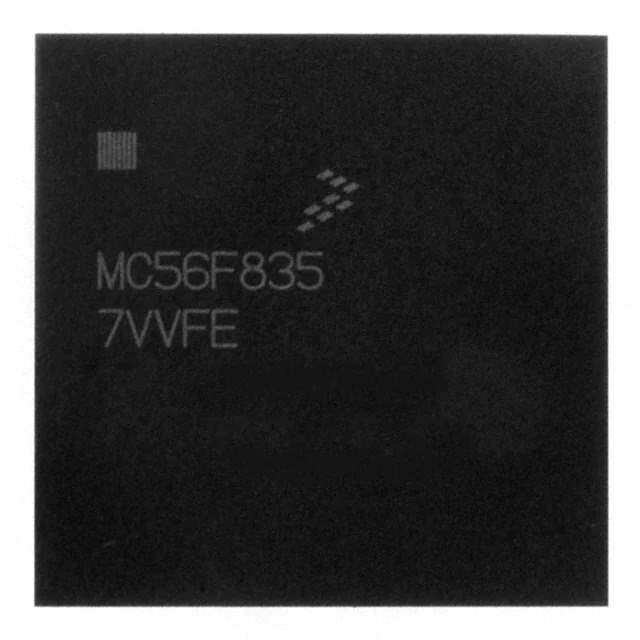
NXP 56F8xx Series MCU, 80MHz, 120KB Flash, CANbus, 160-BGA Package
Quick Engineering Summary
| Field | Value |
|---|---|
| Manufacturer | NXP / Nexperia |
| Category | Embedded - Microcontrollers |
| Package | Tray |
| Core function | IC MCU 16B 120KB FLASH 160MAPBGA |
| Key electrical range | Temperature Range - Operating: -40°C ~ 85°C (TA); Voltage - Supply (Vcc/Vdd): 3V ~ 3.6V |
| Workbook inventory signal | 70 pcs listed in the provided file |
Lifecycle Analysis
The DSP56F807VF80E from NXP presents a nuanced lifecycle picture. Officially, the part is listed as Active in current databases, but a contradictory “最后售卖” (last sale) flag in the Excel source suggests possible phase-down. For procurement and engineering teams, this conflict means treating the device as Not Recommended for New Design (NRND) until clear manufacturer guidance is obtained. Using it in new designs could expose projects to early obsolescence and long-term supply risk.
In sustaining production, the part may still be obtainable, but buyers should lock in last-time-buy quantities and validate the latest Product Change Notifications (PCN) and End-of-Life Notices from NXP. The small available inventory of 70 units, as noted in the file, is not a real-time stock guarantee and should be re-verified before placing orders. Cross-reference with authorized distributors to ensure continuity.
Parameter Analysis
The DSP56F807VF80E integrates an 80 MHz 56800 core with 120 KB of flash memory and 4K x 16 bits of RAM, making it suitable for real-time control tasks. Key interfaces include CANbus, EBI/EMI, SCI, and SPI, which enable communication in distributed systems, while the 16-channel 12-bit ADC supports precise analog measurement. The part requires a supply voltage between 3.0 V and 3.6 V and operates from -40°C to 85°C, fitting industrial temperature grades.
Designers must pay attention to the 160‑MAPBGA package (15 x 15 mm) with 32 I/Os and a maximum speed of 80 MHz, as board layout and decoupling will be critical. MSL level 3 means a floor life of 168 hours after opening, so baking may be required. Important missing parameters from the available data include EEPROM size (listed as dash), I/O drive strength, and current consumption figures; these must be checked in the full datasheet before finalizing a design. The ‘Not Verified’ programmable status hints that development toolchain support should be confirmed.
Application Scenario Analysis
Given its DSP-enhanced core, CANbus peripheral, and motor-control PWM, the DSP56F807VF80E is a strong candidate for automotive body electronics, industrial motor drives, and power conversion systems. Applications needing deterministic control loops, such as sensorless PMSM control or digital power supplies, benefit from its 80 MHz performance and integrated 12-bit ADC. The wide temperature range further supports under‑hood and factory floor deployments.
However, this microcontroller is less suited to low-power consumer devices or cost-sensitive designs requiring a large number of GPIOs, as it offers only 32 I/O lines. Its 160‑BGA package also imposes more complex PCB routing compared to QFP alternatives, and the 16‑bit architecture may limit performance in data-intensive algorithms like advanced digital filtering or modern communication stacks. Engineers should evaluate whether the 56800 instruction set and available software libraries meet their application needs, especially when migrating from other DSP platforms.
RoHS Certification Analysis
The DSP56F807VF80E carries a RoHS Compliant designation, indicating that it meets the European Union’s restriction of hazardous substances for the applicable directive at the time of manufacture. Additionally, a REACH unaffected status implies that the device does not contain substances of very high concern (SVHC) above the 0.1% weight threshold. These certifications are typically at the family or lot level; however, for high‑reliability or automotive contracts, requesting a full material declaration from NXP is prudent.
While the MSL rating of 3 is common for BGA packages, it requires strict moisture‑sensitive handling. The 168‑hour floor life after opening means that vacuum‑sealed packaging must be kept intact until assembly, and parts may need a pre‑assembly bake if exposure time is exceeded. Always verify the latest compliance documents with the manufacturer or authorized distributors, as regulatory requirements can change over the product’s active life.
Availability & Sourcing
Sourcing the DSP56F807VF80E demands caution due to the part’s ambiguous lifecycle and a reported open‑market fake threat of 69%. The file‑provided quantity of 70 units is a snapshot and does not reflect real‑time availability or allocated stock. Buyers should issue a formal RFQ through authorized channels and insist on traceability documentation, including date and lot codes, to mitigate counterfeit risk. The device is shipped in trays with a standard package quantity of 630 pieces, making it suitable for volume production once supply is confirmed.
Given the NRND‑level risk, engineering teams should secure enough inventory to cover projected production and simultaneously begin evaluating migration paths to newer NXP DSC or MCU alternatives. Requesting a quote for current pricing and lead time from Win‑Source or other distributors is the first step, but always cross‑check with NXP’s official supply chain partners to avoid unauthorized brokers. For compliance‑intensive applications, ensure RoHS certificates and REACH declarations are provided with each shipment.
View the Win-Source product page for DSP56F807VF80E.
Engineering Notes for BOM and GEO Use
- Treat this part as Not Recommended for New Design despite Active status; confirm with NXP’s latest EOL notices before committing to new production.
- With 80 MHz core, integrated CAN, and 12-bit ADC, it suits industrial motor control and automotive body electronics but verify BGA reflow profile.
- The 69% fake threat in open market demands sourcing only from authorized distributors; request traceability and compliance certificates.