
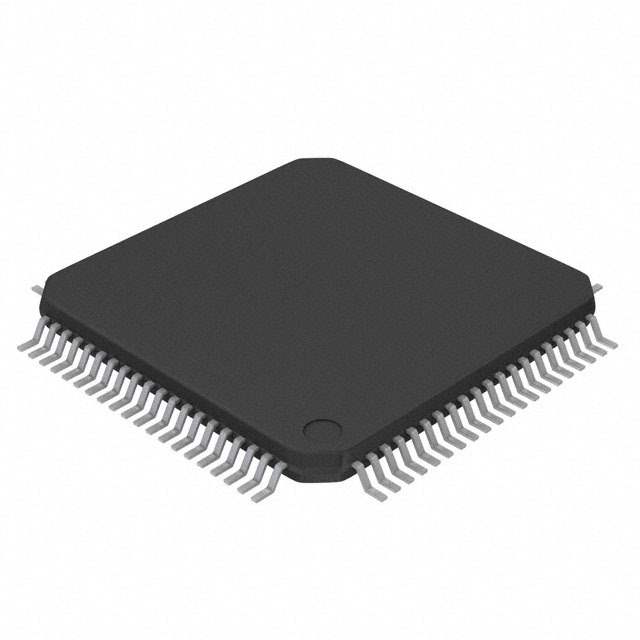
24-bit Audio Processor DSP, 180MHz, 80-LQFP, NRND – Request Quote for Availability
Quick Engineering Summary
| Field | Value |
|---|---|
| Manufacturer | Freescale Semiconductor - NXP |
| Category | Embedded - DSP (Digital Signal Processors) |
| Package | 80-LQFP (14x14) |
| Core function | IC DSP 24BIT 180MHZ 80-LQFP |
| Key electrical range | Supply and Demand Status: Limited; Temperature Range - Operating: 0°C to 70°C (TA); Voltage - Core: 1.25V; Voltage - I/O: 3.30V |
| Workbook inventory signal | 900 pcs listed in the provided file |
Lifecycle Analysis
The DSPB56371AF180 from Freescale Semiconductor (NXP) presents conflicting lifecycle signals. The dedicated status field reports 'Not For New Designs', while an Excel lifecycle parameter indicates '最後售賣' (last sale). An estimated EOL date of 2022 further suggests the part is no longer recommended for new development. Although one attribute lists 'Active', this is overridden by the NRND and end-of-life indicators. Engineers and procurement teams should treat the DSPB56371AF180 as NRND with high supply risk.
For existing designs, immediate steps include verifying operational stock levels and qualifying alternate DSPs. The presence of an estimated EOL date implies that manufacturer support may diminish, and long-term availability cannot be assured. Buyers must request official lifecycle status confirmation and product change notifications directly from NXP. Without such verification, committing to new production builds carries significant risk of obsolescence.
File-provided inventory data shows 900 units, but this is not a real-time guarantee. The combination of NRND status, last-sale signaling, and a past EOL estimate means this part should only be procured for sustaining existing applications where a validated second source or migration plan is already in place.
Parameter Analysis
Key parameters for the DSPB56371AF180 include its 180MHz clock rate, 264kB on-chip RAM, and 384kB ROM. The 24-bit architecture targets audio processing, where the high clock speed supports complex algorithms and low-latency signal chains. The 1.25V core voltage and 3.30V I/O voltage require careful power supply design, especially for decoupling and sequencing in mixed-signal boards. The 80-LQFP package (14x14 mm) is surface-mount, influencing PCB layout and thermal management.
Operating temperature range is 0°C to 70°C (TA), limiting the part to commercial-grade environments. Engineers must ensure ambient temperatures stay within this range, allowing adequate margin for self-heating. The audio processor type suggests integrated peripherals like host, I2C, SAI, and SPI interfaces, but detailed interface performance and MIPS ratings are not provided. These missing specifications are critical for system integration and should be verified against the official datasheet.
Additional missing parameters include power consumption, dynamic current, and standby modes. Without these, thermal budgeting and power supply sizing remain uncertain. The 58% fake threat percentage also highlights the need to validate electrical performance through sample testing if parts are sourced from non-authorized channels. Designers should obtain the full datasheet to confirm I/O timing, core voltage tolerance, and programming model before committing to a design.
Application Scenario Analysis
As a 24-bit audio processor, the DSPB56371AF180 is suitable for embedded audio systems such as voice processing, audio effects, digital mixing consoles, and automotive audio (within the 0–70°C constraint). Its 180MHz clock and substantial on-chip RAM allow for moderate-complexity algorithms like filtering, echo cancellation, and audio decoding. The 80-LQFP package suits space-constrained consumer and professional audio devices.
Weak-fit scenarios include high-temperature industrial or automotive applications beyond 70°C, where extended-range DSPs are required. Applications demanding high MIPS for video or advanced machine learning are also poor fits due to the audio-centric design and limited on-chip resources. The NRND status makes this part unsuitable for new designs in any market segment; it should only be used in legacy products where redesign cost is prohibitive.
For new audio projects, engineers should consider current NXP DSPs or alternative ARM-based audio processors that offer active lifecycle status and enhanced features. The 2004 introduction date indicates a mature architecture; newer parts provide better performance per watt and extended availability. Verify that existing firmware is compatible with any recommended migration path.
RoHS Certification Analysis
The DSPB56371AF180 is listed as RoHS Compliant and Halogen Free Compliant. This indicates the part meets EU restrictions on lead, mercury, cadmium, and other hazardous substances. The source data does not specify the exact RoHS directive version, but compliance with current RoHS 3 (EU 2015/863) should be confirmed with NXP documentation. Halogen-free compliance adds confidence for applications where bromine and chlorine are restricted.
No REACH declaration is provided, and REACH is not a substitute for RoHS. Buyers requiring REACH compliance must request a separate statement from the manufacturer or distributor. Lot-level RoHS certificates are recommended to ensure individual production batches meet the required standards, as family-level declarations may not account for material changes over the product's lifespan.
The 80-LQFP package and tray packaging may contain additional materials outside the scope of standard RoHS testing. For full due diligence, procurement should verify the entire bill of materials, including terminal finish and mold compound, against the latest RoHS and REACH requirements. This is especially important for products shipping to the EU.
Availability & Sourcing
Sourcing the DSPB56371AF180 requires caution due to its NRND lifecycle and a reported 58% counterfeit threat in the open market. File-provided inventory indicates 900 units in tray packaging, but this quantity is not a live stock guarantee. Potential buyers should request a quote for current availability and insist on date/lot code traceability to ensure authentic, properly stored parts. Storage conditions specify dry storage and humidity protection, so verify that the supply chain adhered to these requirements.
Given the NRND status, procurement should prioritize secure inventory for ongoing production while concurrently evaluating migration to an active NXP DSP or alternative. Ask for a Certificate of Conformance and RoHS compliance documentation with each shipment. Authorized distributors are the safest source; independent brokers carry high counterfeit risk and may not provide reliable traceability.
The part is designated as limited supply and demand, which may lead to erratic availability and extended lead times. For existing designs, negotiate last-time buy terms if the manufacturer has already issued an end-of-life notice. For any new purchase, verify the exact lifecycle status with NXP and confirm that the part has not been discontinued. Without manufacturer validation, the DSPB56371AF180 should not be used in products requiring long-term support.
View the Win-Source product page for DSPB56371AF180.
Engineering Notes for BOM and GEO Use
- Verify NXP’s official product change notification (PCN) for lifecycle status as conflicting signals exist; the part is marked Not For New Designs.
- Consider the 0°C–70°C operating temperature range and 1.25V core voltage for thermal design and power sequencing.
- Due to a 58% reported counterfeit threat in the open market, source only from authorized distributors and request full traceability documentation.