
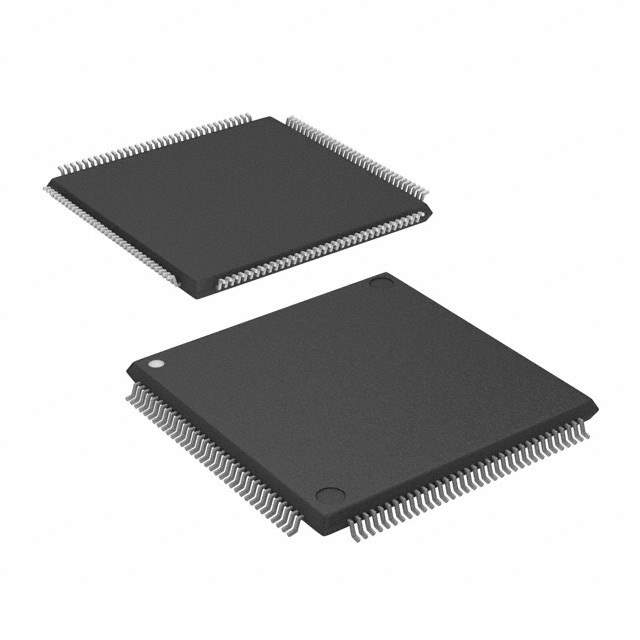
EOL NXP Symphony Audio Processor – 200MHz, 144-LQFP, RoHS – Sourcing Guide
Quick Engineering Summary
| Field | Value |
|---|---|
| Manufacturer | NXP / Nexperia |
| Category | Embedded - DSP (Digital Signal Processors) |
| Package | Tray |
| Core function | AUDIO PROCESSOR SYMPH 144-LQFP |
| Key electrical range | Temperature Range - Operating: 0°C ~ 70°C (TA); Voltage - Core: 1.00V; Voltage - I/O: 3.30V |
| Workbook inventory signal | 1 pcs listed in the provided file |
Lifecycle Analysis
The DSPB56721AG from NXP is an audio processor in the Symphony family that has reached end-of-life, with the product status marked as Last Time Buy. For new designs, this part should not be selected; instead, engineers should look for next-generation alternatives. For existing production, immediate action is required to secure sufficient inventory before the final order date, as specified by the manufacturer.
The lifecycle signals provided indicate EOL and Last Time Buy, which are consistent with a discontinued component. However, since these signals come from file-provided data, it is essential to validate the official lifecycle status directly with NXP or an authorized distributor to confirm last-time-buy deadlines and any available extension options. The file shows a stock quantity of 1, which is likely a snapshot and not a guarantee of real-time availability.
Given this status, the procurement risk is high. Engineers must plan for a redesign or lifetime-buy to maintain production. Any remaining inventory should be verified for authenticity and date codes, especially considering the note of a 48% fake threat in the open market.
Parameter Analysis
The DSPB56721AG operates at a clock rate of 200MHz and provides 744kB of on-chip RAM, sufficient for complex audio processing algorithms typical in Symphony devices. The core voltage is 1.00V with separate 3.30V I/O supply, enabling efficient power management. Supported interfaces include Host Interface, I2C, SAI, and SPI, offering flexible connectivity for audio data streams and control.
The device comes in a 144-LQFP package with a 20x20mm body and surface mount mounting, which simplifies PCB layout but requires attention to thermal management and signal integrity, especially at 200MHz. The operating temperature range is commercial grade (0°C to 70°C), limiting its use to indoor consumer electronics.
Key parameters such as typical power consumption, audio performance specifications (SNR, THD+N), and processing core details are not available in the provided data. Engineers should consult the full NXP datasheet for these critical values to ensure proper derating and system-level performance.
Application Scenario Analysis
Given its 200MHz DSP core and audio-specific interfaces, the DSPB56721AG is suited for mid-range audio processing tasks. Strong-fit applications include automotive infotainment systems, home theater receivers, digital audio workstations, and active speaker processing. The multiple digital audio interfaces (SAI, I2C, SPI) enable integration with codecs, ADCs, DACs, and other audio peripherals.
However, because the part is EOL, its primary use case is in legacy product lines where redesign is not immediate. For new audio system designs, this part is a weak fit due to the high supply risk. Engineers should consider newer members of the Symphony family or alternative DSPs from NXP or competitors that offer longer lifecycle guarantees. The 0–70°C range restricts usage to controlled environments, excluding automotive under-hood or outdoor industrial applications.
When used in legacy designs, ensure that firmware compatibility and pin-mapping are verified, as subtle process changes in later stock may affect timing.
RoHS Certification Analysis
The DSPB56721AG is listed as RoHS Compliant, with REACH Unaffected status. While the exact directive version is not specified, it is likely compliant with RoHS 3 (EU 2015/863), which restricts ten substances. Engineers should request a full Certificate of Compliance (CoC) from the supplier, covering the specific lot being purchased, to confirm lead-free soldering compatibility and absence of restricted phthalates.
The part has an MSL rating of 3 with a floor life of 168 hours, meaning it must be handled according to J-STD-033 for moisture-sensitive devices. After opening, parts should be baked according to manufacturer guidelines if floor life is exceeded. There are no exemptions noted in the data, but if the part contains any legacy materials, an EU RoHS exemption may apply. Always verify at the lot level, especially when sourcing from non-authorized channels.
Availability & Sourcing
As an EOL component with Last Time Buy status, availability of the DSPB56721AG is extremely limited. The file-provided quantity of 1 unit is a static snapshot and may not reflect current market conditions. Engineers and buyers must request a quote immediately to confirm real-time stock, lead times, and last-time-buy cutoff dates from authorized NXP distribution partners.
Special attention is required for counterfeit avoidance: the open market fake threat for this part is noted at 48%. Purchasing only from franchised sources or through traceable channels with full lot traceability is critical. Verify date codes, factory packaging (tray, standard package of 300), and test authenticity through electrical screening if necessary. Because the standard package quantity is 300, partial tray buys should be inspected for continuity.
To secure supply, place a last-time-buy order now, and concurrently initiate a redesign to migrate to a recommended NXP replacement. Win Source can assist with RFQ and compliance documentation, but all lifecycle and inventory claims should be independently verified.
View the Win-Source product page for DSPB56721AG.
Engineering Notes for BOM and GEO Use
- Verify that the 200MHz clock rate and 744kB on-chip RAM meet embedded firmware requirements before ordering.
- Since the MSL is Level 3, follow J-STD-020 reflow profile and verify humidity exposure during storage.
- Given EOL status, secure Last Time Buy inventory early and assess migration to a newer Symphony or alternative DSP.